Food
Spirulina
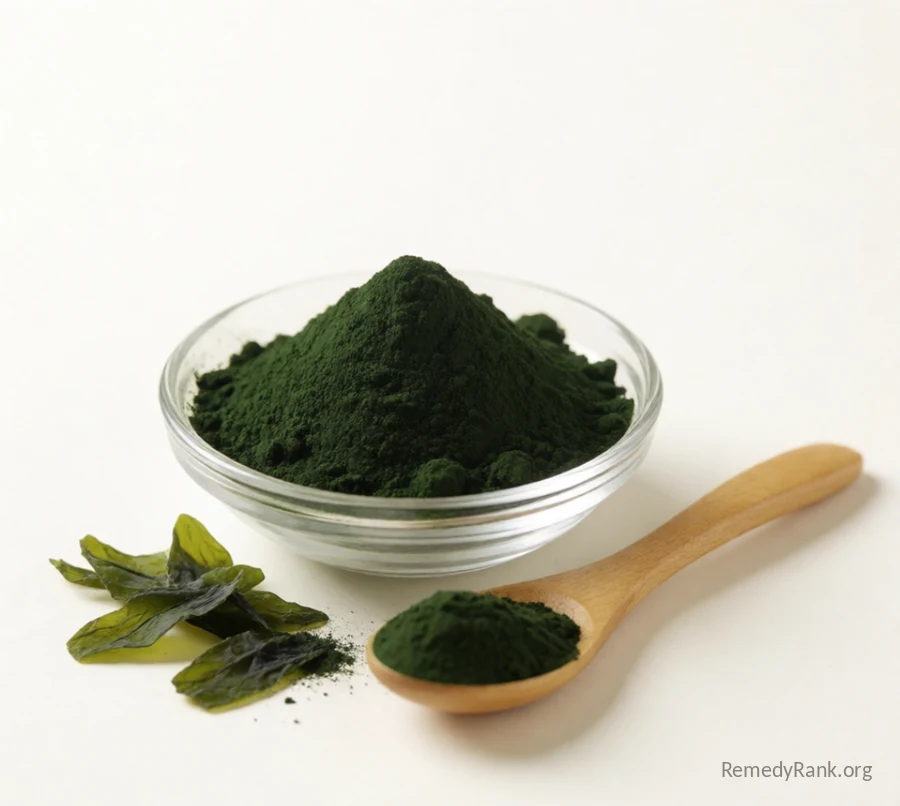
A nutrient-dense blue-green algae, taken as a powder, rich in protein, iron, and antioxidants to nourish and energize.
 ⤢
⤢📊 How it ranks (our editor score) — 76/100Tap to see the breakdown
🌱 What it is
Spirulina is a blue-green algae grown in water and dried into a deep green powder, valued as a concentrated source of plant protein, iron, and antioxidants.
📜 Where it comes from
Spirulina has ancient roots as a food source, historically harvested from lakes by the Aztec people of Mexico and by communities around Lake Chad in Africa, who dried it into cakes. It drew modern scientific interest in the mid-20th century for its dense nutrient content and has since become a popular whole-food supplement.
✨ Why it's good for you
- May help support healthy energy levels
- May help support healthy iron status
- May help support the immune system
- May help support healthy inflammation levels
🥗 Nutrition
Per 1 tablespoon dried (7 g) · about 20 calories
- Protein: 4 g
- Iron: 2 mg
- Riboflavin: 0.25 mg
- Copper: 0.5 mg
Source: USDA FoodData Central
🥄 How to use it
Stir ½... 1 teaspoon of spirulina powder into a smoothie or juice once a day (its flavor is strong, so blend it with fruit); build up gradually.
How much: ½... 1 teaspoon of powder daily, building gradually.
Why it works: Very nourishing, adds energy, reduces appetite, and reduces kidney poisoning from mercury and drugs.
Show full details & how to prepare it
Spirulina is a blue-green algae remarkably concentrated in protein, iron, B vitamins, and antioxidants, which is why a small daily spoonful is used to nourish the run-down and boost energy. Quality and sourcing matter a great deal, so a reputable, tested brand is important.
Ways to prepare it
🔬 Let's get technical
The scientific view, plainly reported. Hover a dotted word for its meaning.
What's in it
Spirulina is a blue-green cyanobacterium notable for a very high protein content by dry weight, along with the blue pigment-protein complex , such as and , and , an omega-6 fatty acid less common in most foods. It also contains iron and B vitamins, though its vitamin B12 content is now understood to be largely a non-bioactive analogue rather than the active form usable by humans.
Mechanism of action
, the pigment responsible for spirulina's blue-green color, has shown antioxidant and anti-inflammatory activity in laboratory studies, including scavenging of and modulation of inflammatory signaling pathways such as those involving production. As a complete protein source containing all essential amino acids, spirulina's protein digestibility is supported partly by the fact that its cell walls, made of complex rather than the tougher cellulose found in plants, are more readily broken down during digestion. can be converted in the body toward anti-inflammatory pathways, distinct from the more common omega-6 pathway that tends toward pro-inflammatory products, though the clinical significance of this shift at typical spirulina doses is not well established in humans. Iron in spirulina is non-heme and its is debated in the literature, with some studies suggesting it is reasonably well absorbed and others noting that overall iron status improvements from spirulina supplementation are inconsistent across trials.
Current pharmacological applications
Spirulina has been studied in small clinical trials for markers such as blood lipid levels, blood pressure, and antioxidant status, with some positive findings, though trials are generally short, small, and heterogeneous in dose and preparation. Its use as a protein and micronutrient-dense food, including in famine-relief and malnutrition programs, is better supported by straightforward nutritional-composition data than its more specific therapeutic claims. Because of its aquatic cultivation, spirulina is also studied for potential contamination with heavy metals or toxins depending on growing conditions, a quality-control consideration distinct from its nutritional research.
Every underlined word is collected on the technical glossary.
⚠️ Cautions
- Choose a reputable, tested brand... algae can be contaminated if poorly sourced.
- Because it supports immune activity, those with autoimmune conditions may find it stimulates the immune system further, which is worth knowing before adding it in.
- People with the condition phenylketonuria (PKU) must avoid it (it contains phenylalanine).
📚 Learn more
🌿 Deeper natural detail
🩺 The conventional view
💬 Ask Remy about Spirulina
📚 Resource confidence
Based on mentions in health references
Your vote is saved. Source endorsement totals come from books and studies (+7 per book, +5 per article). You can change your vote anytime from this device.
💬 Comments & experiences
Share what worked for you — and reply or 👍 like the experiences that resonate. Comments get a quick review before they appear publicly, to keep things safe and honest. Please don't make medical claims.
💚 Have an experience to share? Create a free account to join the conversation — your words might be exactly what someone else needs. Reading is always open to everyone.
Know a remedy like this?
Share a structured suggestion and our team will review it for the site.
Suggest a similar remedy