Educational information only — RemedyRank does not diagnose, treat, or cure disease. Read our full disclaimer.

Fruit

Cranberry

83/100
RemedyRank score

A tart red berry that many people sip as unsweetened juice to help keep bladder infections from coming back.

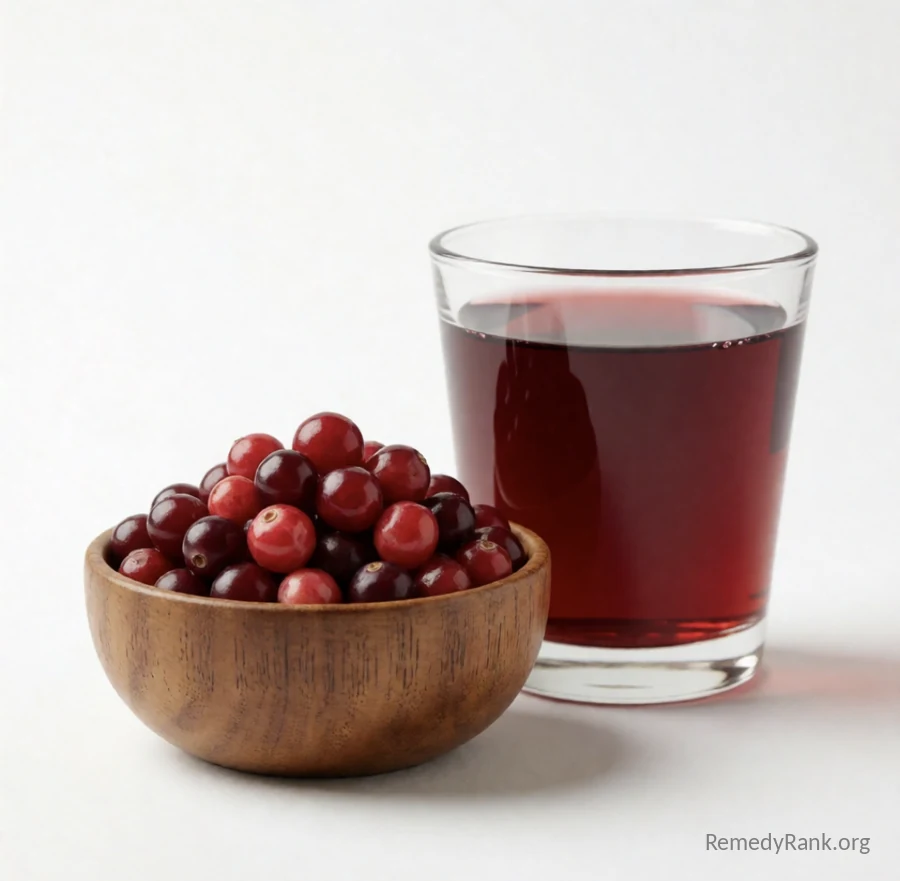
A wooden bowl heaped with fresh red cranberries next to a glass of ruby cranberry juice.⤢
📊 How it ranks (our editor score) — 83/100Tap to see the breakdown
Source quality
Safety
Simplicity
Affordability
Lifestyle fit
Eight-laws alignment
User feedback

🌱 What it is

Cranberries are small, tart red berries that grow on low vines in wet, sandy bogs, harvested each fall and eaten fresh, dried, or as juice.

📜 Where it comes from

Cranberries were used by Native American nations of the northeastern woodlands, including the Wampanoag, both as food and as a traditional remedy for bladder and kidney complaints. Early European settlers in New England adopted the berry from these communities and it became a regional staple. The folk habit of drinking cranberry juice for bladder health grew directly out of this Indigenous and colonial tradition.

✨ Why it's good for you

  • May help support fewer repeat urinary tract infections
  • May help support a healthy dose of antioxidants
  • May help support urinary tract wellness as a steady habit
  • May help support variety in a colorful, fruit-filled diet

🥗 Nutrition

Per 1/2 cup fresh (55g) · about 23 calories

  • Vitamin C 7mg
  • Fiber 2g
  • Vitamin E 0.6mg
  • Manganese 0.1mg

Source: USDA FoodData Central

🥄 How to use it

Choose pure, unsweetened cranberry juice or a plain cranberry supplement, and use it as a steady habit for prevention — not as a cure once an infection has started. Drink a small glass a day, or take a capsuleDried, powdered herb packed into a swallowable shell for a measured dose. How to make a capsule → as the label directs.

How much: For prevention, about 1 small glass (around 240 ml) of pure, unsweetened cranberry juice a day, or a standardized cranberry capsuleDried, powdered herb packed into a swallowable shell for a measured dose. How to make a capsule → at the label dose. Use it steadily over time rather than as a one-time fix.

Why it works: Proanthocyanidins may prevent bacteria from adhering to urinary tract walls.

Show full details & how to prepare it

Cranberries are small, sour, bright-red berries that grow on low vines in cool, boggy ground. Long before anyone understood why, people noticed that sipping the tart juice seemed to help keep bladder infections from returning. Modern study suggests the berry holds natural compounds that make it harder for certain bacteria to cling to the lining of the bladder, so they get flushed away more easily.

The key word is prevention. Cranberry is best thought of as a gentle daily habit for people who get urinary infections again and again — not as something that will clear an infection you already have. Once burning, urgency, and other symptoms arrive, that is a job for a doctor, because an untreated bladder infection can climb to the kidneys.

Choose your cranberry wisely. The pure, unsweetened juice is quite sharp, so it is often watered down; many supermarket "cranberry cocktails," though, are mostly added sugar and offer little real help. Plain juice, or a simple cranberry capsuleDried, powdered herb packed into a swallowable shell for a measured dose. How to make a capsule →, is the better route — paired, as always, with the simplest helper of all: plenty of plain water.

Ways to prepare it

Unsweetened juice: Drink about a small glass (240 ml) of pure, unsweetened cranberry juice a day. If it is too tart, dilute it with water rather than adding sugar.
Capsules / extract: Use a standardized cranberry capsuleDried, powdered herb packed into a swallowable shell for a measured dose. How to make a capsule → at the label dose for convenient daily prevention, taken with water.
Whole or dried berries: Add fresh or unsweetened dried cranberries to meals as a tart, vitaminA natural substance your body needs in small amounts to stay healthy, like vitamin C or D. More →-C-rich food; look for unsweetened dried ones, since most are heavily sugared.

🔬 Let's get technical

The scientific view, plainly reported. Hover a dotted word for its meaning.

What's in it

Cranberries are notably rich in , particularly A-type proanthocyanidins that are structurally distinct from the more common B-type found in most other fruits, along with other , organic acids such as quinic and citric acid, and moderate vitamin C content.

Mechanism of action

A-type are of particular research interest because they interfere with the adhesion structures that Escherichia coli use to attach to the lining the bladder wall, reducing bacterial adherence without acting as a conventional antibiotic. This anti-adhesive action, rather than direct killing, is the leading proposed mechanism for cranberry's traditional association with urinary tract health, and it does not appear to promote resistance the way antibiotic exposure does. Cranberry's organic acid content was historically thought to acidify urine sufficiently to inhibit bacterial growth, but controlled studies have not consistently supported clinically meaningful urinary acidification at typical consumption levels, so this mechanism is now considered secondary at best.

Current pharmacological applications

Cranberry juice and standardized extracts have been studied extensively for prevention of recurrent urinary tract infection, with Cochrane-level meta-analyses showing modest benefit in some populations, particularly women with recurrent infections, but not consistently across all groups such as older adults in care settings or pregnant women. Effective proanthocyanidin dosing appears to matter, and many commercial juice products contain less than trial formulations. Cranberry is studied only as a preventive measure against recurrence, not as a treatment for active infection.

Every underlined word is collected on the technical glossary.

🧺 Other forms of Cranberry

These used to be pages of their own. They are the same remedy in a different form — the differences worth knowing are below.

Cranberry JuiceFood

A tart juice that may help support urinary tract comfort by making urine less hospitable to certain bacteria.

How this form is used: Drink unsweetened cranberry juice regularly, especially during a urinary flare-up; some people find 1-2 cups a day helpful, more during a rough patch, alongside plenty of water.

Cautions for this form
  • Not a proven treatment for dissolving kidney stones or curing an active infection — see a doctor for suspected UTI, kidney stones, or nephritis.
  • Can interact with blood-thinning medication (e.g. warfarin) — check with your doctor.
  • Choose unsweetened juice; sweetened versions add excess sugar.

Learn more: MSKCC — Cranberry (About Herbs) · Examine.com — Cranberry

Natural Remedies Encyclopedia (7th ed.)

Shop unsweetened cranberry juice on Amazon

Formerly its own page at /remedies/cranberry-juice, now redirected here.

⚠️ Cautions

  • Cranberry may help prevent repeat urinary infections for some people, but it is not a treatment — a real infection still needs a doctor and usually antibiotics.
  • Many store "cranberry cocktails" are mostly sugar; choose the unsweetened kind or dilute the pure juice with water.
  • If you take warfarin or other blood thinners, check with your doctor first, since cranberry may add to their effect.
  • Cranberry is fairly high in oxalate, so go easy if you are prone to calcium-oxalate kidney stones.
  • Use only normal food amounts in pregnancy or breastfeeding unless your doctor agrees, and stop if it upsets your stomach.

📚 Learn more

🌿 Deeper natural detail

Curated links coming for this one.

💬 Ask Remy about Cranberry

Hi, I'm Remy 🌿 Ask me anything about Cranberry and I'll answer from this page.

📚 Resource confidence

Based on mentions in health references

—
★★★★★
0 ratings
Tap to rate:
Did this remedy help you? Add your experience — source endorsements plus visitor feedback rank it on the ailment pages:0

Your vote is saved. Source endorsement totals come from books and studies (+7 per book, +5 per article). You can change your vote anytime from this device.

💬 Comments & experiences

Share what worked for you — and reply or 👍 like the experiences that resonate. Comments get a quick review before they appear publicly, to keep things safe and honest. Please don't make medical claims.

💚 Have an experience to share? Create a free account to join the conversation — your words might be exactly what someone else needs. Reading is always open to everyone.

Know a remedy like this?

Share a structured suggestion and our team will review it for the site.

Suggest a similar remedy