Vegetable
Collard Greens
A sturdy dark leafy green rich in calcium and vitamin K that quietly strengthens bones and blood.
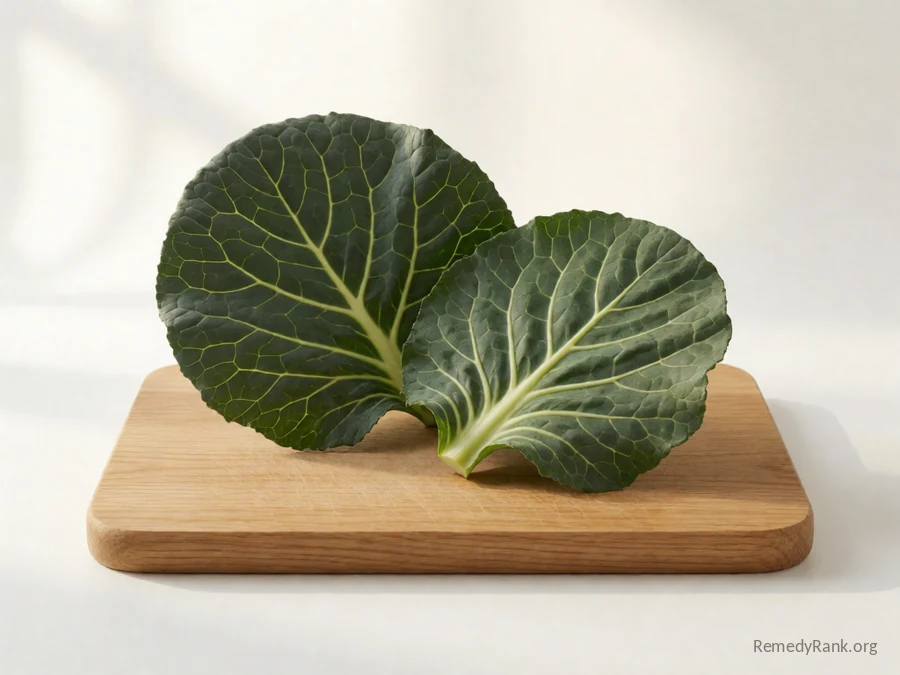 ⤢
⤢📊 How it ranks (our editor score) — 91/100Tap to see the breakdown
🌱 What it is
Collard greens are large, sturdy leaves from a cabbage-family plant, cooked low and slow to soften their hearty texture and bring out a mild, earthy flavor.
📜 Where it comes from
Collard greens trace back to wild cabbage varieties grown in the eastern Mediterranean and were later cultivated widely across Africa, where they became a dietary staple. Enslaved Africans brought both the plant and its cooking traditions to the American South, where collards became a cornerstone of Southern soul food cuisine. They remain treasured today for their hearty texture and nutrient density.
✨ Why it's good for you
- May help support strong bones with calcium and vitamin K
- May help support healthy blood clotting and vessel health
- May help provide iron and folate for healthy blood
- May help support healthy cholesterol levels with fiber
🥗 Nutrition
Per 1 cup chopped, cooked (190g) · about 63 calories
- Vitamin K 772mcg
- Calcium 268mg
- Vitamin A 722mcg RAE
- Fiber 5g
Source: USDA FoodData Central
🥄 How to use it
Slice the leaves into ribbons and simmer or sauté until tender. A squeeze of lemon helps your body take up the iron.
How much: A practical serving is about 1 cup cooked (or 2 cups raw) several times a week, ideally with a source of vitamin C nearby to boost iron uptake.
Why it works: Nutrition science attributes collard greens' bone-supporting reputation to their high calcium and vitamin K content, both of which are studied for their roles in bone mineralization and blood health.
Show full details & how to prepare it
Collard greens are broad, deep-green leaves from the cabbage family, and they are one of the kitchen's quiet powerhouses for bone and blood. A single cooked cup carries a generous helping of calcium plus a large amount of vitamin K — two nutrients that work hand in hand to help the body build and maintain strong bones.
The same leaves bring plant iron and folate that support healthy blood, and a good dose of soluble fiber that gently helps carry cholesterol out of the body. Pairing collards with something rich in vitamin C, like a squeeze of lemon or some tomato, helps your body absorb their iron far better.
They are a very safe, inexpensive food. The main thing to know is their high vitamin K: if you take a blood thinner such as warfarin, keep your leafy-green intake steady rather than swinging high and low, and let your doctor know.
Ways to prepare it
⚠️ Cautions
- Collards are high in vitamin K, which can interact with blood-thinning medicine like warfarin, so it helps to keep intake steady rather than swinging high and low.
- Their oxalates mean people prone to kidney stones should enjoy them in moderation.
- Very large amounts of raw cruciferous greens may affect thyroid function in sensitive people; cooking reduces this.
📚 Learn more
🌿 Deeper natural detail
🩺 The conventional view
💬 Ask Remy about Collard Greens
📚 Resource confidence
Based on mentions in health references
Your vote is saved. Source endorsement totals come from books and studies (+7 per book, +5 per article). You can change your vote anytime from this device.
💬 Comments & experiences
Share what worked for you — and reply or 👍 like the experiences that resonate. Comments get a quick review before they appear publicly, to keep things safe and honest. Please don't make medical claims.
💚 Have an experience to share? Create a free account to join the conversation — your words might be exactly what someone else needs. Reading is always open to everyone.
Know a remedy like this?
Share a structured suggestion and our team will review it for the site.
Suggest a similar remedy