Whole Grain
Buckwheat
A hearty gluten-free seed rich in rutin, a plant compound that helps strengthen blood vessels and circulation.
 ⤢
⤢📊 How it ranks (our editor score) — 85/100Tap to see the breakdown
🌱 What it is
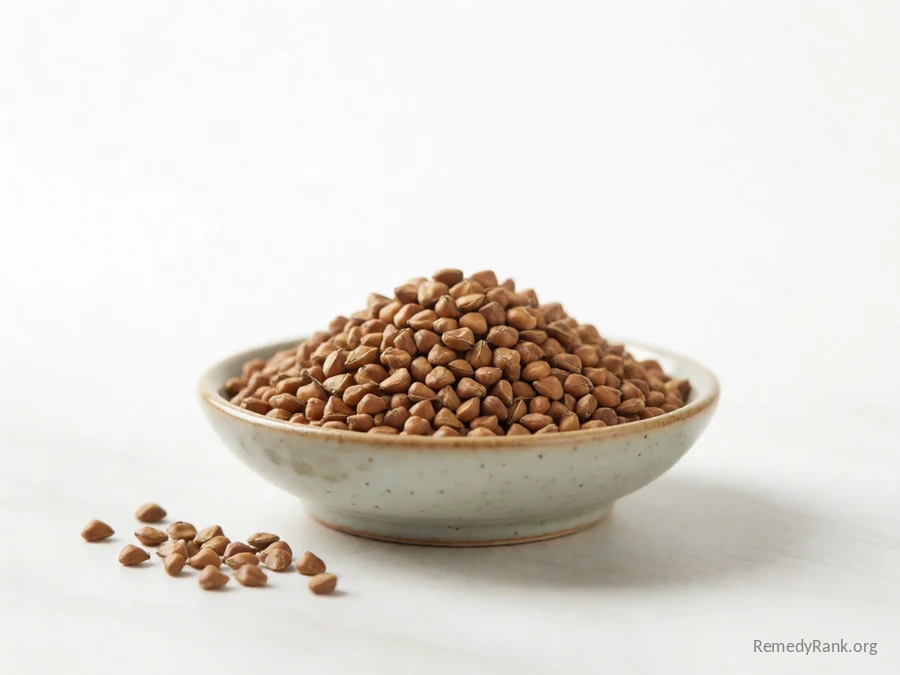
Buckwheat is a gluten-free seed, not a true grain, related to rhubarb, that's cooked whole as groats or milled into flour for pancakes and noodles.
📜 Where it comes from
Buckwheat originated in Central Asia and China, cultivated for thousands of years before spreading through Russia, Eastern Europe, and eventually into Western cooking as flour for pancakes and noodles. Traditional Eastern European diets relied heavily on buckwheat groats, or kasha, as a hearty staple food. Its gluten-free nature has made it a popular alternative grain in modern times.
✨ Why it's good for you
- May help support healthy blood vessels with rutin
- May help support healthy circulation
- May help support healthy blood sugar levels
- May help supply plant protein and fiber
🥗 Nutrition
Per 1 cup cooked groats (168g) · about 155 calories
- Fiber 4.5g
- Magnesium 86mg
- Protein 5.7g
- Manganese 1mg
Source: USDA FoodData Central
🥄 How to use it
Cook the groats like rice for porridge or pilaf, or use buckwheat flour for pancakes and noodles.
How much: A practical serving is about ½ to 1 cup cooked buckwheat a few times a week in place of refined grains.
Why it works: Researchers point to buckwheat's rutin content, a plant compound studied for strengthening the walls of small blood vessels and supporting healthy circulation.
Show full details & how to prepare it
Despite its name, buckwheat is not a wheat at all but the seed of a flowering plant, naturally free of gluten. What sets it apart is its rich store of rutin, a flavonoid that has long been studied for helping strengthen the tiny walls of blood vessels and support healthy circulation — which is why it is so often linked with care for varicose veins and fragile capillaries.
As a whole grain it also brings steady, slow-releasing energy, good fiber, and minerals like magnesium, all of which fit a heart-healthy, blood-pressure-friendly way of eating. The toasted form, called kasha, has a warm, nutty flavor; the plain groats cook up mild.
Buckwheat is a wholesome everyday food for most people. The main caution is allergy: a minority react to it, sometimes strongly, so anyone trying it for the first time should start with a small portion.
Ways to prepare it
⚠️ Cautions
- Buckwheat is a known allergen for some people and can cause reactions — try a small amount first if you have not eaten it before.
- Introduce its fiber gradually with plenty of water to avoid gas or bloating.
- Choose plain groats or flour rather than sweetened buckwheat mixes.
📚 Learn more
🌿 Deeper natural detail
🩺 The conventional view
💬 Ask Remy about Buckwheat
📚 Resource confidence
Based on mentions in health references
Your vote is saved. Source endorsement totals come from books and studies (+7 per book, +5 per article). You can change your vote anytime from this device.
💬 Comments & experiences
Share what worked for you — and reply or 👍 like the experiences that resonate. Comments get a quick review before they appear publicly, to keep things safe and honest. Please don't make medical claims.
💚 Have an experience to share? Create a free account to join the conversation — your words might be exactly what someone else needs. Reading is always open to everyone.
Know a remedy like this?
Share a structured suggestion and our team will review it for the site.
Suggest a similar remedy