Vegetable
Bok Choy
A mild, juicy Chinese cabbage that quietly supplies calcium, potassium, and vitamin C.
 ⤢
⤢📊 How it ranks (our editor score) — 92/100Tap to see the breakdown
🌱 What it is
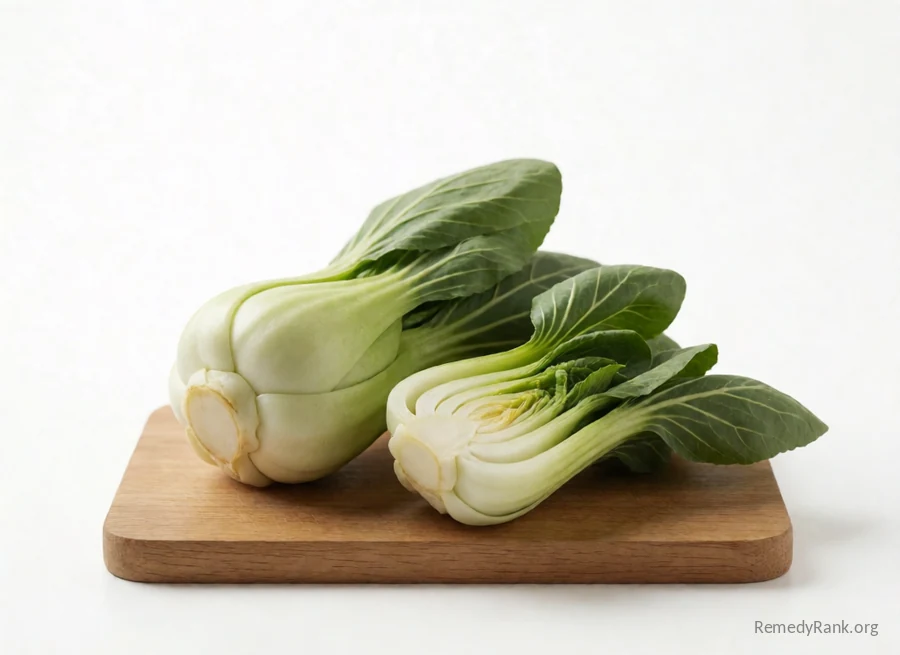
Bok choy is a mild, juicy Chinese cabbage with crisp white stalks and tender dark-green leaves.
📜 Where it comes from
Bok choy has been cultivated in China for many centuries, forming a staple leafy vegetable in traditional Chinese cooking and appearing in classical Chinese agricultural texts. It spread throughout East and Southeast Asian cuisine and, with waves of immigration, into Western markets over the past century. Traditional Chinese food culture valued it as a light, easily digested vegetable.
✨ Why it's good for you
- may help support bone health with calcium and vitamin K
- may help support healthy blood pressure with potassium
- may help support immune health with vitamin C
- may help support digestion with light, easy fiber
🥗 Nutrition
Per 1 cup chopped, cooked (170g) · about 20 calories
- Vitamin A 4468 IU
- Vitamin C 44.2mg
- Calcium 158mg
- Potassium 631mg
- Vitamin K 57.7mcg
Source: USDA FoodData Central
🥄 How to use it
Slice and stir-fry briefly, or add to soups in the last few minutes so the stems stay crisp and the leaves just wilt.
How much: A practical food amount is one to two cups of chopped bok choy several times a week, lightly cooked in stir-fries or soups.
Why it works: Nutrition science points to bok choy's calcium, potassium, and vitamin C content as support for bone strength and overall nutrient intake, especially valued for its low calorie density.
Show full details & how to prepare it
Bok choy is a mild, crunchy Chinese cabbage with crisp white stems and tender dark-green leaves. It cooks in moments and has almost no calories, yet it quietly delivers a useful spread of nutrients that support bones, blood, and immunity.
It is one of the better plant sources of well-absorbed calcium, and it carries potassium that helps balance blood pressure, plus vitamin C for immunity and iron and folate for the blood. Because it is so light and water-rich, it fits easily into meals meant to be filling without being heavy.
The kindest way to cook it is briefly — a quick stir-fry or a short simmer keeps the stems juicy and the leaves bright, preserving the vitamins. Normal cooked portions are gentle for nearly everyone.
Ways to prepare it
⚠️ Cautions
- It contains vitamin K — those on blood thinners should keep portions steady from week to week, since sudden changes can affect how the medication works.
- Very large raw amounts of any cabbage may affect the thyroid; cooking and normal portions avoid this.
📚 Learn more
🌿 Deeper natural detail
🩺 The conventional view
💬 Ask Remy about Bok Choy
📚 Resource confidence
Based on mentions in health references
Your vote is saved. Source endorsement totals come from books and studies (+7 per book, +5 per article). You can change your vote anytime from this device.
💬 Comments & experiences
Share what worked for you — and reply or 👍 like the experiences that resonate. Comments get a quick review before they appear publicly, to keep things safe and honest. Please don't make medical claims.
💚 Have an experience to share? Create a free account to join the conversation — your words might be exactly what someone else needs. Reading is always open to everyone.
Know a remedy like this?
Share a structured suggestion and our team will review it for the site.
Suggest a similar remedy