Herb
Balm of Gilead
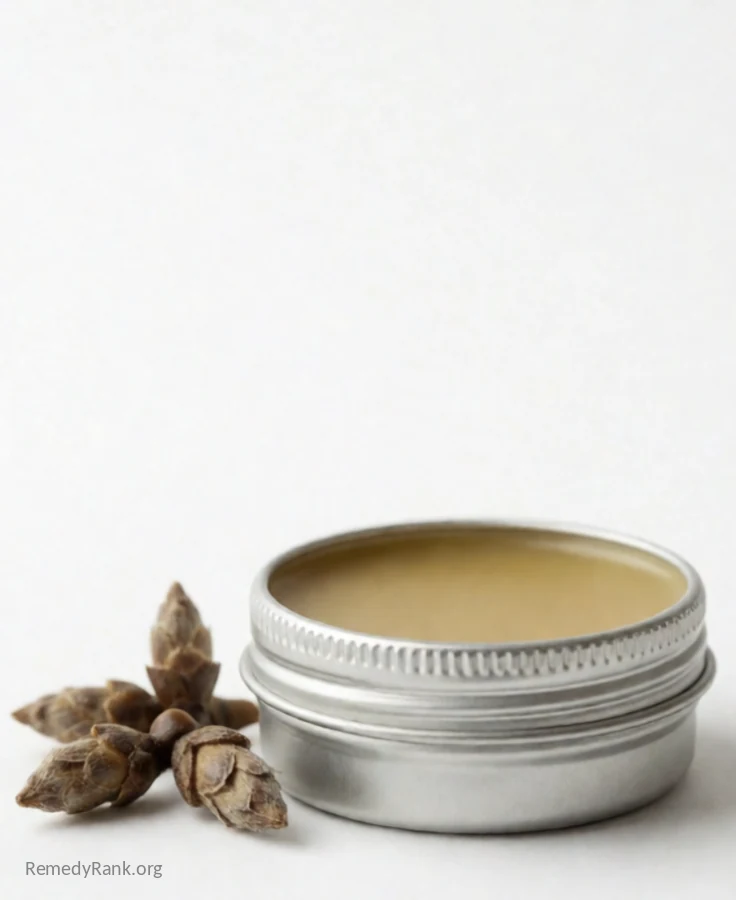
Balm of Gilead is a fragrant poplar-bud salve with a biblical name, traditionally rubbed on skin and used in chest rubs or lozenges for coughs.
 ⤢
⤢📊 How it ranks (our editor score) — 55/100Tap to see the breakdown
👶 Safe for children?
This remedy carries age-related cautions. Please read them before giving it to a child, and check with your pediatrician or pharmacist first.
- Poplar resin contains salicin, related to aspirin... avoid if allergic to aspirin/salicylates, and avoid giving it internally to children due to Reye's syndrome concerns
🌱 What it is
Balm of Gilead refers to a resinous salve or oil infusion made from the sticky buds of balsam poplar or cottonwood trees, named after the healing balm mentioned in Scripture.
📜 Where it comes from
Balm of Gilead takes its name from the fragrant healing balm mentioned in the Bible, associated with the region of Gilead and referenced in the book of Jeremiah. North American folk herbalists later applied the name to the resinous, sweet-smelling buds of balsam poplar and cottonwood trees, using them in salves and chest rubs for coughs. This blend of biblical naming and frontier herbal practice gave the remedy its lasting identity in Western folk medicine.
✨ Why it's good for you
- Traditionally used topically to soothe chapped, dry, or minor irritated skin
- Traditionally used as a chest rub or lozenge for a scratchy throat and cough
- A fragrant, long-standing folk remedy with a biblical namesake
🥄 How to use it
Apply a small amount of balm-of-gilead salveA soothing herbal ointment for the skin. How to make a salve → to chapped skin, minor cuts, or the chest as a rub, or use a lozengeA small medicated sweet that dissolves slowly to soothe the throat. How to make a lozenge → or syrupA sweet, thick herbal liquid that soothes the throat. How to make a syrup → made from the buds for a scratchy throat. Patch-test a small area of skin first since the resin can be sticky and occasionally irritating.
How much: Apply salveA soothing herbal ointment for the skin. How to make a salve → to skin as needed, or use lozenges/syrupA sweet, thick herbal liquid that soothes the throat. How to make a syrup → per product label.
Why it works: The aromatic resin in poplar buds is traditionally regarded as soothing and protective for skin and, when inhaled or taken as a lozengeA small medicated sweet that dissolves slowly to soothe the throat. How to make a lozenge →, softening to an irritated throat, though modern research is limited.
⚠️ Cautions
- Traditional use only... modern clinical evidence is very limited
- Do not apply to broken or deeply wounded skin without medical advice; a cut that is deep, won't stop bleeding, or shows signs of infection needs a doctor
- A cough lasting more than 2-3 weeks, or with fever or difficulty breathing, needs medical attention
📚 Learn more
🌿 Deeper natural detail
🩺 The conventional view
Curated links coming for this one.
💬 Ask Remy about Balm of Gilead
📚 Resource confidence
Based on mentions in health references
Your vote is saved. Source endorsement totals come from books and studies (+7 per book, +5 per article). You can change your vote anytime from this device.
💬 Comments & experiences
Share what worked for you — and reply or 👍 like the experiences that resonate. Comments get a quick review before they appear publicly, to keep things safe and honest. Please don't make medical claims.
💚 Have an experience to share? Create a free account to join the conversation — your words might be exactly what someone else needs. Reading is always open to everyone.
Know a remedy like this?
Share a structured suggestion and our team will review it for the site.
Suggest a similar remedy