Herb
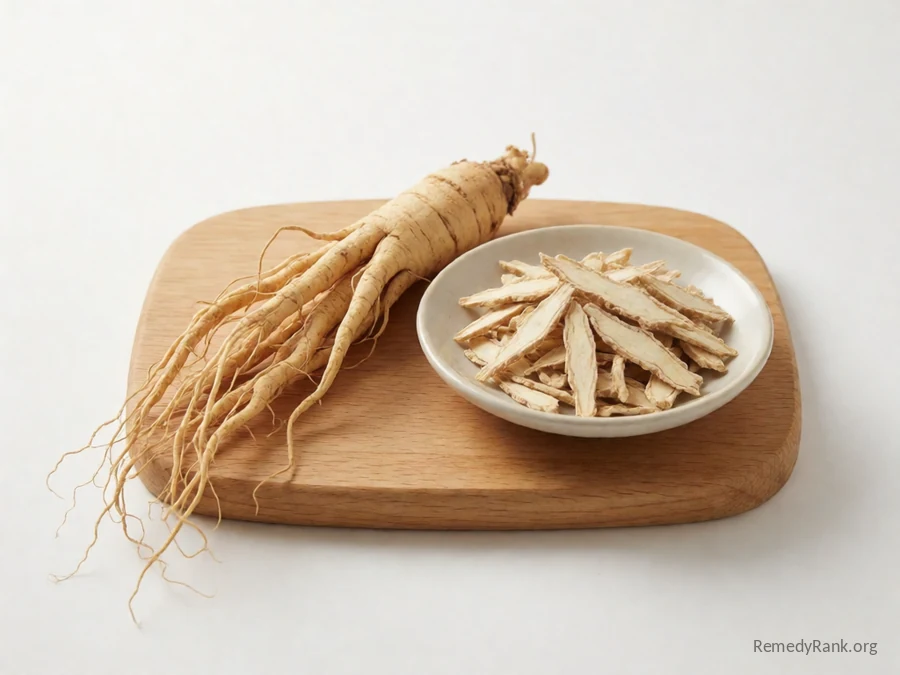
Asian & Siberian Ginseng
Traditional energizing root tonics, taken to help ease fatigue and support the body's response to stress.
 ⤢
⤢📊 How it ranks (our editor score) — 63/100Tap to see the breakdown
👶 Safe for children?
This remedy carries age-related cautions. Please read them before giving it to a child, and check with your pediatrician or pharmacist first.
- Interacts with blood thinners, diabetes medicines, and blood-pressure medicines; avoid in pregnancy, breastfeeding, and for children, and take a break after several weeks of use rather than using continuously.
🌱 What it is
Asian ginseng and Siberian ginseng (also called eleuthero) are root herbs long valued in traditional practice as "adaptogens"... plants believed to help the body adjust to stress and fatigue. They are typically taken as capsules, teas, or tinctures made from the dried root, usually in cycles rather than continuously.
📜 Where it comes from
Asian ginseng has been used in traditional Chinese medicine for over two thousand years as a prized root tonic believed to restore vitality and support long life, while Siberian ginseng, or eleuthero, comes from a related but botanically distinct plant used in traditional Russian and East Asian folk medicine for endurance and resilience under stress. Both roots gained the modern label of adaptogen in the 20th century, a term coined by Soviet researchers studying substances thought to help the body cope with stress.
✨ Why it's good for you
- Traditionally used to support energy during periods of fatigue
- Traditionally used to support the body's response to everyday stress
- Traditionally used to support mental alertness
- Traditionally used to support stamina during demanding seasons of life
🥗 Nutrition
Per 1 cup brewed tea / 1 tsp root · about 6 calories
- Ginsenosides (bioactive)
- Polysaccharides
- Trace B vitamins
Source: Nutrition estimate (per typical serving)
🥄 How to use it
Taken as a standardized root extract capsuleDried, powdered herb packed into a swallowable shell for a measured dose. How to make a capsule →, teaA warm drink made by steeping herbs in hot water. How to make a tea →, or tinctureA concentrated herbal extract made with alcohol. How to make a tincture →, generally in the morning, following the product label; not taken continuously for months on end.
How much: Standardized root extract is commonly taken at 200-400 mg a day, or as directed on the product label; many traditions suggest using it for a few weeks, then resting.
Why it works: Herbalists describe these roots as adaptogens, believed to help the body's stress-response systems find balance, while researchers have studied their compounds for possible effects on energy, immune activity, and mental fatigue.
Show full details & how to prepare it
Ginseng root has been used in East Asian traditional medicine for centuries as an energizing, stress-easing tonic. 'Siberian ginseng' (eleuthero) is a related but botanically different plant used similarly. Modern research on fatigue and stress is encouraging but not conclusive, and because ginseng is genuinely stimulating, it sits differently than a simple whole food... it is best used thoughtfully, in the morning, for a bounded stretch of time, with a doctor's input if you take other medicines.
Ways to prepare it
⚠️ Cautions
- A stimulating tonic... can disturb sleep, raise blood pressure, and cause jitteriness or headache, especially at higher doses or taken late in the day.
📚 Learn more
🌿 Deeper natural detail
🩺 The conventional view
💬 Ask Remy about Asian & Siberian Ginseng
📚 Resource confidence
Based on mentions in health references
Your vote is saved. Source endorsement totals come from books and studies (+7 per book, +5 per article). You can change your vote anytime from this device.
💬 Comments & experiences
Share what worked for you — and reply or 👍 like the experiences that resonate. Comments get a quick review before they appear publicly, to keep things safe and honest. Please don't make medical claims.
💚 Have an experience to share? Create a free account to join the conversation — your words might be exactly what someone else needs. Reading is always open to everyone.
Know a remedy like this?
Share a structured suggestion and our team will review it for the site.
Suggest a similar remedy