Educational information only — RemedyRank does not diagnose, treat, or cure disease. Read our full disclaimer.

Herb

Licorice Root

72/100
RemedyRank score

A naturally sweet root that soothes a sore throat and calms the burn of indigestion.

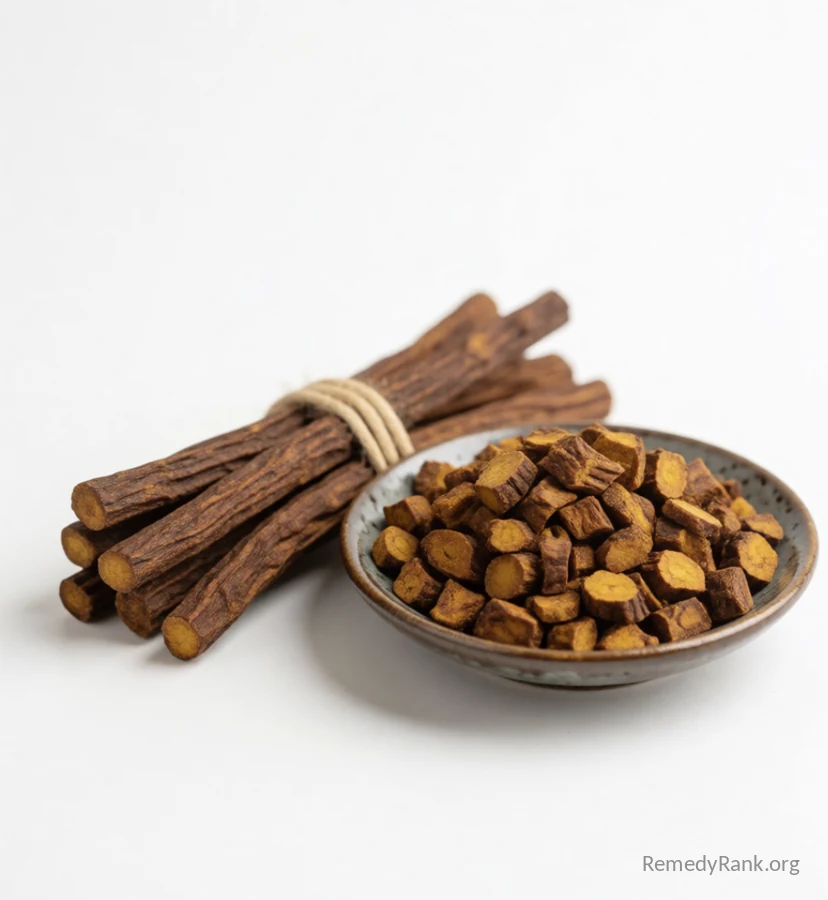
Dried brown licorice root sticks next to a small ceramic dish of chopped root.
📊 How it ranks (our editor score) — 72/100Tap to see the breakdown
Source quality
Safety
Simplicity
Affordability
Lifestyle fit
Eight-laws alignment
User feedback

🌱 What it is

Licorice root comes from a legume plant whose long roots carry a natural sweetness many times stronger than sugar.

📜 Where it comes from

Licorice root has an ancient history stretching from Chinese herbal medicine, where it is considered a harmonizing ingredient in many formulas, to Greco-Roman physicians who recommended it for the throat and stomach. Ancient Egyptian tombs have even been found containing licorice root, suggesting its value was recognized very early. It later became a common flavoring and remedy across the Middle East and Europe for soothing sore throats and settling the stomach.

✨ Why it's good for you

  • May help support a soothed, less scratchy throat
  • May help support comfort with occasional indigestion
  • May help support a calmer stomach lining short-term

🥗 Nutrition

Per 1 cup brewed tea (240ml) · about 5 calories

  • Glycyrrhizin (bioactive)
  • Flavonoids
  • Negligible macronutrients

Source: Nutrition estimate (per typical serving)

🥄 How to use it

Sip as a teaA warm drink made by steeping herbs in hot water. How to make a tea, suck on a licorice-root lozengeA small medicated sweet that dissolves slowly to soothe the throat. How to make a lozenge for the throat, or use a special 'DGL' form for the stomach. Keep use short-term.

How much: As teaA warm drink made by steeping herbs in hot water. How to make a tea, up to 1–2 cups a day for no more than 1–2 weeks at a stretch. For indigestion, chewable DGL tablets are taken per the label before meals — and DGL is the safer choice for regular use.

Why it works: Antiviral; relieves sore throat.

Show full details & how to prepare it

Licorice root is famously, naturally sweet — many times sweeter than sugar — and that sweetness comes with real soothing power. Its compounds form a gentle, anti-irritant film, which is why licorice has long calmed a raw sore throat, eased a dry cough, and settled the burning discomfort of indigestion and acid reflux.

There is an important catch with whole licorice. One of its compounds, glycyrrhizin, can cause the body to hold onto sodium and lose potassium when used regularly, which may raise blood pressure. So whole licorice is best kept to short stretches and avoided by anyone with high blood pressure, heart or kidney concerns, or during pregnancy.

Happily, there is a clever solution for the stomach: DGL, or deglycyrrhizinated licorice, has that troublesome compound removed. DGL keeps the soothing benefit for indigestion without the blood-pressure worry, and is the form most people should reach for if they want to use licorice more than occasionally.

Ways to prepare it

Throat tea (decoction): Simmer 1 teaspoon dried licorice root in 1½ cups water, covered, for 10 minutes, then strain. Sip up to 1–2 cups a day, short-term, for a sore throat or dry cough.
DGL for the stomach: For indigestion or reflux, chew a DGL tablet about 20 minutes before meals as directed on the label — DGL avoids the blood-pressure concern of whole licorice.
Soothing lozenge: A licorice-root lozengeA small medicated sweet that dissolves slowly to soothe the throat. How to make a lozenge dissolved slowly coats and calms a scratchy throat on the go. Choose DGL lozenges if you use them often.

🔬 Let's get technical

The scientific view, plainly reported. Hover a dotted word for its meaning.

What's in it

Licorice root's characteristic sweetness and much of its studied activity come from , a roughly 50 times sweeter than sucrose, along with its metabolite and a range of including liquiritin.

Mechanism of action

, the compound produced when gut bacteria metabolize , inhibits the enzyme , which normally inactivates in -sensitive tissue; blocking this enzyme allows cortisol to act on aldosterone receptors, producing a mineralocorticoid-like effect of sodium retention and potassium loss that explains licorice's well-documented capacity to raise blood pressure with sustained intake. Separately, licorice and glycyrrhizin itself show and mild anti-inflammatory activity on gastric and esophageal mucosa, with some evidence of increasing mucus secretion and activity that supports mucosal defense, relevant to its traditional use for indigestion and gastric irritation. Deglycyrrhizinated licorice preparations remove most of the glycyrrhizin specifically to retain these mucosal-soothing flavonoid effects while avoiding the mineralocorticoid mechanism.

Current pharmacological applications

Deglycyrrhizinated licorice (DGL) has been studied in small clinical trials for dyspepsia and as adjunct therapy alongside standard treatment for peptic ulcer, with modest supportive evidence for symptom relief. Whole licorice root and -containing extracts are studied for cough and sore throat as a , largely on traditional use and small trials rather than large-scale confirmation. The effect of sustained glycyrrhizin intake is well documented in case reports and pharmacological studies, making licorice one of the more mechanistically well-characterized herbs regarding a specific, dose-related physiological effect.

Every underlined word is collected on the technical glossary.

🧺 Other forms of Licorice Root

These used to be pages of their own. They are the same remedy in a different form — the differences worth knowing are below.

LicoriceHerb

A soothing, adaptogenic root traditionally used for the throat, digestionHow your body breaks food down into pieces small enough to use for energy. More →, and adrenal support.

How this form is used: Simmer licorice root in water and drink as a teaA warm drink made by steeping herbs in hot water. How to make a tea, or chew deglycerinated licorice (DGL) for heartburn relief. Use short-term and under guidance as part of an adaptogenic herbal blend.

Cautions for this form
  • Regular (non-DGL) licorice can raise blood pressure and cause water retention with prolonged use — use short-term and under supervision
  • Not for use during pregnancy
  • Avoid if you have high blood pressure, heart, or kidney disease unless cleared by a doctor. Cystic fibrosis requires ongoing specialized medical treatment, not herbal remedies

Learn more: Examine.com — Licorice

Natural Remedies Encyclopedia (7th ed.)

Shop licorice root tea on Amazon

Formerly its own page at /remedies/licorice, now redirected here.

⚠️ Cautions

  • Real licorice can raise blood pressure and lower potassium with regular use — avoid if you have high blood pressure, heart, or kidney problems, or are pregnant.
  • Keep use to short stretches (about 1–2 weeks), not daily for long periods.
  • DGL (deglycyrrhizinated) licorice avoids the blood-pressure concern.

📚 Learn more

💬 Ask Remy about Licorice Root

Hi, I'm Remy 🌿 Ask me anything about Licorice Root and I'll answer from this page.

📚 Resource confidence

Based on mentions in health references

0 ratings
Tap to rate:
Did this remedy help you? Add your experience — source endorsements plus visitor feedback rank it on the ailment pages:0

Your vote is saved. Source endorsement totals come from books and studies (+7 per book, +5 per article). You can change your vote anytime from this device.

💬 Comments & experiences

Share what worked for you — and reply or 👍 like the experiences that resonate. Comments get a quick review before they appear publicly, to keep things safe and honest. Please don't make medical claims.

💚 Have an experience to share? Create a free account to join the conversation — your words might be exactly what someone else needs. Reading is always open to everyone.

Know a remedy like this?

Share a structured suggestion and our team will review it for the site.

Suggest a similar remedy