Herb
Antibiotic Herbs
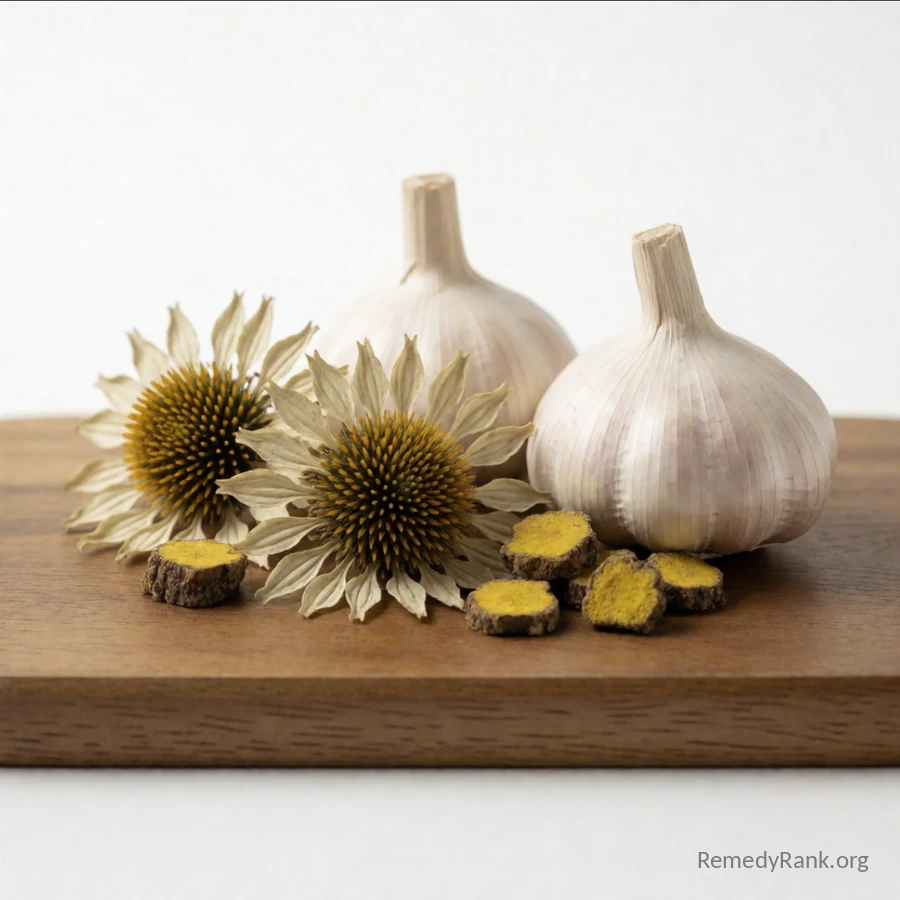
A group of traditional infection-fighting herbs (such as echinacea, garlic, and goldenseal) used to support the body during infection.
 ⤢
⤢📊 How it ranks (our editor score) — 48/100Tap to see the breakdown
🌱 What it is
A category of herbs traditionally used to help the body resist bacterial and parasitic infection, taken as tea, tincture, or capsule.
📜 Where it comes from
Herbs such as echinacea, garlic, and goldenseal each carry independent traditions: echinacea among Native American Plains peoples for wounds and infection, garlic since ancient Egypt and Rome for vigor and illness, and goldenseal among Cherokee and other Native nations for sores and digestive complaints. Herbalists later grouped them under the modern category of infection-fighting or antibiotic herbs as Western herbal medicine organized itself in the 19th and 20th centuries.
✨ Why it's good for you
- Traditional support alongside medical care
- Many options (garlic, echinacea, goldenseal, etc.)
- Widely available
🥄 How to use it
Take a chosen herbA plant, or part of one, used for flavor, food, or gentle health support. More → (e.g., echinacea, garlic, or goldenseal) internally as directed on the product label for a limited course during illness.
How much: As directed on the specific herbA plant, or part of one, used for flavor, food, or gentle health support. More →'s product label, for a limited course.
Why it works: Various compounds in these herbs are traditionally believed to have antimicrobial or immune-supporting properties.
🔬 Let's get technical
The scientific view, plainly reported. Hover a dotted word for its meaning.
What's in it
This traditional grouping spans botanically unrelated plants with distinct chemistries: garlic contributes the , formed when the bulb is crushed; echinacea contributes and ; and goldenseal contributes , an also found in barberry and Oregon grape.
Mechanism of action
and its breakdown products show activity in laboratory settings against a range of bacteria and fungi, largely through reaction with on microbial enzymes, though allicin is unstable and its levels drop quickly after garlic is cut or cooked. has documented antimicrobial and antidiarrheal activity and in some animal studies, and separately influences intestinal glucose and lipid handling, though human absorption is low and variable. Echinacea's and have been studied for modulation of cell activity, including effects on production by , though translating these in vitro findings to a meaningful clinical immune boost has proven difficult. Because 'antibiotic herbs' is a traditional-use category rather than a shared pharmacological class, the mechanisms behind its members are largely independent of one another.
Current pharmacological applications
Garlic's activity is well documented in laboratory studies but has not translated into robust clinical evidence for treating active infections in humans, where absorption, stability, and dosing are limiting factors. Echinacea has been studied fairly extensively for upper respiratory infection prevention and duration, with meta-analyses showing small, inconsistent effects that vary considerably by which plant part and preparation is used. Goldenseal and have supporting laboratory and limited clinical data for gastrointestinal infections, but goldenseal specifically is understudied in humans and is not interchangeable with berberine-only preparations. Overall, evidence for this category is strongest at the laboratory level and considerably thinner and more mixed in clinical human trials.
Every underlined word is collected on the technical glossary.
⚠️ Cautions
- Serious infections such as rabies, tularemia, listeriosis, and schistosomiasis are potentially life-threatening and require prompt medical diagnosis and treatment — herbs are supportive only, never a substitute.
- Goldenseal is not recommended in pregnancy.
- Check for interactions with prescription medications.
📚 Learn more
🌿 Deeper natural detail
🩺 The conventional view
💬 Ask Remy about Antibiotic Herbs
📚 Resource confidence
Based on mentions in health references
Your vote is saved. Source endorsement totals come from books and studies (+7 per book, +5 per article). You can change your vote anytime from this device.
💬 Comments & experiences
Share what worked for you — and reply or 👍 like the experiences that resonate. Comments get a quick review before they appear publicly, to keep things safe and honest. Please don't make medical claims.
💚 Have an experience to share? Create a free account to join the conversation — your words might be exactly what someone else needs. Reading is always open to everyone.
Know a remedy like this?
Share a structured suggestion and our team will review it for the site.
Suggest a similar remedy