Herb
Yarrow
A feathery wayside flower, used as a tea or a wound wash, traditionally for stopping minor bleeding, easing fevers, and settling digestion.
 ⤢
⤢📊 How it ranks (our editor score) — 80/100Tap to see the breakdown
🌱 What it is
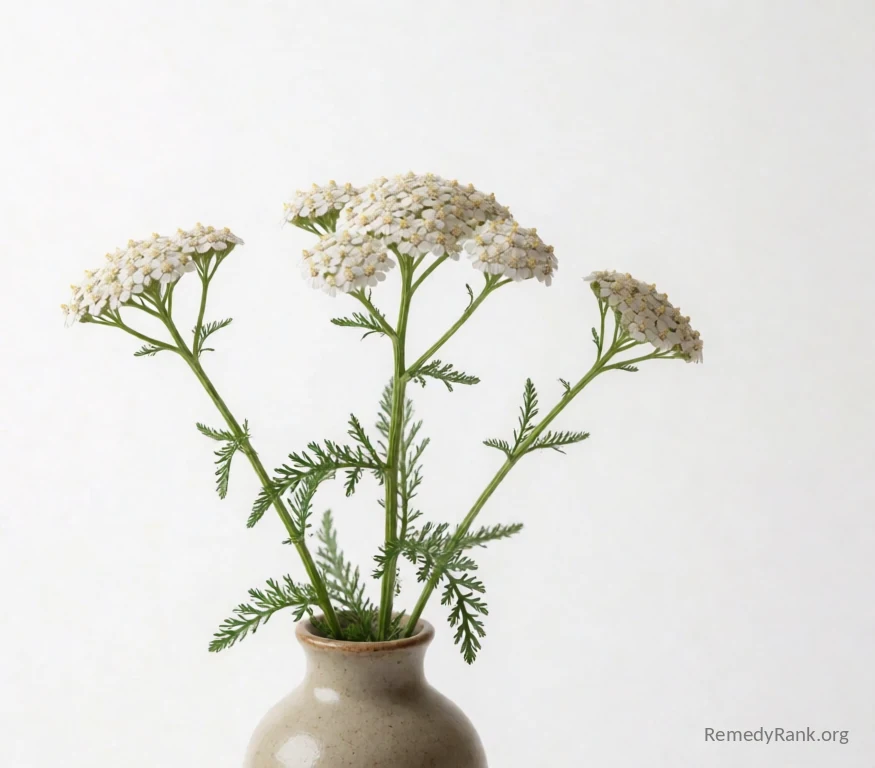
Yarrow is a wild flowering plant with fine, feather-like leaves and clusters of small white or pink blooms, traditionally gathered for tea and topical washes.
📜 Where it comes from
Yarrow earned a reputation among Greco-Roman soldiers, who are said to have carried it onto battlefields to help stop bleeding from wounds, giving it old nicknames tied to war and healing. Medieval European herbalists continued this use alongside brewing yarrow tea for fevers and digestive upset. That old battlefield reputation for stopping minor bleeding has stayed attached to yarrow through centuries of folk use.
✨ Why it's good for you
- Traditionally used to help ease a mild fever
- May help support healthy digestion
- Traditionally applied to help minor cuts and scrapes
- Often used to support the body's natural response to minor bleeding
🥗 Nutrition
Per 1 cup brewed tea (240ml) · about 2 calories
- Flavonoids
- Volatile oils (azulene)
- Negligible macronutrients
Source: Nutrition estimate (per typical serving)
🥄 How to use it
Steep 1 teaspoon of dried yarrow in hot water for 10 minutes and sip for a fever or digestive upset; a cooled, strong infusionA tea made by steeping soft leaves or flowers in hot water. How to make an infusion → can be dabbed on a minor cut or scrape.
How much: As teaA warm drink made by steeping herbs in hot water. How to make a tea →, 1 teaspoon dried herbA plant, or part of one, used for flavor, food, or gentle health support. More → per cup; as a wash, a stronger cooled infusionA tea made by steeping soft leaves or flowers in hot water. How to make an infusion → dabbed on minor wounds.
Why it works: Herbalists attribute yarrow's traditional wound and fever use to compounds thought to help constrict tissue and encourage sweating, though such claims rest on tradition more than modern clinical proof.
Show full details & how to prepare it
Yarrow is a feathery-leaved roadside flower with a long battlefield reputation... the 'soldier's herbA plant, or part of one, used for flavor, food, or gentle health support. More →'... for helping minor wounds stop bleeding. Beyond that, it's a classic fever herb (it encourages a gentle sweat) and a bitter that settles digestionHow your body breaks food down into pieces small enough to use for energy. More →.
It makes a slightly sharp teaA warm drink made by steeping herbs in hot water. How to make a tea →, and a strong cooled infusionA tea made by steeping soft leaves or flowers in hot water. How to make an infusion → can be dabbed on a small cut or scrape. It's a more active herbA plant, or part of one, used for flavor, food, or gentle health support. More → than a kitchen mint, so it's best avoided in pregnancy, and deep or heavy bleeding always needs real medical care, not a herb.
Ways to prepare it
⚠️ Cautions
- Avoid in pregnancy (it can stimulate the uterus).
- Those allergic to daisies or ragweed may react; can increase sun sensitivity in some.
- May interact with blood thinners and blood-pressure medicines; deep or heavily bleeding wounds need care beyond a home herb.
📚 Learn more
🌿 Deeper natural detail
🩺 The conventional view
🔎 What this addresses
Where Yarrow fits into a condition's cause-and-symptom picture — some conditions it works on the root cause of, others it mainly soothes.
💬 Ask Remy about Yarrow
📚 Resource confidence
Based on mentions in health references
Your vote is saved. Source endorsement totals come from books and studies (+7 per book, +5 per article). You can change your vote anytime from this device.
💬 Comments & experiences
Share what worked for you — and reply or 👍 like the experiences that resonate. Comments get a quick review before they appear publicly, to keep things safe and honest. Please don't make medical claims.
💚 Have an experience to share? Create a free account to join the conversation — your words might be exactly what someone else needs. Reading is always open to everyone.
Know a remedy like this?
Share a structured suggestion and our team will review it for the site.
Suggest a similar remedy