Therapy
Warming Sock (Wet Sock) Treatment
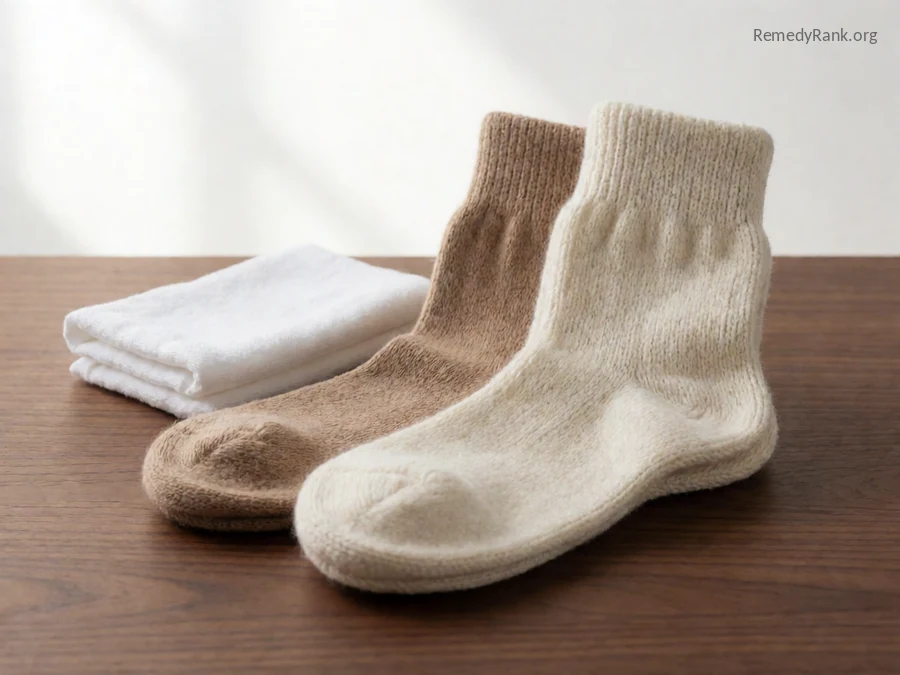
A classic bedtime hydrotherapy: cold, wet socks covered by dry wool, which the body warms overnight - a traditional comfort for colds and congestion.
 ⤢
⤢📊 How it ranks (our editor score) — 77/100Tap to see the breakdown
🌱 What it is
The wet sock treatment is a bedtime hydrotherapy method in which cold, damp cotton socks are covered with dry wool socks, allowing the feet to warm gradually overnight.
📜 Where it comes from
The wet sock treatment grew out of the nineteenth-century hydrotherapy movement associated with the Battle Creek health reform and sanitarium tradition, particularly the natural healing methods promoted at Battle Creek under John Harvey Kellogg. It was recommended as a simple home remedy to help the body respond to the early stages of a cold or congestion overnight. The practice has continued in natural-health household traditions into the present.
🙏 Begin with prayer
Prayer is the first remedy, not the last resort. Whether you are facing this yourself, caring for someone who is, or simply reading to understand — here is a simple prayer you are welcome to make your own, in your name or in theirs:
Creator God, thank You for the body You designed to warm itself and rest through the night, and for this old, simple treatment of cool cloth and warm wool. Bless it to comfort me as I sleep, easing my cold and my stuffy throat. If my fever climbs high or my breathing grows hard, give me wisdom to know what this body needs. In Jesus' name, Amen.
“It is vain for you to rise up early, to sit up late, to eat the bread of sorrows: for so he giveth his beloved sleep.”— Psalm 127:2
🥄 How to use it
Warm your feet first, put on cold wet (well-wrung) cotton socks covered by thick dry wool socks, and go to bed; remove them in the morning.
How much: Use once at bedtime during a cold, repeating nightly for a few nights as needed, as long as the feet warm comfortably.
Why it works: Practitioners attribute the wet sock treatment's effect to a reflex response where the body increases circulation to the feet to warm the cold, damp fabric, which is thought to draw blood away from congested areas and support the body's natural response to illness.
Show full details & how to prepare it
The warming sock treatment is a gentle piece of old-fashioned hydrotherapy, a tradition in natural-care homes. The idea sounds backwards at first: you put cold, wet socks on warm feet at bedtime, then cover them with thick dry wool socks. In response, the body sends a flush of warm blood to the feet to heat them, and they dry as you sleep.
That gentle stimulation of circulation is the point. People have long used it during a head cold or sinus congestion, a scratchy sore throat, or a low fever, finding it eases the stuffy, achy feeling and helps them settle into a more restful sleep. It costs almost nothing and is soothing to do.
Two things make it safe and pleasant: warm the feet well first - a quick warm foot bath is ideal - and be sure they actually warm up under the socks. It is not for cold feet, poor circulation, or numb diabetic feet. For an ordinary cold, though, it is a comforting bedtime ritual.
Ways to prepare it
⚠️ Cautions
- Always warm the feet thoroughly first and make sure they warm up under the socks - never do this with cold feet or poor circulation.
- Avoid in diabetes with nerve damage, poor circulation, or any foot numbness or skin breakdown without a doctor's advice.
- This is a comfort measure - seek care for high fever, trouble breathing, or an illness that worsens.
📚 Learn more
🌿 Deeper natural detail
Curated links coming for this one.
🩺 The conventional view
🔎 What this addresses
Where Warming Sock (Wet Sock) Treatment fits into a condition's cause-and-symptom picture — some conditions it works on the root cause of, others it mainly soothes.
Eases the symptoms of
For these, it calms the condition without addressing what drives it.
- Eczema — Damp cotton coverings over a moisturizer — the 'wet-wrap' technique — are used clinically to calm severe flares by trapping in moisture; the wet-wrap approach itself has decent clinical support, even without a sock-specific trial.
💬 Ask Remy about Warming Sock (Wet Sock) Treatment
📚 Resource confidence
Based on mentions in health references
Your vote is saved. Source endorsement totals come from books and studies (+7 per book, +5 per article). You can change your vote anytime from this device.
💬 Comments & experiences
Share what worked for you — and reply or 👍 like the experiences that resonate. Comments get a quick review before they appear publicly, to keep things safe and honest. Please don't make medical claims.
💚 Have an experience to share? Create a free account to join the conversation — your words might be exactly what someone else needs. Reading is always open to everyone.
Know a remedy like this?
Share a structured suggestion and our team will review it for the site.
Suggest a similar remedy