Vegetable
Tomato
A juicy fruit rich in lycopene, an antioxidant linked to heart and prostate health — and most available when cooked.
 ⤢
⤢📊 How it ranks (our editor score) — 94/100Tap to see the breakdown
🌱 What it is
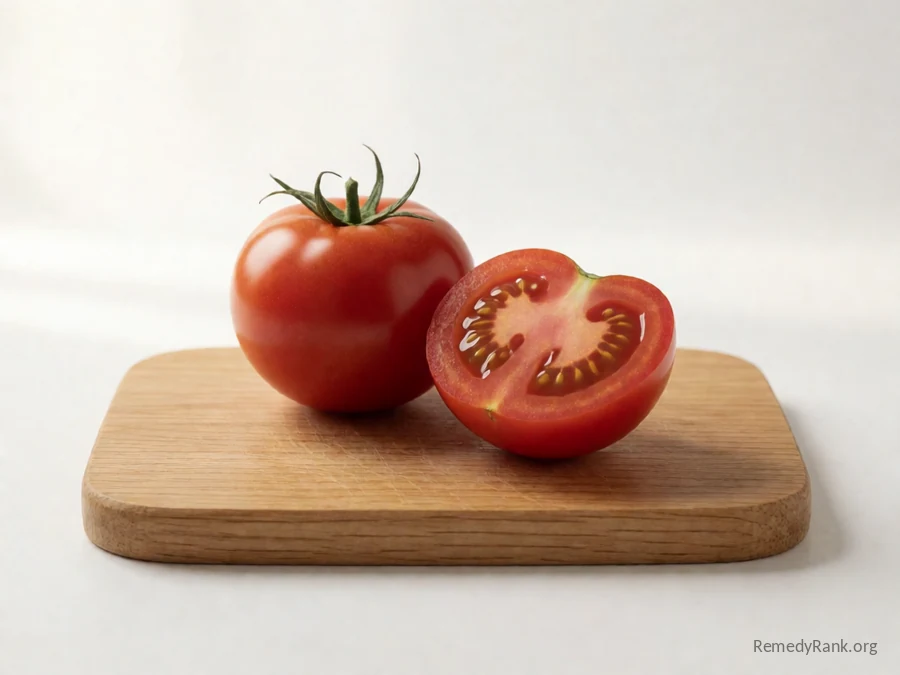
Tomatoes are bright red fruits that we usually eat like a vegetable. Their red color comes from lycopene, a plant nutrient that may be good for the heart and skin.
📜 Where it comes from
Tomatoes originated in South America, were cultivated by indigenous peoples of Mexico, and were brought to Europe by Spanish explorers in the 1500s, where they were initially viewed with suspicion before becoming central to Mediterranean cooking. Twentieth-century nutrition research turned attention to the fruit's lycopene content and its link to heart and prostate health.
✨ Why it's good for you
- A good source of vitamin C and the antioxidant lycopene
- Often linked with a healthy heart and blood pressure
- Mostly water, so they help you stay hydrated and full
🥗 Nutrition
Per 1 medium tomato (123g) · about 22 calories
- Vitamin C 28% DV
- Potassium 8% DV
- Lycopene
- Vitamin K 10% DV
Source: USDA FoodData Central
🥄 How to use it
Enjoy tomatoes raw or, even better for lycopene, cooked with a little oil (as in a simmered sauce), which makes the antioxidantA helpful substance in colorful fruits and vegetables that protects your cells from everyday wear and tear. More → easier for the body to absorb.
How much: Regular servings, raw or cooked with a little oil.
Why it works: Researchers point to lycopene, the antioxidantA helpful substance in colorful fruits and vegetables that protects your cells from everyday wear and tear. More → that gives tomatoes their red color, as supporting heart health, noting it becomes more available to the body when tomatoes are cooked.
Show full details & how to prepare it
Tomatoes are rich in lycopene, the red antioxidantA helpful substance in colorful fruits and vegetables that protects your cells from everyday wear and tear. More → studied for supporting the heart and the prostate. Interestingly, cooking tomatoes — and pairing them with a little oil — makes their lycopene far easier for the body to absorb, so a simmered sauce is a nutritional plus.
Ways to prepare it
⚠️ Cautions
- A whole food, very safe; cooking with a little fat boosts lycopene absorption.
- Their acidity can trigger reflux in some people.
- Otherwise no significant cautions.
📚 Learn more
🌿 Deeper natural detail
🩺 The conventional view
💬 Ask Remy about Tomato
📚 Resource confidence
Based on mentions in health references
Your vote is saved. Source endorsement totals come from books and studies (+7 per book, +5 per article). You can change your vote anytime from this device.
💬 Comments & experiences
Share what worked for you — and reply or 👍 like the experiences that resonate. Comments get a quick review before they appear publicly, to keep things safe and honest. Please don't make medical claims.
💚 Have an experience to share? Create a free account to join the conversation — your words might be exactly what someone else needs. Reading is always open to everyone.
Know a remedy like this?
Share a structured suggestion and our team will review it for the site.
Suggest a similar remedy