Vegetable
Sauerkraut (Fermented Cabbage)
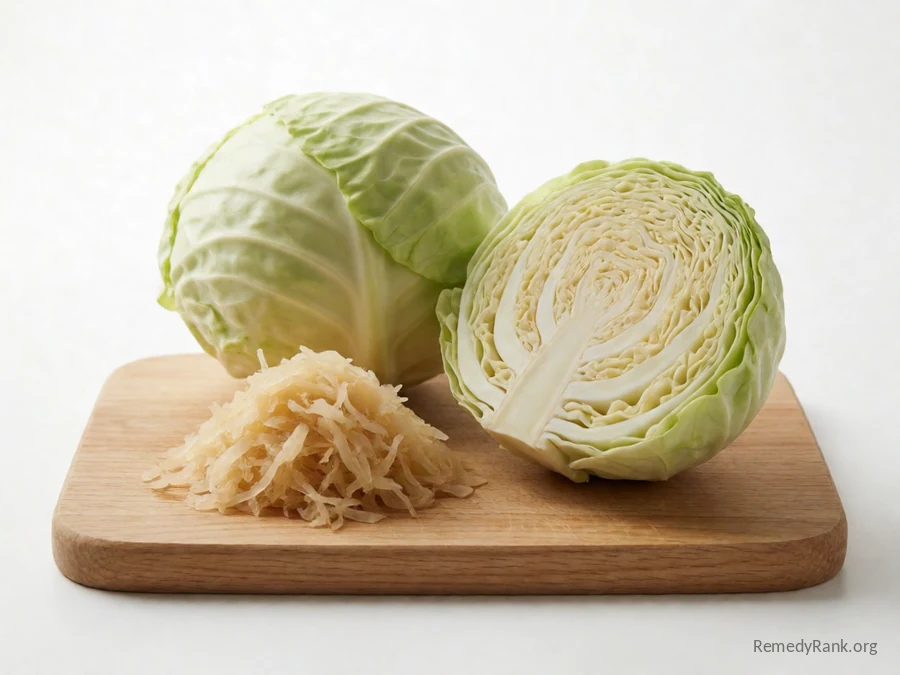
Naturally fermented cabbage, rich in living cultures and tangy flavor - a traditional food for a happy, well-balanced gut.
 ⤢
⤢📊 How it ranks (our editor score) — 81/100Tap to see the breakdown
🌱 What it is
Sauerkraut is cabbage that has been finely shredded, salted, and left to ferment naturally over days or weeks. The salt and fermentation create a tangy, crunchy food alive with beneficial bacteria when left raw and unpasteurized.
📜 Where it comes from
Sauerkraut's fermentation tradition dates back centuries in Central and Eastern Europe, particularly Germany, though the technique of preserving cabbage through fermentation is believed to trace back even further to ancient China, where laborers reportedly fermented cabbage in rice wine. European immigrants carried sauerkraut-making traditions to the Americas, where it became a beloved preserved food. Traditional diets valued fermented cabbage both for its tangy flavor and its long shelf life through winter.
✨ Why it's good for you
- Traditionally used to support a healthy gut with its live, natural cultures
- May help support healthy digestion when eaten regularly in small amounts
- May help support vitamin C intake, since fermentation helps preserve it
- Traditionally used to add tangy flavor and variety to simple meals
🥗 Nutrition
Per 1/2 cup (75 g) · about 14 calories
- Sodium 470 mg
- Fiber 1.4 g
- Vitamin C 8.5 mg
- Vitamin K 13 mcg
Source: USDA FoodData Central
🥄 How to use it
Eat a small forkful of raw, unpasteurized sauerkraut as a side or topping; keep it cold and uncooked to preserve its live cultures.
How much: Enjoy a small forkful (about 1-2 tablespoons) of raw sauerkraut with a meal, once a day or a few times a week, building up gradually.
Why it works: Nutrition science points to sauerkraut's naturally occurring beneficial bacteria, produced during fermentation, as support for a healthy balance of gut microorganisms.
Show full details & how to prepare it
Sauerkraut is cabbage transformed by simple, natural fermentation: shredded cabbage and salt, left to bubble away as friendly bacteria turn it tangy and sour. Those same bacteria are the gift - a serving of raw, unpasteurized sauerkraut delivers living cultures along with fiber and vitamin C.
Those live cultures are why it has a place at the table for digestionHow your body breaks food down into pieces small enough to use for energy. More →. Folded into meals as a small, sharp side, sauerkraut helps feed a balanced gut, which in turn supports comfortable digestion, less bloating, and regular, easy bowel movements. A little goes a long way, both for flavor and for the gut.
Two simple points keep it wholesome: choose the raw, refrigerated kind, because the heat used to can shelf-stable kraut kills the very cultures you want, and keep portions modest, since it is salty and, until your gut adjusts, a large helping can cause gas. As a small daily relish, it is a delicious way to care for your insides.
Ways to prepare it
⚠️ Cautions
- Sauerkraut is high in salt, so go easy if you watch your sodium or have high blood pressure.
- Choose raw, unpasteurized kraut for live cultures - the canned, shelf-stable kind has been heated and lacks them.
- Start with a small amount, since fermented foods can cause gas or bloating until your gut adjusts; introduce slowly if you take it for digestion.
📚 Learn more
🌿 Deeper natural detail
Curated links coming for this one.
💬 Ask Remy about Sauerkraut (Fermented Cabbage)
📚 Resource confidence
Based on mentions in health references
Your vote is saved. Source endorsement totals come from books and studies (+7 per book, +5 per article). You can change your vote anytime from this device.
💬 Comments & experiences
Share what worked for you — and reply or 👍 like the experiences that resonate. Comments get a quick review before they appear publicly, to keep things safe and honest. Please don't make medical claims.
💚 Have an experience to share? Create a free account to join the conversation — your words might be exactly what someone else needs. Reading is always open to everyone.
Know a remedy like this?
Share a structured suggestion and our team will review it for the site.
Suggest a similar remedy