Herb
Sage
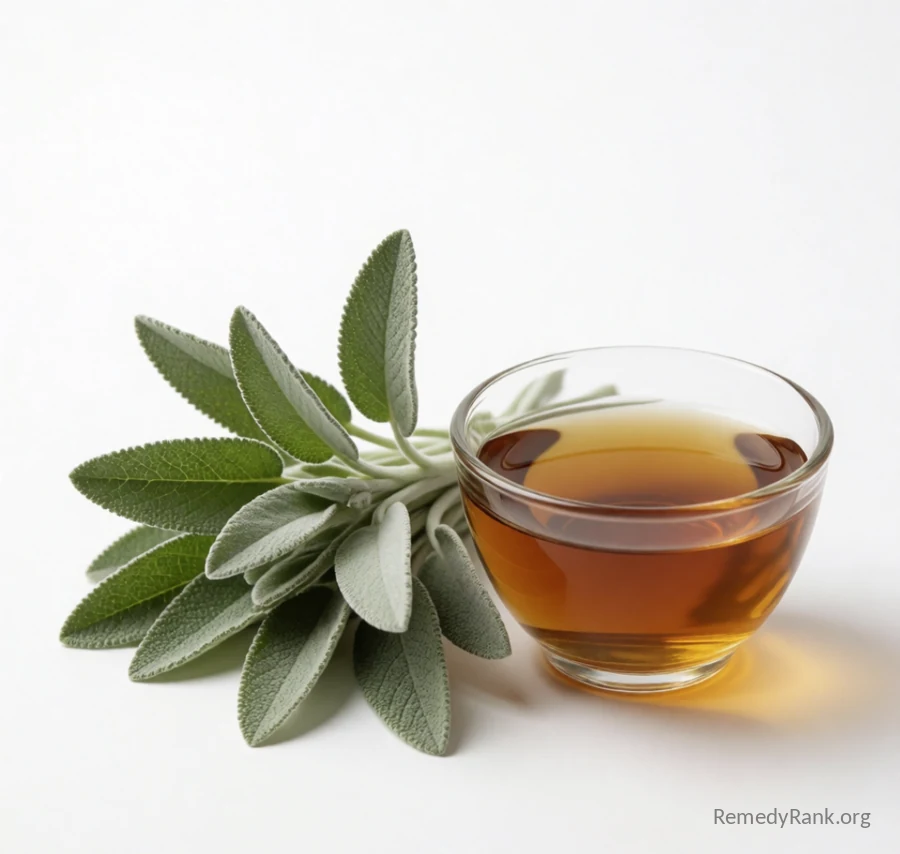
A common kitchen herb, brewed strong as a gargle or tea, traditionally used for sore throats, tender gums, and hot flushes.
 ⤢
⤢📊 How it ranks (our editor score) — 80/100Tap to see the breakdown
🌱 What it is
Sage is a fragrant herb with velvety leaves. Beyond seasoning food, a cooled sage tea has been used for generations as a soothing gargle.
📜 Where it comes from
Sage was highly regarded by Greco-Roman physicians, whose very name for the plant reflects the Latin word for healing, and it was a staple of medieval European herbal gardens used for sore throats, gum troubles, and hot flushes. Its reputation as a gargle herb in particular carried through centuries of European folk medicine. It remains a common kitchen herb that doubles as an old-fashioned remedy in many households today.
✨ Why it's good for you
- A warm sage gargle may soothe a sore, scratchy throat
- Its fresh scent can help with stale breath
- Adds savory flavor to beans, soups, and grains
🥗 Nutrition
Per 1 tsp ground (0.7g) · about 2 calories
- Vitamin K 12mcg
- Iron 0.2mg
- Calcium 12mg
- Rosmarinic acid
Source: USDA FoodData Central
🥄 How to use it
Steep 1 teaspoon of dried sage in hot water for 10 minutes; cool slightly and gargleSwishing a warm liquid at the back of the throat, then spitting. How to make a gargle → for a sore throat, or sip as a teaA warm drink made by steeping herbs in hot water. How to make a tea →. Use culinary amounts and short courses.
How much: A common amount is 1 teaspoon dried sage per cup as a gargleSwishing a warm liquid at the back of the throat, then spitting. How to make a gargle → or teaA warm drink made by steeping herbs in hot water. How to make a tea →, up to a few times daily for a short stretch — not for prolonged daily use in large amounts.
Why it works: Contains compounds with antioxidantA helpful substance in colorful fruits and vegetables that protects your cells from everyday wear and tear. More → and memory-related effects.
Show full details & how to prepare it
Sage is a familiar grey-green kitchen herbA plant, or part of one, used for flavor, food, or gentle health support. More → with a long second life as a medicine. Brewed strong and cooled, it makes a time-honored gargleSwishing a warm liquid at the back of the throat, then spitting. How to make a gargle → for a sore, scratchy throat and tender gums, and a sip-able teaA warm drink made by steeping herbs in hot water. How to make a tea → traditionally used to ease the hot flushes and night sweats of menopause.
Sage is wonderful in food and fine as an occasional teaA warm drink made by steeping herbs in hot water. How to make a tea →, but it contains a compound called thujone that can build up with very large or long-term doses, so it's best used in modest amounts and short courses — and the concentrated essential oilA very concentrated plant oil — always diluted before it touches skin. How to make an essential oil → should never be swallowed.
Ways to prepare it
🔬 Let's get technical
The scientific view, plainly reported. Hover a dotted word for its meaning.
What's in it
Sage leaf contains and other compounds, , and a whose constituents include and camphor.
Mechanism of action
and related exert an , protein-binding action on tissue, which is thought to tighten superficial tissue and reduce minor local inflammation, the basis for sage's traditional use as a gargle for sore throat and gum irritation. and camphor contribute activity documented against oral and other microorganisms. Separately, sage extracts have shown estrogen-like receptor-binding activity and -inhibiting activity in laboratory studies, mechanisms proposed to underlie its traditional use for hot flushes and its research interest for cognitive function, though the extent to which these in vitro findings explain observed clinical effects remains unresolved. Thujone itself is a central nervous system stimulant at sufficiently high exposure, which is why concentrated extracts and prolonged use are approached cautiously.
Current pharmacological applications
Small randomized trials have tested sage extracts for menopausal hot flush frequency and severity, generally reporting improvement over placebo, though sample sizes are limited and trial quality varies. Sage tea or tincture used as a gargle for sore throat and reflects long traditional use more than a substantial modern clinical trial base. content is monitored in commercial sage products because of its potential for central nervous system toxicity at high or prolonged exposure.
Every underlined word is collected on the technical glossary.
⚠️ Cautions
- Use food and short-tea amounts only — large or long-term doses, and sage essential oil taken internally, can be harmful because of a compound called thujone.
- Avoid medicinal amounts in pregnancy and breastfeeding (it can reduce milk supply), and with seizure disorders.
- May interact with diabetes or seizure medication.
📚 Learn more
🌿 Deeper natural detail
🩺 The conventional view
💬 Ask Remy about Sage
📚 Resource confidence
Based on mentions in health references
Your vote is saved. Source endorsement totals come from books and studies (+7 per book, +5 per article). You can change your vote anytime from this device.
💬 Comments & experiences
Share what worked for you — and reply or 👍 like the experiences that resonate. Comments get a quick review before they appear publicly, to keep things safe and honest. Please don't make medical claims.
💚 Have an experience to share? Create a free account to join the conversation — your words might be exactly what someone else needs. Reading is always open to everyone.
Know a remedy like this?
Share a structured suggestion and our team will review it for the site.
Suggest a similar remedy