Vegetable
Rutabaga
A hearty, mildly sweet root that brings fiber and vitamin C to comfort-food cooking.
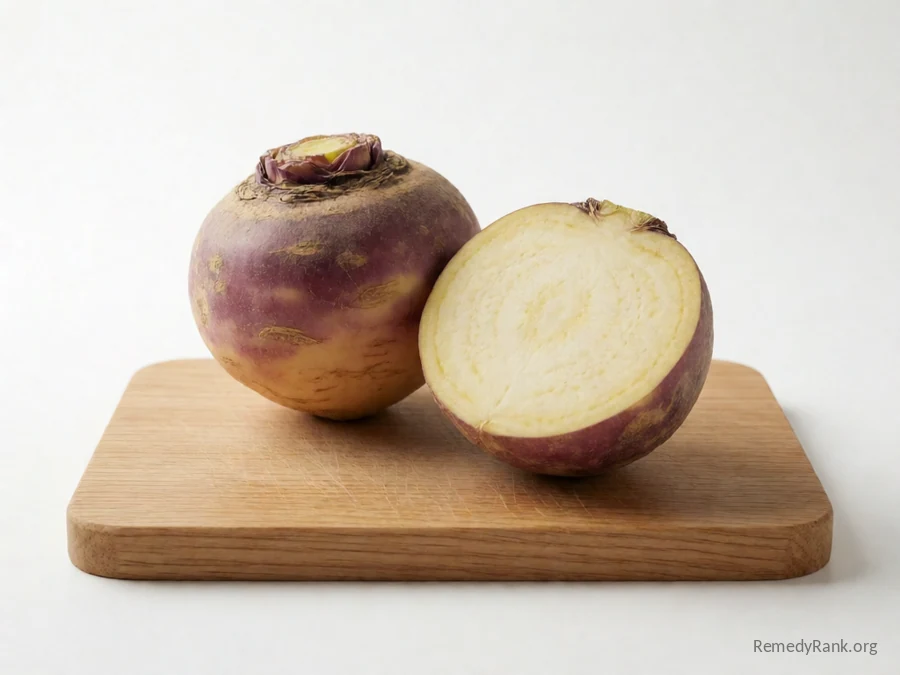 ⤢
⤢📊 How it ranks (our editor score) — 89/100Tap to see the breakdown
🌱 What it is
Rutabaga is a hearty root vegetable, a natural cross between cabbage and turnip, with a mildly sweet, earthy flavor that shines in roasted and mashed dishes.
📜 Where it comes from
Rutabaga arose in Europe sometime in the 17th century as a natural cross between cabbage and turnip, likely first noted in Scandinavia or Bohemia, and it quickly became a staple winter keeper across northern Europe. Farmers and cottagers valued it for its ability to store through long winters when little else was available, and it became closely tied to peasant and wartime diets, including as a substitute food during European food shortages. It later spread to North America as a hearty root crop for root cellars.
✨ Why it's good for you
- may help support digestive regularity through its fiber content
- may help support immune health with its vitamin C
- may help support balanced meals as a lower-carb potato alternative
- may help support healthy weight management through its fiber and low calorie density
🥗 Nutrition
Per 1 cup, cubed, cooked (170g) · about 51 calories
- Fiber 4g
- Vitamin C 32mg
- Potassium 472mg
- Calcium 66mg
- Carbohydrates 12g
Source: USDA FoodData Central
🥄 How to use it
Peel and roast, boil, or mash rutabaga as a lighter stand-in for potatoes.
How much: A cup of cooked rutabaga as a side dish, a few times a week.
Why it works: Nutrition science attributes rutabaga's benefits to its fiber content, which supports digestionHow your body breaks food down into pieces small enough to use for energy. More →, and its vitamin C, which researchers point to as supporting immune function and tissue repair.
Show full details & how to prepare it
A cross between cabbage and turnip, the rutabaga is a humble cold-weather keeper that quietly outdoes the potato in some ways: more fiber for steady digestionHow your body breaks food down into pieces small enough to use for energy. More → and healthier cholesterol, a good measure of vitamin C for immunity, and potassium for healthy blood pressure, all with fewer calories. Its flavor is mild and faintly sweet, turning golden and almost buttery when roasted.
Mashed with a little olive oil, roasted into caramelized chunks, or simmered into a winter stew, it offers all the comfort of heavier starches in a lighter form. Cooking also tames the gas-forming fibers that cabbage-family vegetables can bring.
Ways to prepare it
⚠️ Cautions
- As a cabbage-family root, large amounts may cause gas; cooking eases this.
- Those with thyroid concerns may prefer it cooked rather than raw.
📚 Learn more
🌿 Deeper natural detail
🩺 The conventional view
💬 Ask Remy about Rutabaga
📚 Resource confidence
Based on mentions in health references
Your vote is saved. Source endorsement totals come from books and studies (+7 per book, +5 per article). You can change your vote anytime from this device.
💬 Comments & experiences
Share what worked for you — and reply or 👍 like the experiences that resonate. Comments get a quick review before they appear publicly, to keep things safe and honest. Please don't make medical claims.
💚 Have an experience to share? Create a free account to join the conversation — your words might be exactly what someone else needs. Reading is always open to everyone.
Know a remedy like this?
Share a structured suggestion and our team will review it for the site.
Suggest a similar remedy