Food
Rice Water
The starchy water left from cooking or soaking rice - a simple traditional drink for settling loose stools and a soothing rinse for irritated skin.
 ⤢
⤢📊 How it ranks (our editor score) — 84/100Tap to see the breakdown
👶 Safe for children?
This remedy carries age-related cautions. Please read them before giving it to a child, and check with your pediatrician or pharmacist first.
- Rice water helps firm stools, though proper rehydration is the real priority with diarrhea -- oral rehydration solution is the standard approach, especially for children, and signs of dehydration are typically a reason people see a doctor.
🌱 What it is
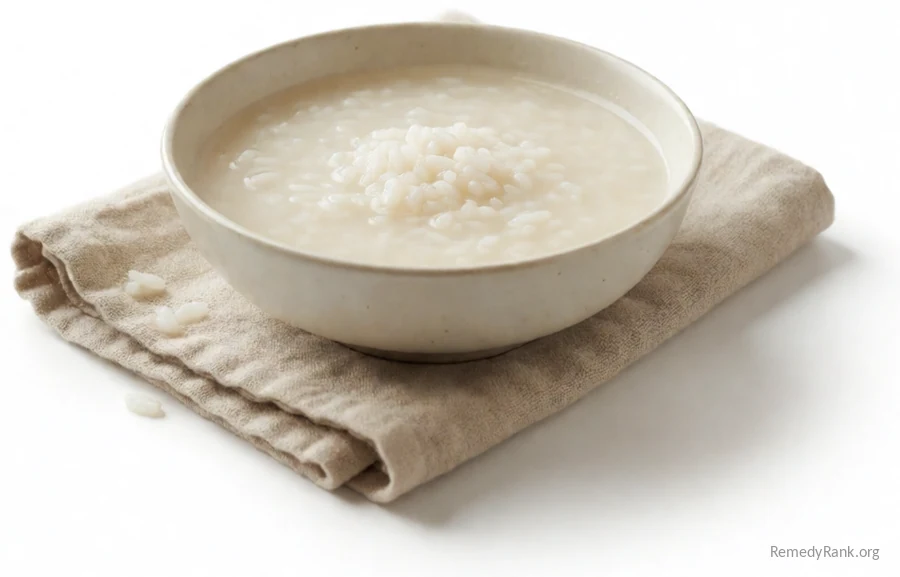
Rice water is the cloudy liquid left behind after rice has been boiled or soaked. Rich in starch washed out of the grain, it has long been used as a gentle home remedy for both drinking and skin care.
📜 Where it comes from
Rice water has been used as a home remedy across many Asian cultures for centuries, traditionally given to settle upset stomachs and loose bowels, particularly in children. It has also long been used topically in East Asian folk beauty traditions as a gentle rinse for hair and skin. Its simple preparation from a kitchen staple has kept the practice alive in home remedies around the world.
✨ Why it's good for you
- Traditionally used to help settle loose stools as a mild, starchy drink
- May help support gentle hydration alongside other fluids
- Traditionally used as a soothing rinse for irritated skin
- May help support comfort for an unsettled stomach
🥗 Nutrition
Per 1 cup (240 ml), home-prepared · about 15 calories
- Mostly water
- Carbohydrate (trace, from dissolved starch) ~3 g
- Trace minerals from rice
🥄 How to use it
Save the cloudy water from cooking or rinsing rice; sip it (lightly salted) to settle the stomach, or use it cooled as a gentle skin rinse.
How much: Sip about 1/2 to 1 cup of strained rice water (with a small pinch of salt) several times a day to help settle loose stools, alongside proper fluids; for skin, pat cooled rice water on with a cloth.
Why it works: Traditional practice attributes rice water's soothing effect on loose stools to its starch content, thought to help bind and settle the digestive tract, while its use as a skin rinse is linked to its mild, gentle nourishing properties.
Show full details & how to prepare it
Rice water is exactly what it sounds like - the mild, starchy liquid left after cooking rice, or from soaking and rinsing it. For generations and across many cultures it has been a first, gentle answer to an upset, loose stomach, because the soft starch helps bind and firm the stools while the liquid replaces some lost fluid.
The same gentle starch makes it a traditional skin comfort. Cooled rice water, patted onto irritated, itchy skin or used as a final rinse, can feel calming on eczema flares and simple rashes, leaving a soft, soothed surface.
The one thing to remember is that real rehydration is the priority with diarrhea. Above all in children, replacing fluids and salts properly comes first, and signs of dehydration are typically a reason for medical care. As a soothing helper within that, rice water is simple, kind, and almost free.
Ways to prepare it
⚠️ Cautions
- Use rice from a trusted source and vary grains over time, since rice can carry traces of arsenic.
- Make it fresh and keep it refrigerated, as starchy water spoils quickly.
📚 Learn more
🌿 Deeper natural detail
🩺 The conventional view
🔎 What this addresses
Where Rice Water fits into a condition's cause-and-symptom picture — some conditions it works on the root cause of, others it mainly soothes.
Eases the symptoms of
For these, it calms the condition without addressing what drives it.
- Eczema — A traditional folk skin soakResting a body part (or the whole body) in warm, treated water. How to make a soak → with a long history in several cultures; evidence specific to eczema is thin.
💬 Ask Remy about Rice Water
📚 Resource confidence
Based on mentions in health references
Your vote is saved. Source endorsement totals come from books and studies (+7 per book, +5 per article). You can change your vote anytime from this device.
💬 Comments & experiences
Share what worked for you — and reply or 👍 like the experiences that resonate. Comments get a quick review before they appear publicly, to keep things safe and honest. Please don't make medical claims.
💚 Have an experience to share? Create a free account to join the conversation — your words might be exactly what someone else needs. Reading is always open to everyone.
Know a remedy like this?
Share a structured suggestion and our team will review it for the site.
Suggest a similar remedy