Vegetable
Radish
A crisp, peppery root that gently stirs the appetite and supports the liver and digestion.
 ⤢
⤢📊 How it ranks (our editor score) — 94/100Tap to see the breakdown
🌱 What it is
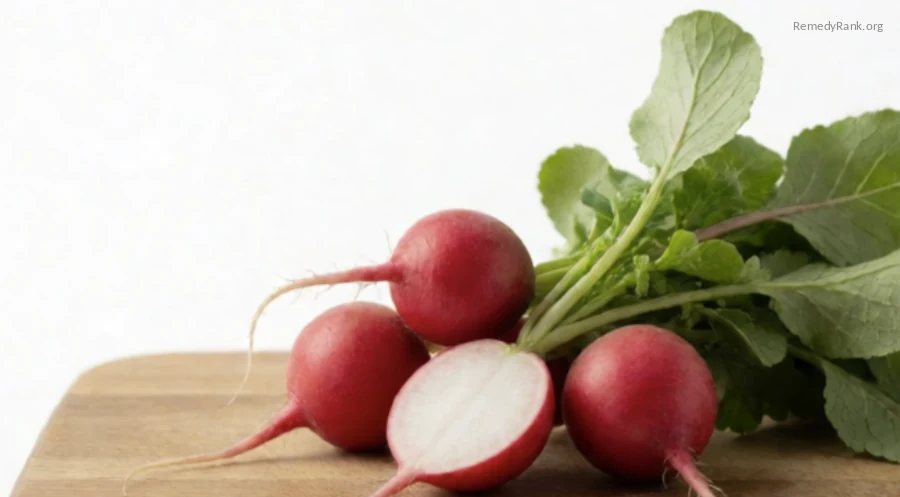
The radish is a small, crisp root vegetable with a peppery bite, eaten raw or lightly cooked along with its edible leafy tops.
📜 Where it comes from
Radishes have been cultivated since ancient times in Egypt, where they are recorded among the foods fed to the laborers who built the pyramids, and they were also valued by Greek and Roman physicians as a digestive aid. Traditional European and Asian folk medicine used radish to stir a sluggish appetite and support the liver. It remains a common crisp, peppery vegetable in kitchens worldwide.
✨ Why it's good for you
- may help support digestion by gently stirring the appetite
- may help support liver function with natural plant compounds
- may help support immune health with vitamin C
- may help support fresh breath and oral comfort
🥗 Nutrition
Per 1 cup sliced, raw (116g) · about 19 calories
- Vitamin C 17.2mg
- Fiber 1.9g
- Potassium 270mg
- Folate 29mcg
Source: USDA FoodData Central
🥄 How to use it
Slice thin into salads, grate over grain bowls, or eat a few with a little salt before a meal to wake up digestionHow your body breaks food down into pieces small enough to use for energy. More →.
How much: A practical food amount is a small handful of sliced radishes (about half a cup) once or twice a day, fresh in salads or as a crunchy snack.
Why it works: Herbalists attribute radish's digestive reputation to its natural bitter and sulfur compounds, thought to stimulate digestive juices and support the liver's detoxification work.
Show full details & how to prepare it
The radish is a humble root with a bright, peppery snap that comes from the same natural sulfur compounds found across the cabbage family. For generations cooks have eaten a few radishes before a heavy meal because that gentle sharpness seems to wake up the appetite and get the digestive juices flowing.
Radishes are mostly water and fiber, which makes them light, hydrating, and kind to the waistline, while their natural compounds have long been turned to for easing a stuffy head and supporting the liver in its daily work of clearing the body. Black radish in particular has an old reputation as a friend to the gallbladder.
They are wonderfully safe as food. The only caution is their heat: a raw radish can sting an already irritated or ulcerated stomach, so anyone with that sensitivity is wise to start small or cook them, which mellows the bite considerably.
Ways to prepare it
⚠️ Cautions
- Their sharp bite can irritate a sensitive or ulcerated stomach — start with small amounts.
- People with gallstones or a thyroid condition are wise to keep portions modest, since radish's sulfur compounds can affect both.
📚 Learn more
🌿 Deeper natural detail
🩺 The conventional view
💬 Ask Remy about Radish
📚 Resource confidence
Based on mentions in health references
Your vote is saved. Source endorsement totals come from books and studies (+7 per book, +5 per article). You can change your vote anytime from this device.
💬 Comments & experiences
Share what worked for you — and reply or 👍 like the experiences that resonate. Comments get a quick review before they appear publicly, to keep things safe and honest. Please don't make medical claims.
💚 Have an experience to share? Create a free account to join the conversation — your words might be exactly what someone else needs. Reading is always open to everyone.
Know a remedy like this?
Share a structured suggestion and our team will review it for the site.
Suggest a similar remedy