Whole Grain
Quinoa
A tiny seed cooked like a grain that offers complete plant protein and is naturally gluten-free — gentle, sustaining nourishment.
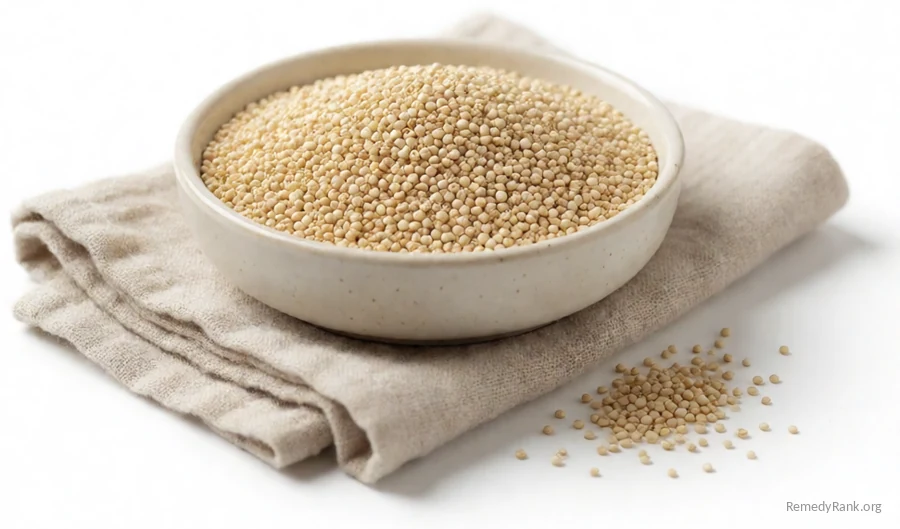 ⤢
⤢📊 How it ranks (our editor score) — 87/100Tap to see the breakdown
🌱 What it is
Quinoa is a small seed from a leafy plant native to the Andes, cooked and eaten like a grain. It stands out among plant foods for containing all the essential amino acids.
📜 Where it comes from
Quinoa was cultivated by ancient Andean civilizations, including the Inca, who considered it a sacred staple crop grown at high altitude for thousands of years. It sustained mountain communities in South America long before it drew wider notice, and it gained international popularity in the late twentieth and early twenty-first centuries as interest grew in gluten-free and complete plant proteins. Today it is grown well beyond its Andean homeland.
✨ Why it's good for you
- Provides complete plant protein with all essential amino acids
- Naturally gluten-free, gentle for sensitive digestion
- A good source of fiber to help support fullness and digestion
- Contains iron and magnesium
🥗 Nutrition
Per 1 cup cooked (185g) quinoa · about 222 calories
- Protein 8g
- Fiber 5g
- Magnesium 118mg
- Iron 2.8mg
Source: USDA FoodData Central
🥄 How to use it
Rinse, then simmer two parts water to one part quinoa for about 15 minutes. Use it anywhere you would use rice — as a base, in salads, or in warm breakfast bowls.
How much: A cooked half-cup to one cup serving makes a satisfying base for a meal. It triples in size when cooked, so a little dry quinoa goes a long way.
Why it works: Nutrition science highlights quinoa's unusual completeness among plant foods, containing all essential amino acids, along with fiber and minerals that are thought to support steady energy and digestionHow your body breaks food down into pieces small enough to use for energy. More →.
Show full details & how to prepare it
Quinoa is technically a seed, but it cooks up light and fluffy like a grain. What makes it special is that it provides all the essential amino acids, which is rare for a plant food — so it is a genuinely complete protein. Because it contains no gluten, it is a safe, nourishing staple for those with celiac disease or gluten sensitivity.
Quinoa's fiber and protein slow the rise of blood sugar after meals, giving steady, lasting energy rather than a spike and crash. Rinsing it before cooking removes the bitter saponin coating that nature uses to protect the seeds.
Ways to prepare it
⚠️ Cautions
- Always rinse quinoa well before cooking to wash off its natural bitter coating (saponin), which can upset the stomach.
- Introduce it gradually if you are not used to high-fiber foods.
📚 Learn more
🌿 Deeper natural detail
🩺 The conventional view
💬 Ask Remy about Quinoa
📚 Resource confidence
Based on mentions in health references
Your vote is saved. Source endorsement totals come from books and studies (+7 per book, +5 per article). You can change your vote anytime from this device.
💬 Comments & experiences
Share what worked for you — and reply or 👍 like the experiences that resonate. Comments get a quick review before they appear publicly, to keep things safe and honest. Please don't make medical claims.
💚 Have an experience to share? Create a free account to join the conversation — your words might be exactly what someone else needs. Reading is always open to everyone.
Know a remedy like this?
Share a structured suggestion and our team will review it for the site.
Suggest a similar remedy