Herb
Parsley
A familiar green garnish that's a nutrient-rich, mildly diuretic herb — used to freshen breath and support the urinary tract.
 ⤢
⤢📊 How it ranks (our editor score) — 79/100Tap to see the breakdown
🌱 What it is
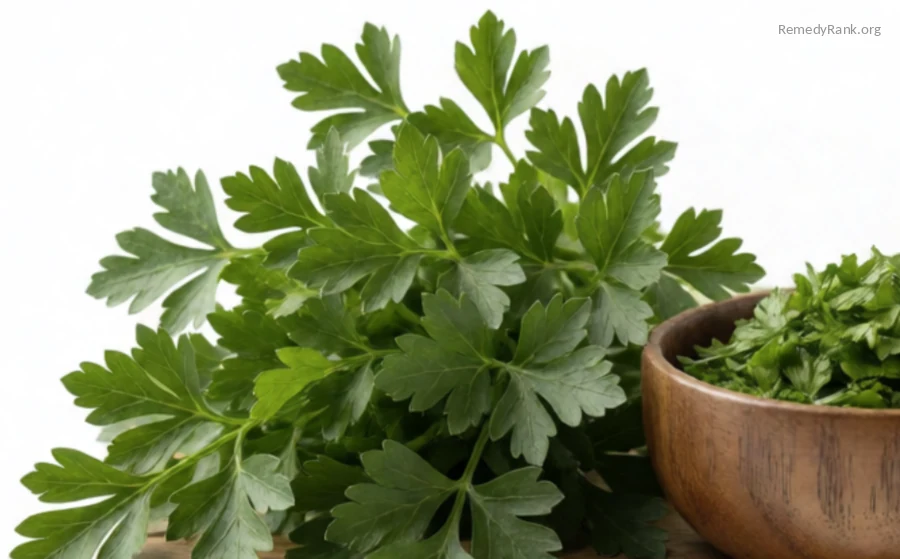
Parsley is a leafy green herb with a clean, fresh taste, full of vitamins A, C, and K.
📜 Where it comes from
Parsley was cultivated in ancient Greece and Rome, where it was woven into wreaths and used medicinally by physicians like Dioscorides as a diuretic and breath freshener. Medieval European herbalists continued to grow it in kitchen gardens for both food and remedy. It became a fixture of European and later American cooking, valued as much for its uses as for its garnish appeal.
✨ Why it's good for you
- Chewing it can naturally freshen the breath
- Adds vitamins and color to everyday meals
- A fresh, low-salt way to season food
🥗 Nutrition
Per 1/4 cup fresh chopped (15g) · about 5 calories
- Vitamin K 246mcg
- Vitamin C 20mg
- Vitamin A 76mcg
- Folate 23mcg
Source: USDA FoodData Central
🥄 How to use it
Chew a sprig of fresh parsley after meals to freshen the breath, add it generously to food, or steep 1 teaspoon of dried parsley as a light teaA warm drink made by steeping herbs in hot water. How to make a tea →.
How much: Generous culinary use, a chewed sprig after meals, or 1 teaspoon dried as a light teaA warm drink made by steeping herbs in hot water. How to make a tea →.
Why it works: Diuretic that increases urine flow to flush the kidneys.
Show full details & how to prepare it
Parsley is far more than a plate garnish — it's a vitaminA natural substance your body needs in small amounts to stay healthy, like vitamin C or D. More →- and mineralA natural building block your body needs in small amounts, like calcium or magnesium. More →-rich herbA plant, or part of one, used for flavor, food, or gentle health support. More → with a fresh, clean taste and a gentle, traditional use as a mild diuretic that supports the urinary tract. Chewed after a meal, it's a time-honored breath freshener too (it helps counter garlic and onion).
The leaf, fresh or dried, is wonderfully safe as a food. Only the concentrated seed oil and very large medicinal amounts are a concern, especially in pregnancy, so everyday culinary use is the way to enjoy it.
Ways to prepare it
⚠️ Cautions
- Food and garnish amounts are very safe; avoid large medicinal doses (and parsley-seed oil) in pregnancy, as they can stimulate the uterus.
- Its mild diuretic effect means caution with water pills and kidney disease.
- Very high intake may interact with blood thinners (vitamin K) — keep to culinary amounts.
📚 Learn more
🌿 Deeper natural detail
🩺 The conventional view
💬 Ask Remy about Parsley
📚 Resource confidence
Based on mentions in health references
Your vote is saved. Source endorsement totals come from books and studies (+7 per book, +5 per article). You can change your vote anytime from this device.
💬 Comments & experiences
Share what worked for you — and reply or 👍 like the experiences that resonate. Comments get a quick review before they appear publicly, to keep things safe and honest. Please don't make medical claims.
💚 Have an experience to share? Create a free account to join the conversation — your words might be exactly what someone else needs. Reading is always open to everyone.
Know a remedy like this?
Share a structured suggestion and our team will review it for the site.
Suggest a similar remedy