Fruit
Mango
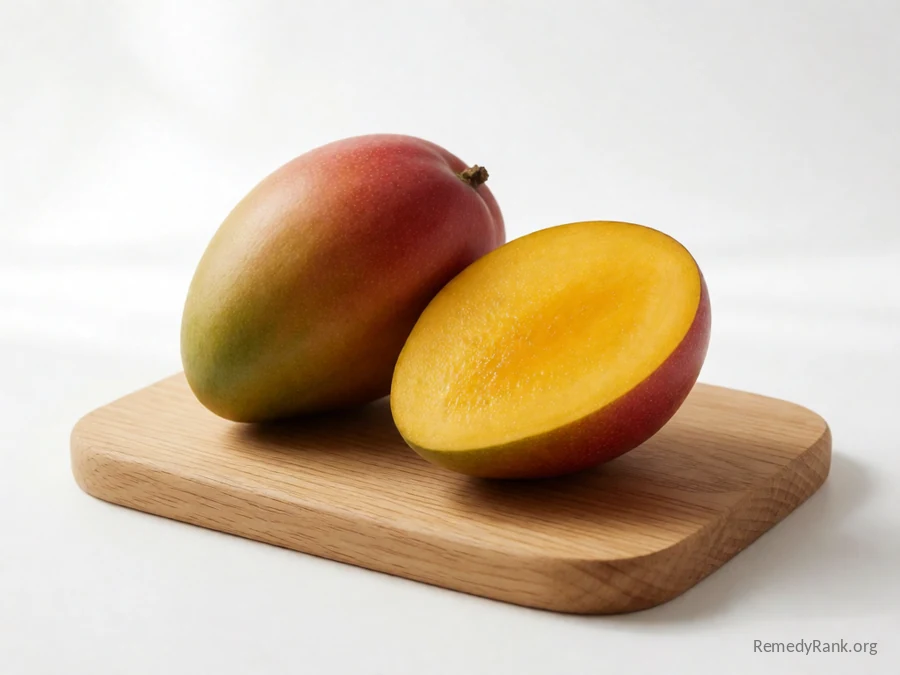
A golden tropical fruit loaded with vitamin A and C — gentle support for healthy skin, eyes, and digestion.
 ⤢
⤢📊 How it ranks (our editor score) — 86/100Tap to see the breakdown
🌱 What it is
Mango is a sweet, juicy tropical fruit grown on trees across warm climates worldwide, prized for its rich golden-orange flesh and fragrant flavor.
📜 Where it comes from
The mango has been cultivated in South Asia for thousands of years, with roots in ancient Indian tradition where it appears in Ayurvedic texts and is considered a sacred and nourishing fruit. It spread through trade and colonization to Southeast Asia, Africa, and eventually the Americas, becoming a staple tropical fruit across many cultures. Traditional Ayurvedic practice valued mango for supporting digestion and vitality when eaten ripe.
✨ Why it's good for you
- Rich in vitamin A to help support healthy skin and eyes
- A good source of vitamin C to help support immunity
- Contains fiber that may help support healthy digestion
- Provides antioxidant plant compounds
🥗 Nutrition
Per 1 cup sliced (165g) mango · about 99 calories
- Vitamin C 60mg
- Vitamin A 89mcg
- Fiber 3g
- Folate 71mcg
Source: USDA FoodData Central
🥄 How to use it
Eat a ripe mango fresh, cubed into a bowl, or blended into a smoothie. Press gently — a ripe mango yields slightly and smells sweet at the stem.
How much: Half to one whole mango makes a satisfying serving. A few times a week keeps the vitamin A and C topped up without too much sugar.
Why it works: Nutrition science points to mango's vitamin A and C content as support for healthy skin, eyes, and immune function, while its fiber and digestive enzymes are thought to aid gentle digestionHow your body breaks food down into pieces small enough to use for energy. More →.
Show full details & how to prepare it
Mango is one of the richest fruit sources of beta-carotene, which the body turns into vitamin A — the nutrient that keeps skin smooth and eyes working well in dim light. It also brings vitamin C for healing and immunity, plus fiber and natural enzymes that support comfortable digestionHow your body breaks food down into pieces small enough to use for energy. More →.
A ripe mango is soft, fragrant, and deep gold inside. Frozen mango chunks are picked ripe and work beautifully in smoothies year-round.
Ways to prepare it
⚠️ Cautions
- Mango is sweet and fairly high in natural sugar — enjoy in moderate portions if you watch blood sugar.
- Mango skin and sap are related to poison ivy and can irritate sensitive skin; peel before eating.
📚 Learn more
🌿 Deeper natural detail
🩺 The conventional view
💬 Ask Remy about Mango
📚 Resource confidence
Based on mentions in health references
Your vote is saved. Source endorsement totals come from books and studies (+7 per book, +5 per article). You can change your vote anytime from this device.
💬 Comments & experiences
Share what worked for you — and reply or 👍 like the experiences that resonate. Comments get a quick review before they appear publicly, to keep things safe and honest. Please don't make medical claims.
💚 Have an experience to share? Create a free account to join the conversation — your words might be exactly what someone else needs. Reading is always open to everyone.
Know a remedy like this?
Share a structured suggestion and our team will review it for the site.
Suggest a similar remedy