Legume
Kidney Beans
A hearty red bean, rich in fiber, plant protein, and iron, that supports healthy cholesterol, steady blood sugar, and healthy blood.
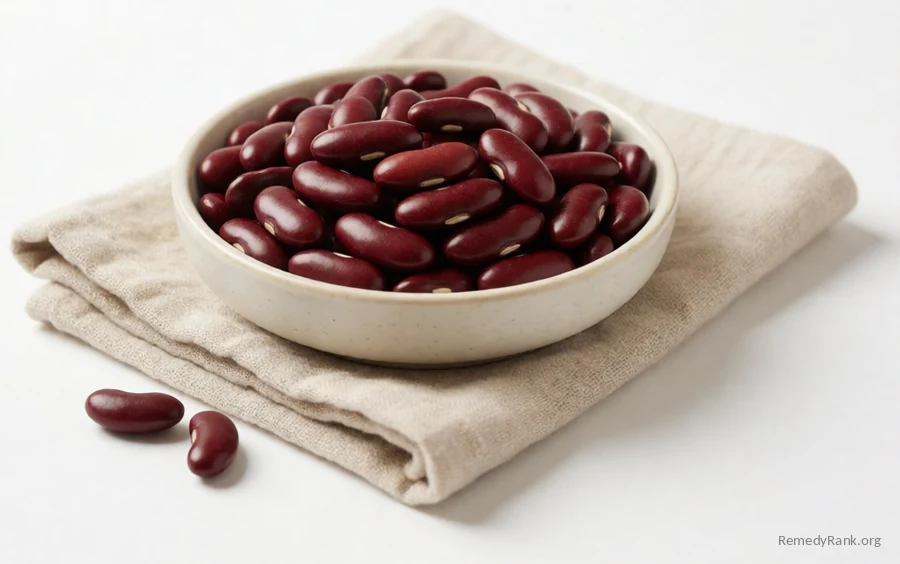 ⤢
⤢📊 How it ranks (our editor score) — 87/100Tap to see the breakdown
🌱 What it is
Kidney beans are large, deep-red legumes with a firm, creamy texture, a staple of chilis, stews, and bean salads once cooked thoroughly tender.
📜 Where it comes from
Kidney beans descend from bean varieties domesticated in Mesoamerica and South America thousands of years ago, forming a dietary cornerstone alongside corn and squash in traditional indigenous agriculture. They spread throughout the Americas and, after European contact, to Europe, Africa, and Asia. Traditional Latin American, Caribbean, and Southern cooking built many staple dishes around this hearty bean.
✨ Why it's good for you
- May help support healthy cholesterol levels
- May help support steady blood sugar
- May help supply iron for healthy blood
- May help provide filling plant protein and fiber
🥗 Nutrition
Per 1 cup cooked (177g) · about 225 calories
- Protein 15.3g
- Fiber 11.3g
- Iron 3.9mg
- Folate 230mcg
Source: USDA FoodData Central
🥄 How to use it
Simmer into stews, soups and chili, or fold into salads and grain bowls.
How much: A practical food amount is about half a cup to a cup cooked, several times a week.
Why it works: Nutrition science points to kidney beans' fiber, plant protein, and iron content as support for healthy cholesterol, steady blood sugar, and healthy blood formation.
Show full details & how to prepare it
The kidney bean, named for its rich red curve, is one of the great hearty staples of the table, anchoring stews, soups and chili across many cultures. Filling and satisfying, it has long stretched a humble meal into a nourishing one.
It is generous with plant protein and with soluble fiber, the steadying kind that helps carry off excess cholesterol and softens the rise of blood sugar after eating. It also brings a useful measure of iron and folate, the building blocks of healthy red blood, making it a quiet friend to anyone prone to tiredness from thin blood.
Kidney beans are wholesome and safe — with one firm rule: they must be soaked and boiled thoroughly, never eaten raw or undercooked, as the raw bean holds a natural toxin that proper cooking removes completely. Introduced gradually with water, they are gentle and deeply nourishing.
Ways to prepare it
⚠️ Cautions
- Raw or undercooked kidney beans contain a natural toxin — always soak and boil them thoroughly until fully tender.
- Like all beans they can cause gas at first, so introduce them gradually with plenty of water.
📚 Learn more
🌿 Deeper natural detail
💬 Ask Remy about Kidney Beans
📚 Resource confidence
Based on mentions in health references
Your vote is saved. Source endorsement totals come from books and studies (+7 per book, +5 per article). You can change your vote anytime from this device.
💬 Comments & experiences
Share what worked for you — and reply or 👍 like the experiences that resonate. Comments get a quick review before they appear publicly, to keep things safe and honest. Please don't make medical claims.
💚 Have an experience to share? Create a free account to join the conversation — your words might be exactly what someone else needs. Reading is always open to everyone.
Know a remedy like this?
Share a structured suggestion and our team will review it for the site.
Suggest a similar remedy