Fruit
Guava
A fragrant tropical fruit extraordinarily rich in vitamin C, with fiber that soothes the gut and steadies blood sugar.
 ⤢
⤢📊 How it ranks (our editor score) — 87/100Tap to see the breakdown
🌱 What it is
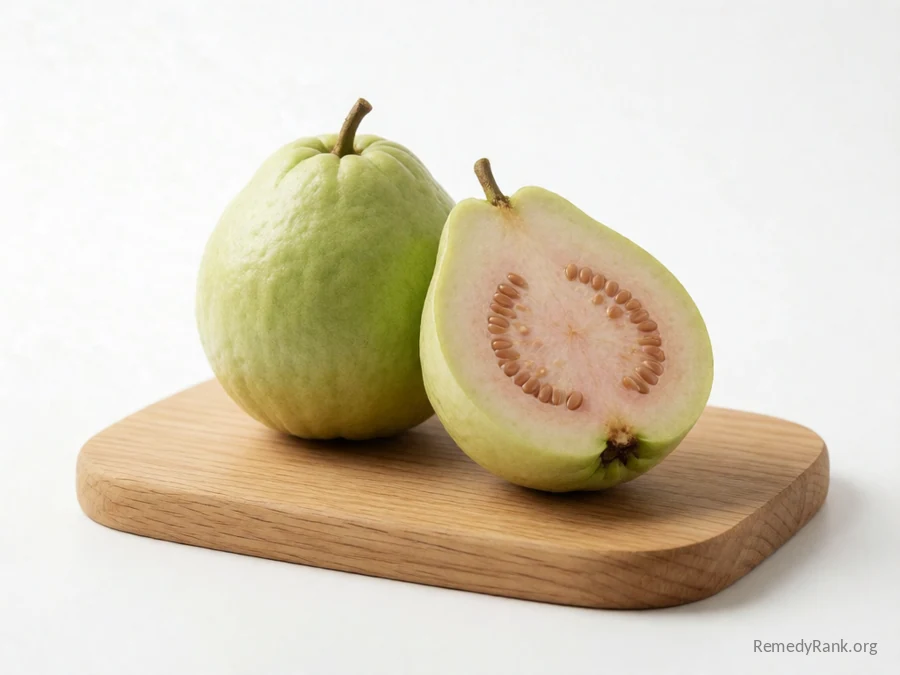
Guava is a fragrant tropical fruit with a thin green-to-yellow skin, pink or white flesh, and many small edible seeds.
📜 Where it comes from
Guava is native to Central and South America, where indigenous peoples cultivated and ate the fruit long before European contact. Spanish and Portuguese traders carried it across the world during the colonial era, and it took root in tropical Asia, Africa, and the Pacific, becoming deeply woven into traditional diets in those regions. Traditional folk medicine across these areas valued guava leaves and fruit for digestive complaints.
✨ Why it's good for you
- may help support immune health with very high vitamin C
- may help support digestion with generous fiber
- may help support steady blood sugar levels
- may help support heart health with potassium and antioxidants
🥗 Nutrition
Per 1 medium guava (55g) · about 37 calories
- Vitamin C 125mg
- Fiber 3g
- Potassium 229mg
- Folate 24mcg
- Vitamin A 355 IU
Source: USDA FoodData Central
🥄 How to use it
Eat the ripe fruit whole, skin and all, or blend into a fresh juice or smoothie; the leaves are traditionally brewed as a mild teaA warm drink made by steeping herbs in hot water. How to make a tea →.
How much: A practical serving is one medium guava (or about ½ cup) eaten fresh; guava-leaf teaA warm drink made by steeping herbs in hot water. How to make a tea → is traditionally taken as a cup of mild infusionA tea made by steeping soft leaves or flowers in hot water. How to make an infusion →.
Why it works: Nutrition science points to guava's exceptionally high vitamin C content as support for immune function, while its fiber is studied for steadying blood sugar and supporting digestive comfort.
Show full details & how to prepare it
Guava is a small, fragrant tropical fruit with a remarkable secret: it carries several times more vitamin C than an orange, ounce for ounce, making it a delicious natural support for the immune systemYour body's built-in defense team that fights off germs and helps you heal. More → during colds and run-down seasons. The whole fruit, skin and seeds included, is also unusually rich in fiber.
That fiber works two helpful ways: it gently slows the absorption of sugar after meals, supporting steadier blood sugar, and it adds bulk that has long made guava a traditional comfort for loose digestionHow your body breaks food down into pieces small enough to use for energy. More →. In many cultures the leaves are brewed into a mild teaA warm drink made by steeping herbs in hot water. How to make a tea → used for the same soothing, settling purpose.
Guava is a very safe, nourishing fruit. The main practical notes are small — its hard little seeds can be strained out if uncomfortable, and anyone using guava-leaf teaA warm drink made by steeping herbs in hot water. How to make a tea → regularly alongside blood-sugar medicine should mention it to their doctor.
Ways to prepare it
⚠️ Cautions
- Its many small seeds are edible but hard — those with sensitive teeth or digestion may prefer to strain them.
- Eaten in large amounts the high fiber can loosen or, for some, firm the stool — find your comfortable portion.
- If you use guava-leaf tea regularly alongside blood-sugar medicine, be aware it may add to the medicine's blood-sugar-lowering effect.
📚 Learn more
🌿 Deeper natural detail
🩺 The conventional view
💬 Ask Remy about Guava
📚 Resource confidence
Based on mentions in health references
Your vote is saved. Source endorsement totals come from books and studies (+7 per book, +5 per article). You can change your vote anytime from this device.
💬 Comments & experiences
Share what worked for you — and reply or 👍 like the experiences that resonate. Comments get a quick review before they appear publicly, to keep things safe and honest. Please don't make medical claims.
💚 Have an experience to share? Create a free account to join the conversation — your words might be exactly what someone else needs. Reading is always open to everyone.
Know a remedy like this?
Share a structured suggestion and our team will review it for the site.
Suggest a similar remedy