Herb
Chickweed
A tender lawn weed, used as a cooling salve, poultice, or tea, traditionally soothing for itchy, irritated skin.
 ⤢
⤢📊 How it ranks (our editor score) — 84/100Tap to see the breakdown
🌱 What it is
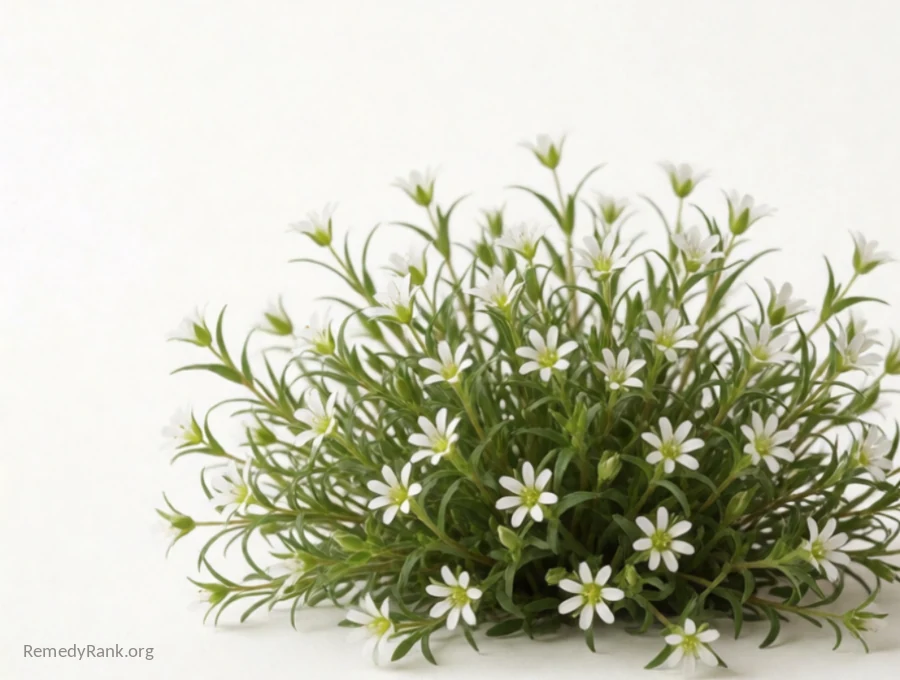
Chickweed is a soft, low-growing plant often found in lawns and gardens, used fresh in salads, as a poultice, or steeped as a mild tea.
📜 Where it comes from
Chickweed has been used in European folk medicine for centuries as a common garden and lawn plant valued for cooling, soothing skin complaints. Traditional herbalists made poultices and salves from the fresh plant to calm itching and irritation, and it was also eaten in salads as a mild, nourishing green.
✨ Why it's good for you
- May help support soothing itchy, irritated skin
- May help support calm, cooled skin after irritation
- May help support gentle, everyday skin comfort
- May help support a light, nourishing addition to salads
🥗 Nutrition
Per 1 cup fresh leaves (25g) · about 7 calories
- Vitamin C
- Saponins
- Trace iron and calcium
Source: Nutrition estimate (per typical serving)
🥄 How to use it
Apply chickweed salveA soothing herbal ointment for the skin. How to make a salve → or a crushed fresh poulticeMashed plant material applied right on the skin. How to make a poultice → to itchy, irritated skin; the fresh leaves can also be eaten in salads or steeped as a mild teaA warm drink made by steeping herbs in hot water. How to make a tea →.
How much: SalveA soothing herbal ointment for the skin. How to make a salve → or fresh poulticeMashed plant material applied right on the skin. How to make a poultice → applied to the skin as needed; or fresh leaves in food.
Why it works: Soothes and heals irritated skin.
Show full details & how to prepare it
Chickweed is a low, tender weed found in lawns and gardens, prized in herbal tradition for its cooling, itch-soothing quality. As a salveA soothing herbal ointment for the skin. How to make a salve → or a crushed fresh poulticeMashed plant material applied right on the skin. How to make a poultice →, it calms eczema, rashes, and bug bites; the mild, fresh leaves are also a pleasant edible green.
Ways to prepare it
⚠️ Cautions
- Gentle and food-safe in ordinary amounts; very large quantities may have a mild laxative effect.
- Be sure foraged chickweed is correctly identified and from a clean, unsprayed area.
- Rare allergy is possible.
📚 Learn more
🌿 Deeper natural detail
🩺 The conventional view
🔎 What this addresses
Where Chickweed fits into a condition's cause-and-symptom picture — some conditions it works on the root cause of, others it mainly soothes.
Eases the symptoms of
For these, it calms the condition without addressing what drives it.
💬 Ask Remy about Chickweed
📚 Resource confidence
Based on mentions in health references
Your vote is saved. Source endorsement totals come from books and studies (+7 per book, +5 per article). You can change your vote anytime from this device.
💬 Comments & experiences
Share what worked for you — and reply or 👍 like the experiences that resonate. Comments get a quick review before they appear publicly, to keep things safe and honest. Please don't make medical claims.
💚 Have an experience to share? Create a free account to join the conversation — your words might be exactly what someone else needs. Reading is always open to everyone.
Know a remedy like this?
Share a structured suggestion and our team will review it for the site.
Suggest a similar remedy