Vegetable
Brussels Sprouts
Little cabbages rich in fiber and protective compounds that support the gut and steady blood sugar.
 ⤢
⤢📊 How it ranks (our editor score) — 81/100Tap to see the breakdown
🌱 What it is
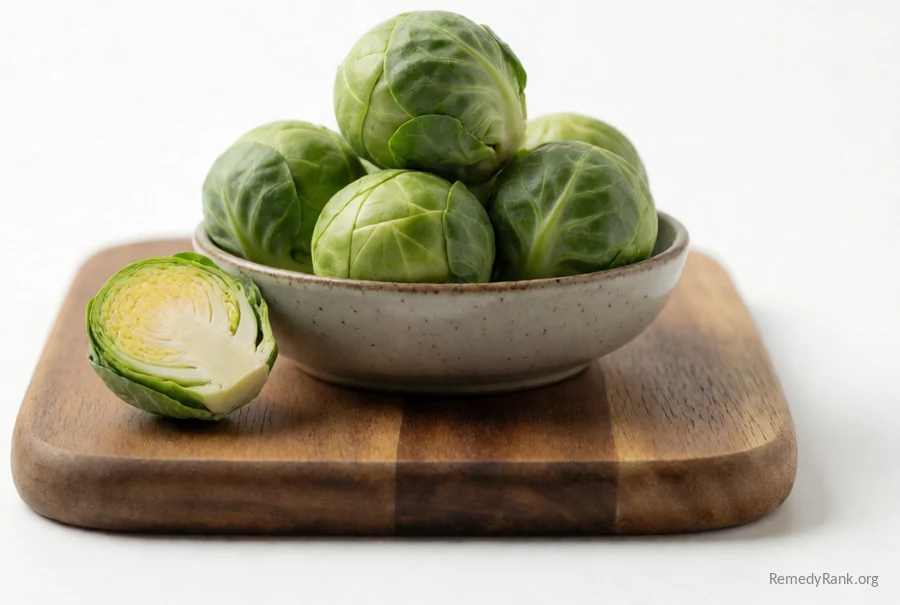
Brussels sprouts are small, tightly-packed heads that grow like miniature cabbages along a tall central stalk.
📜 Where it comes from
Brussels sprouts take their name from Belgium, where they were cultivated and popularized around the sixteenth century, likely developed from wild cabbage varieties long grown in the region. They spread through European kitchens over the following centuries before reaching North America. Traditional European cooking valued them, along with other cabbage-family vegetables, as sturdy winter fare.
✨ Why it's good for you
- may help support gut health with fiber and protective plant compounds
- may help support steady blood sugar
- may help support fiber-rich digestion and gut health
- may help support immune health with vitamin C
🥗 Nutrition
Per 1 cup cooked (156g) · about 56 calories
- Vitamin C 74.8mg
- Vitamin K 218mcg
- Fiber 4.1g
- Folate 94mcg
- Potassium 494mg
Source: USDA FoodData Central
🥄 How to use it
Halve and roast until golden, or shred raw into a slaw. Cook just until tender to keep them sweet, not sulfurous.
How much: A practical food amount is about one cup (roughly 6–8 sprouts) a few times a week, roasted, steamed, or shredded raw.
Why it works: Nutrition science points to Brussels sprouts' fiber and cruciferous plant compounds as support for digestive health and the body's natural cell-protective processes.
Show full details & how to prepare it
Brussels sprouts look like tiny cabbages because that is essentially what they are — small, tight buds from a tall cabbage-family stalk. Like broccoli and kale they belong to the cruciferous vegetables, a group studied closely for plant compounds that help the body protect its own cells.
A cup of sprouts brings a generous dose of fiber, which feeds the friendly bacteria in the gut, keeps things moving, and helps slow the rise of blood sugar after a meal. That same fiber gently helps the body carry away cholesterol, and the sprouts add vitamin C and vitamin K on top.
The secret to enjoying them is not to overcook them. Long boiling releases the sulfur smell that gives sprouts a bad name; roasting or quick steaming until just tender keeps them nutty and sweet, and is also easier on the stomach.
Ways to prepare it
⚠️ Cautions
- They contain vitamin K, so anyone on blood thinners should keep their intake steady from week to week, since sudden changes can affect how the medication works.
- Overcooking makes them gassy and bitter — steam or roast lightly for easier digestion.
📚 Learn more
🌿 Deeper natural detail
Curated links coming for this one.
🩺 The conventional view
💬 Ask Remy about Brussels Sprouts
📚 Resource confidence
Based on mentions in health references
Your vote is saved. Source endorsement totals come from books and studies (+7 per book, +5 per article). You can change your vote anytime from this device.
💬 Comments & experiences
Share what worked for you — and reply or 👍 like the experiences that resonate. Comments get a quick review before they appear publicly, to keep things safe and honest. Please don't make medical claims.
💚 Have an experience to share? Create a free account to join the conversation — your words might be exactly what someone else needs. Reading is always open to everyone.
Know a remedy like this?
Share a structured suggestion and our team will review it for the site.
Suggest a similar remedy