Whole Grain
Brown Rice
The whole, unpolished grain — fiber, B vitamins, and minerals all kept intact for steady energy and easy digestion.
 ⤢
⤢📊 How it ranks (our editor score) — 87/100Tap to see the breakdown
🌱 What it is
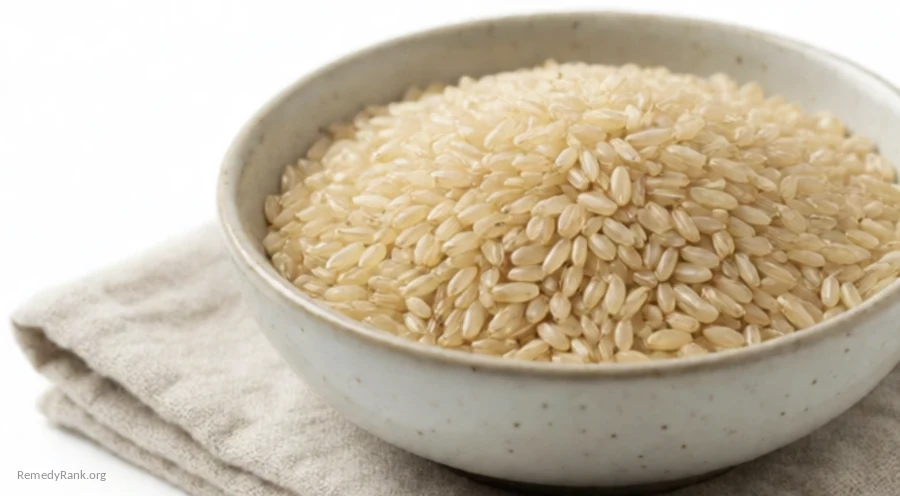
Brown rice is the whole rice kernel with only the outer hull removed, leaving the bran and germ in place, so it keeps more of its natural fiber and nutrients than white rice.
📜 Where it comes from
Rice has been a staple grain across Asia for thousands of years, traditionally eaten in its whole, unpolished form before industrial milling made white rice widespread. Traditional diets throughout Asia relied on the whole grain for sustained energy and its intact bran and germ. Brown rice regained popularity in Western nutrition circles in the twentieth century as attention turned to the health value of whole grains over refined ones.
✨ Why it's good for you
- May help support steady, lasting energy
- May help support healthy digestion with its fiber
- May help support healthy blood sugar levels
- May help supply B vitamins and minerals like magnesium
🥗 Nutrition
Per 1 cup cooked (195g) · about 216 calories
- Fiber 3.5g
- Magnesium 84mg
- Manganese 1.8mg
- Protein 5g
- Selenium 19mcg
Source: USDA FoodData Central
🥄 How to use it
Cook two parts water to one part rice for about 40 minutes, or until tender. Use it as a base for bowls, stir-fries, soups, and simple meals.
How much: A cooked half-cup to one cup serving makes a wholesome base for a meal. Choosing brown over white rice most of the time is the simple, lasting habit.
Why it works: Nutrition science attributes brown rice's steadier energy release to its intact bran and fiber, which slow digestionHow your body breaks food down into pieces small enough to use for energy. More → compared to refined white rice, along with its retained B vitamins and minerals.
Show full details & how to prepare it
Brown rice is simply rice with its nourishing outer layers left on. Those layers — the bran and germ that white rice strips away — hold the fiber, B vitamins, magnesium, and oils that make the grain a real whole food. The fiber slows digestionHow your body breaks food down into pieces small enough to use for energy. More → for steadier energy and helps keep the bowels regular and cholesterol in check.
Because rice can draw a little arsenic from the soil, a good habit is to rinse it, cook it in plenty of water like pasta, and drain off the excess. This simple step lowers the arsenic considerably.
Ways to prepare it
⚠️ Cautions
- Brown rice can hold traces of arsenic from soil; rinse well and cook in extra water, then drain, to reduce it.
- Its bran makes it harder to digest for some — introduce it gradually if your stomach is sensitive.
📚 Learn more
🌿 Deeper natural detail
Curated links coming for this one.
💬 Ask Remy about Brown Rice
📚 Resource confidence
Based on mentions in health references
Your vote is saved. Source endorsement totals come from books and studies (+7 per book, +5 per article). You can change your vote anytime from this device.
💬 Comments & experiences
Share what worked for you — and reply or 👍 like the experiences that resonate. Comments get a quick review before they appear publicly, to keep things safe and honest. Please don't make medical claims.
💚 Have an experience to share? Create a free account to join the conversation — your words might be exactly what someone else needs. Reading is always open to everyone.
Know a remedy like this?
Share a structured suggestion and our team will review it for the site.
Suggest a similar remedy