Vegetable
Bell Pepper
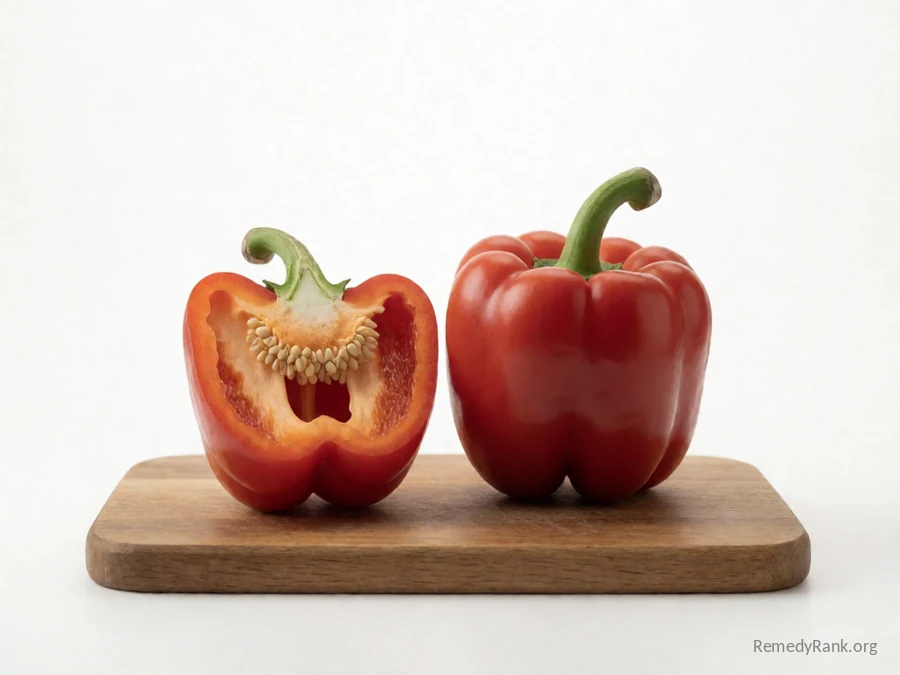
A sweet, crunchy pepper bursting with vitamin C and antioxidants that support immunity, healthy skin, and aging eyes.
 ⤢
⤢📊 How it ranks (our editor score) — 94/100Tap to see the breakdown
🌱 What it is
Sweet bell peppers are crisp, mild peppers in red, yellow, orange, and green, loaded with vitamin C and vitamin A.
📜 Where it comes from
Bell peppers originated in Central and South America, cultivated by indigenous peoples for thousands of years before Spanish and Portuguese explorers carried them to Europe, Africa, and Asia in the sixteenth century. They were quickly adopted into Mediterranean, Balkan, and Asian cuisines, prized for their sweetness and vivid color. Bell peppers remain a garden favorite across the world today.
✨ Why it's good for you
- Very high in vitamin C for immune and skin health
- Vitamin A supports healthy eyes
- Sweet and crunchy raw or cooked
🥗 Nutrition
Per 1 medium pepper (119g) · about 24 calories
- Vitamin C 95mg
- Vitamin A 46mcg
- Fiber 2g
- Vitamin B6 0.3mg
Source: USDA FoodData Central
🥄 How to use it
Eat raw strips as a crisp snack, toss into salads, or roast and stir into soups and grain bowls.
How much: A practical food amount is half to one whole pepper a day, raw or cooked.
Why it works: Nutrition science points to bell peppers' high vitamin C and vitamin A content as support for immune function, skin health, and protecting the eyes from age-related changes.
Show full details & how to prepare it
The bell pepper is the sweet, mild member of the pepper family, and for a vegetable so cheerful and crunchy it carries a surprising gift: ounce for ounce a red bell pepper holds more vitamin C than an orange. That vitaminA natural substance your body needs in small amounts to stay healthy, like vitamin C or D. More → is one of the body's great helpers in defending against everyday colds and in weaving the collagen that keeps skin firm and supple.
Its brilliant reds, yellows and oranges come from a rainbow of antioxidantA helpful substance in colorful fruits and vegetables that protects your cells from everyday wear and tear. More → pigments, including the lutein and zeaxanthin that gather in the eye to shield it from the wear of years. Cooked or raw, a pepper is mostly water and fiber, making it light, hydrating and kind to the waistline.
Peppers are very safe as food. They belong to the nightshade family, which a small number of sensitive people prefer to limit, and very raw they can nip a tender stomach — both easily handled by gentle cooking and modest portions.
Ways to prepare it
⚠️ Cautions
- As a member of the nightshade family, a few sensitive people find peppers aggravate joint discomfort — notice how your body responds.
- Raw peppers can be hard on a very tender or ulcerated stomach, so cook them if they cause discomfort.
📚 Learn more
🌿 Deeper natural detail
🩺 The conventional view
💬 Ask Remy about Bell Pepper
📚 Resource confidence
Based on mentions in health references
Your vote is saved. Source endorsement totals come from books and studies (+7 per book, +5 per article). You can change your vote anytime from this device.
💬 Comments & experiences
Share what worked for you — and reply or 👍 like the experiences that resonate. Comments get a quick review before they appear publicly, to keep things safe and honest. Please don't make medical claims.
💚 Have an experience to share? Create a free account to join the conversation — your words might be exactly what someone else needs. Reading is always open to everyone.
Know a remedy like this?
Share a structured suggestion and our team will review it for the site.
Suggest a similar remedy