Herb
Bilberry
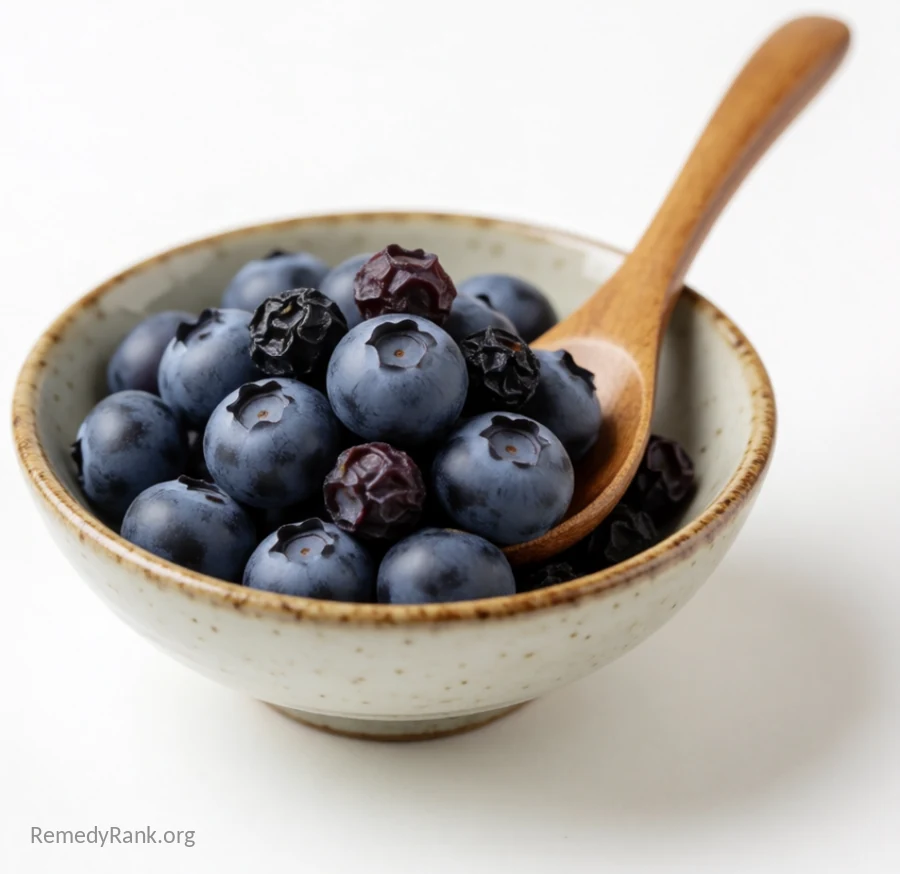
A deep-blue cousin of the blueberry, eaten or taken as tea, rich in antioxidants traditionally linked to eye and circulation health.
 ⤢
⤢📊 How it ranks (our editor score) — 76/100Tap to see the breakdown
🌱 What it is
Bilberry is a small, deep-blue wild berry related to the blueberry, eaten fresh, dried, or steeped as a tea. Its dark pigments have made it a traditional favorite for eye and circulation support.
📜 Where it comes from
Bilberry grows wild across northern Europe and has long been eaten and used in folk remedies there, with a boost to its reputation coming during the Second World War, when British Royal Air Force pilots reportedly ate bilberry jam and claimed it sharpened their night vision. That story helped popularize bilberry specifically for eyesight and circulation in later herbal tradition. It remains a favorite antioxidant-rich berry in Western herbalism.
✨ Why it's good for you
- May help support healthy eyes and vision comfort
- May help support healthy circulation
- May help support the body's natural antioxidant defenses
- May help support healthy blood vessels
🥗 Nutrition
Per 1/2 cup fresh berries (about 75g) · about 43 calories
- Fiber: 2.4g
- Vitamin C: 10mg
- Manganese: 0.3mg
- Anthocyanins (antioxidants): high
- Total carbohydrate: 11g
Source: USDA FoodData Central
🥄 How to use it
Enjoy bilberries (or blueberries) as a food, or steep 1 teaspoon of dried bilberries or leaf in hot water for 10 minutes and drink a cup or two a day.
How much: As a food, a handful of berries; as teaA warm drink made by steeping herbs in hot water. How to make a tea →, 1 teaspoon dried fruit or leaf per cup, one to two cups daily. Standardized extracts follow the product label.
Why it works: Contains antioxidants for eye health.
Show full details & how to prepare it
Bilberry is the European cousin of the blueberry, even darker and richer in the deep-blue antioxidants called anthocyanins. It has a long folk reputation for supporting the eyes and the tiny blood vessels — a story famously tied to wartime pilots — and it's a delicious, genuinely safe food.
The fruit itself is the gentlest way to enjoy bilberry, in teaA warm drink made by steeping herbs in hot water. How to make a tea →, on oatmeal, or by the handful. Concentrated extracts are stronger and may thin the blood a little, worth noting for anyone on blood thinners or diabetes medication.
Ways to prepare it
🔬 Let's get technical
The scientific view, plainly reported. Hover a dotted word for its meaning.
What's in it
Bilberries contain a dense mixture of , including delphinidin and cyanidin , giving the fruit its very dark blue-black pigment, along with smaller amounts of other and . The anthocyanin concentration in bilberry is notably higher than in common blueberry, and standardized extracts are often characterized by their percentage of total anthocyanidins.
Mechanism of action
Bilberry act as antioxidants, scavenging generated during normal metabolism and, in animal and studies, appear to stabilize structures in blood vessel walls and support the integrity of the capillary . Some research suggests anthocyanins may support regeneration of , the light-sensitive pigment in retinal rod cells, which was the basis for a long-standing claim of improved night vision, though controlled human studies have generally not confirmed a meaningful effect on . Anthocyanins have also shown mild and vasoprotective activity in laboratory studies, proposed to support microcirculation in tissues such as the retina and lower limbs.
Current pharmacological applications
Bilberry extract has been studied for chronic venous insufficiency and mild or eye-strain symptoms in a number of small trials, several reporting subjective improvement, though study quality and standardization vary considerably. The specific claim of improved night vision, widely repeated since World War II-era pilot anecdotes, has not held up well under controlled testing and is generally regarded by reviewers as unsupported. Bilberry's better-supported research lies in vascular and antioxidant effects rather than the more famous vision claims.
Every underlined word is collected on the technical glossary.
⚠️ Cautions
- The fruit is very safe as a food; concentrated extracts may thin the blood, so check with your doctor if you take blood thinners or diabetes medicine.
- High-dose leaf preparations long-term aren't well studied — favor the fruit.
- Sudden vision change is generally a sign of something needing prompt medical attention.
📚 Learn more
🌿 Deeper natural detail
🩺 The conventional view
💬 Ask Remy about Bilberry
📚 Resource confidence
Based on mentions in health references
Your vote is saved. Source endorsement totals come from books and studies (+7 per book, +5 per article). You can change your vote anytime from this device.
💬 Comments & experiences
Share what worked for you — and reply or 👍 like the experiences that resonate. Comments get a quick review before they appear publicly, to keep things safe and honest. Please don't make medical claims.
💚 Have an experience to share? Create a free account to join the conversation — your words might be exactly what someone else needs. Reading is always open to everyone.
Know a remedy like this?
Share a structured suggestion and our team will review it for the site.
Suggest a similar remedy