Herb
Astragalus
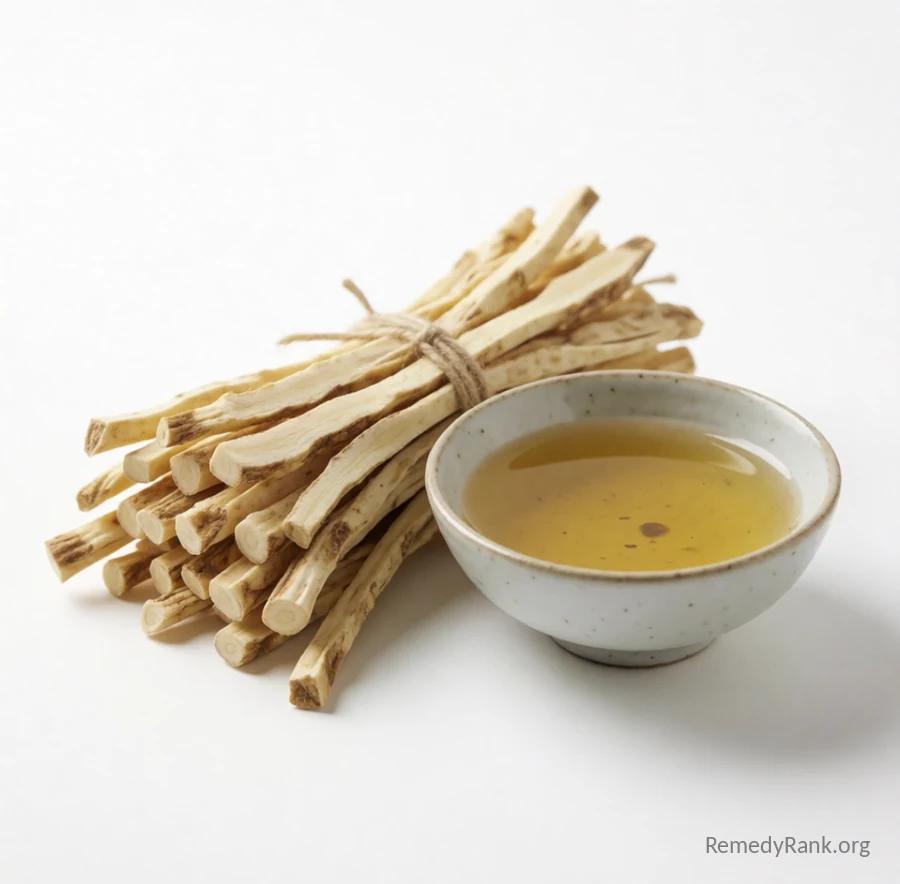
A mild root tonic, simmered into broth or tea, traditionally taken through the cold months to support steady immune strength.
 ⤢
⤢📊 How it ranks (our editor score) — 71/100Tap to see the breakdown
🌱 What it is
Astragalus is a root from a plant in the pea family, traditionally sliced and simmered into soups, broths, or tea as a slow, daily tonic rather than a quick remedy.
📜 Where it comes from
Astragalus root is a foundational herb in Traditional Chinese Medicine, where it has been used for centuries as a slow-building tonic to support the body's resilience, often simmered into soups and broths rather than taken as a quick fix. It holds a respected place among the tonic herbs used through the cold months in Chinese herbal practice. Western herbalism adopted astragalus more recently as interest in Chinese tonic herbs grew.
✨ Why it's good for you
- May help support steady immune strength through cold season
- May help support the body's natural resilience over time
- May help support overall daily wellness as part of a warm broth
🥗 Nutrition
Per 1 cup brewed tea / 1 tsp root · about 5 calories
- Polysaccharides (bioactive)
- Saponins (astragalosides)
- Negligible macronutrients
Source: Nutrition estimate (per typical serving)
🥄 How to use it
Simmer a few dried astragalus root slices in soup or water for 20-30 minutes and drink the broth, or take it as a teaA warm drink made by steeping herbs in hot water. How to make a tea →, through cold-and-flu season. It's a slow, daily tonic rather than a quick fix.
How much: A few dried root slices simmered in broth or teaA warm drink made by steeping herbs in hot water. How to make a tea → daily through the cooler months; capsules and tinctures follow the product label.
Why it works: Immune booster and adaptogen.
Show full details & how to prepare it
Astragalus is a mild, sweet-tasting root that has been used for centuries as a gentle daily tonic... the kind of thing taken steadily through the cold season to keep the body's defenses strong, rather than as a quick rescue.
It's most at home simmered into soup or broth, where its faint sweetness rounds out the pot. Because it nudges the immune systemYour body's built-in defense team that fights off germs and helps you heal. More → to be more active, it isn't suited to autoimmune conditions or to acute infections; think of it as quiet between-times support.
Ways to prepare it
🔬 Let's get technical
The scientific view, plainly reported. Hover a dotted word for its meaning.
What's in it
Astragalus root contains cycloartane-type called , a distinct fraction, and -related isoflavonoids including and calycosin.
Mechanism of action
Astragalus have been studied in laboratory and animal models for stimulating components of the system, including enhanced activity and altered production, effects proposed to underlie its traditional use as an immune tonic. IV, the most studied of the astragalosides, has shown antioxidant and anti-inflammatory activity in cell and animal studies, along with effects on signaling relevant to blood vessel tone. and calycosin are isoflavonoids with weak -like activity and have been studied separately for antioxidant and anti-inflammatory properties. Much of this mechanistic work comes from and animal research rather than confirmed human physiology, so how these laboratory findings translate to whole-root preparations taken by mouth is not fully established.
Current pharmacological applications
In traditional Chinese medicine, astragalus root is used as a general tonic taken especially during colder months, often in soup or tea form, framed around supporting overall resilience rather than treating a specific illness. Modern research includes small clinical trials, mostly from China, examining astragalus alone or combined with other herbs for upper respiratory infection frequency and general immune markers, but methodological quality is often limited and results are not consistently replicated in rigorous international trials. Laboratory evidence for immune-modulating and antioxidant activity is comparatively strong, while direct clinical evidence in humans remains preliminary.
Every underlined word is collected on the technical glossary.
⚠️ Cautions
- Because it gently stimulates the immune system, avoid it in autoimmune conditions (lupus, MS, rheumatoid arthritis).
- May interact with immune-suppressing medicines and blood thinners.
- Avoid during an acute fever or infection; it's for between-times support.
📚 Learn more
🌿 Deeper natural detail
🩺 The conventional view
💬 Ask Remy about Astragalus
📚 Resource confidence
Based on mentions in health references
Your vote is saved. Source endorsement totals come from books and studies (+7 per book, +5 per article). You can change your vote anytime from this device.
💬 Comments & experiences
Share what worked for you — and reply or 👍 like the experiences that resonate. Comments get a quick review before they appear publicly, to keep things safe and honest. Please don't make medical claims.
💚 Have an experience to share? Create a free account to join the conversation — your words might be exactly what someone else needs. Reading is always open to everyone.
Know a remedy like this?
Share a structured suggestion and our team will review it for the site.
Suggest a similar remedy