Fruit
Apricot
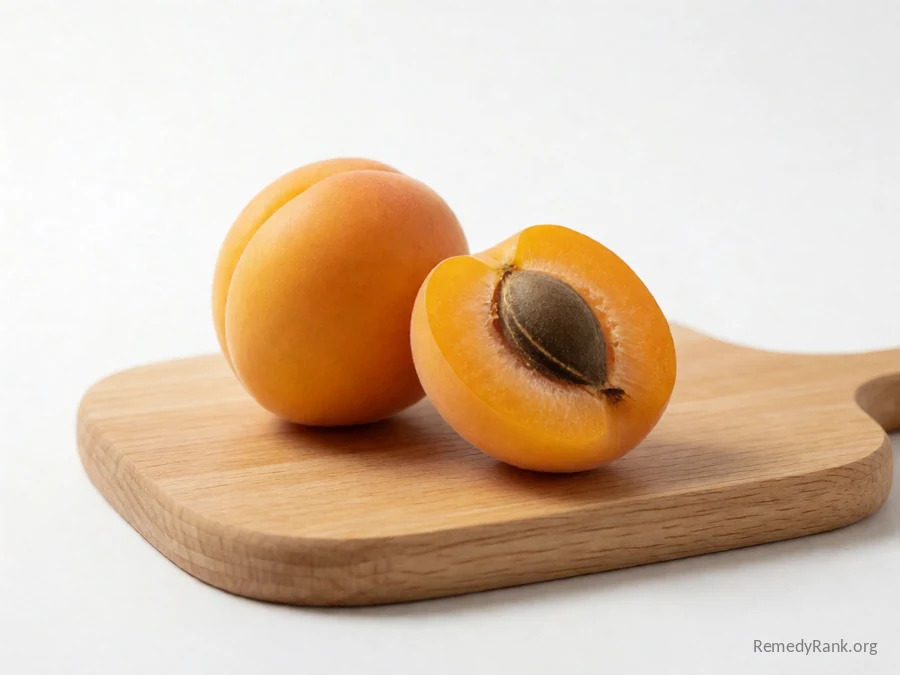
A small golden stone fruit rich in beta-carotene, fiber, and iron — sweet help for the eyes, the blood, and gentle regularity.
 ⤢
⤢📊 How it ranks (our editor score) — 82/100Tap to see the breakdown
🌱 What it is
The apricot is a small, velvety-skinned stone fruit related to the peach and plum, eaten fresh in summer or dried for year-round snacking.
📜 Where it comes from
The apricot likely originated in Central Asia and China, cultivated for thousands of years before spreading along the Silk Road to Persia, the Mediterranean, and eventually Europe. Traditional Persian and Middle Eastern medicine valued dried apricots as a nourishing food for the blood and eyes. Dried apricots became a common household remedy for gentle constipation relief in many folk traditions.
✨ Why it's good for you
- May help support eye health with beta-carotene
- May help support gentle, regular digestion
- May help supply iron for healthy blood
- May help support skin health with vitamin A and C
🥗 Nutrition
Per 4 dried apricot halves (~35g) · about 84 calories
- Fiber 2.4g
- Vitamin A 63mcg RAE
- Potassium 322mg
- Iron 0.7mg
Source: USDA FoodData Central
🥄 How to use it
Eat fresh apricots whole when in season, or keep dried apricots on hand as a portable snack. A few dried apricots also gently ease constipation.
How much: Three or four fresh apricots, or five to six dried halves, make a good serving. A small daily handful of dried apricots is a time-honored aid for regularity.
Why it works: Nutrition science attributes apricot's gentle laxative reputation to its fiber and sorbitol content, while its beta-carotene is studied for supporting eye health and its iron for supporting healthy blood.
Show full details & how to prepare it
Apricots glow orange because they are packed with beta-carotene, which the body converts to vitamin A for healthy eyes and skin. They also carry plant iron and fiber, which is why dried apricots have long been recommended for building the blood and keeping the bowels moving.
Drying concentrates both the goodness and the sugar, so dried apricots are a small, energy-dense snack best eaten in modest amounts. One firm rule: never eat the kernel inside the pit, which holds a natural compound that releases cyanide.
Ways to prepare it
⚠️ Cautions
- Dried apricots are concentrated in sugar — keep portions modest, especially if you watch blood sugar.
- Apricot kernels (the seed inside the pit) contain a natural cyanide compound and should never be eaten.
📚 Learn more
🌿 Deeper natural detail
🩺 The conventional view
💬 Ask Remy about Apricot
📚 Resource confidence
Based on mentions in health references
Your vote is saved. Source endorsement totals come from books and studies (+7 per book, +5 per article). You can change your vote anytime from this device.
💬 Comments & experiences
Share what worked for you — and reply or 👍 like the experiences that resonate. Comments get a quick review before they appear publicly, to keep things safe and honest. Please don't make medical claims.
💚 Have an experience to share? Create a free account to join the conversation — your words might be exactly what someone else needs. Reading is always open to everyone.
Know a remedy like this?
Share a structured suggestion and our team will review it for the site.
Suggest a similar remedy