Herb
Alfalfa
A deeply-rooted legume whose tender leaves and sprouts are packed with vitamins and minerals, used as a gentle nourishing tonic.
📊 How it ranks (our editor score) — 76/100Tap to see the breakdown
🌱 What it is
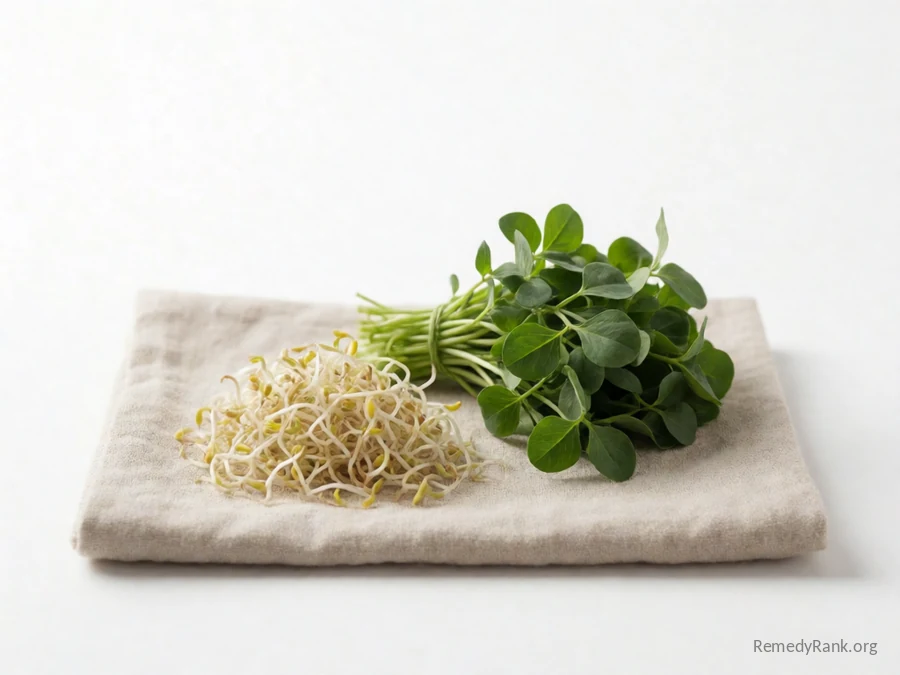
Alfalfa is a leafy legume with roots that can reach many feet into the soil, drawing up minerals other plants can't reach. Its young sprouts, leaves, and dried leaf are all used as food, adding a light, grassy freshness.
✨ Why it's good for you
- Traditionally used to support overall nourishment with its range of vitamins and minerals
- May help support healthy digestion with its fiber and chlorophyll content
- Traditionally used as a gentle tonic during recovery or times of low appetite
- May help support healthy bones with its vitamin K and mineral content
🥗 Nutrition
Per 1 cup raw sprouts (33 g) · about 8 calories
- Vitamin K 10.1 mcg
- Fiber 0.6 g
- Vitamin C 2.7 mg
- Folate 12 mcg
Source: USDA FoodData Central
🥄 How to use it
Steep dried alfalfa leaf as a mild teaA warm drink made by steeping herbs in hot water. How to make a tea →, add fresh sprouts to salads and sandwiches, or take it as a leaf powder stirred into smoothies.
How much: Steep 1-2 teaspoons dried alfalfa leaf in a cup of hot water for 5-10 minutes, up to twice a day, or enjoy a small handful of fresh sprouts in food.
Show full details & how to prepare it
Alfalfa sends its roots far down into the soil, drawing up minerals that concentrate in its tender green leaves. That is why it has long been valued less as a medicine and more as a quiet, nourishing tonic - a food-like source of vitamins A, C, and K, folate, and minerals like calcium and iron.
People reach for it to help rebuild after run-down, low-iron seasons, to support a healthy cholesterol pattern as part of a plant-rich diet, and to ease the passage through menopause with its mild plant compounds. As a gentle anti-inflammatoryA food or habit that helps calm swelling and redness in the body. More → green, it is also a traditional companion for achy joints.
The simplest ways to enjoy it are the best: a mild leaf teaA warm drink made by steeping herbs in hot water. How to make a tea →, or fresh sprouts tucked into a salad or sandwich. A couple of sensible cautions apply - it is not for people with autoimmune conditions, and its vitamin K means those on blood thinners should keep their intake steady - but for most people it is simply a wholesome green.
Ways to prepare it
⚠️ Cautions
- People with lupus or other autoimmune conditions should avoid alfalfa, as a natural compound in it (canavanine) may stir up immune activity.
- If you take blood thinners, be consistent, since alfalfa is rich in vitamin K, which affects clotting; check with your doctor.
- Use washed, food-safe sprouts and normal food amounts rather than high-dose extracts.
📚 What others say
- Long used as a nutritive tonic herb
- Listed in herbal references for its vitamin and mineral content
Learn more
🕊️ A word of encouragement
Like a plant that quietly draws strength from deep roots, may you be nourished steadily today - small, faithful good choices adding up to real strength.
💬 Ask Remy about Alfalfa
📚 Resource confidence
Based on mentions in health references
Your vote is saved. Source endorsement totals come from books and studies (+7 per book, +5 per article). You can change your vote anytime from this device.
💬 Comments & experiences
Share what worked for you — and reply or 👍 like the experiences that resonate. Comments get a quick review before they appear publicly, to keep things safe and honest. Please don't make medical claims.
💚 Have an experience to share? Create a free account to join the conversation — your words might be exactly what someone else needs. Reading is always open to everyone.
Know a remedy like this?
Share a structured suggestion and our team will review it for the site.
Suggest a similar remedy