Whole Grain
Wild Rice
A nutty, protein-rich whole grain, high in fiber and antioxidants, that supports healthy cholesterol, steady blood sugar, and the heart.
 ⤢
⤢📊 How it ranks (our editor score) — 89/100Tap to see the breakdown
🌱 What it is
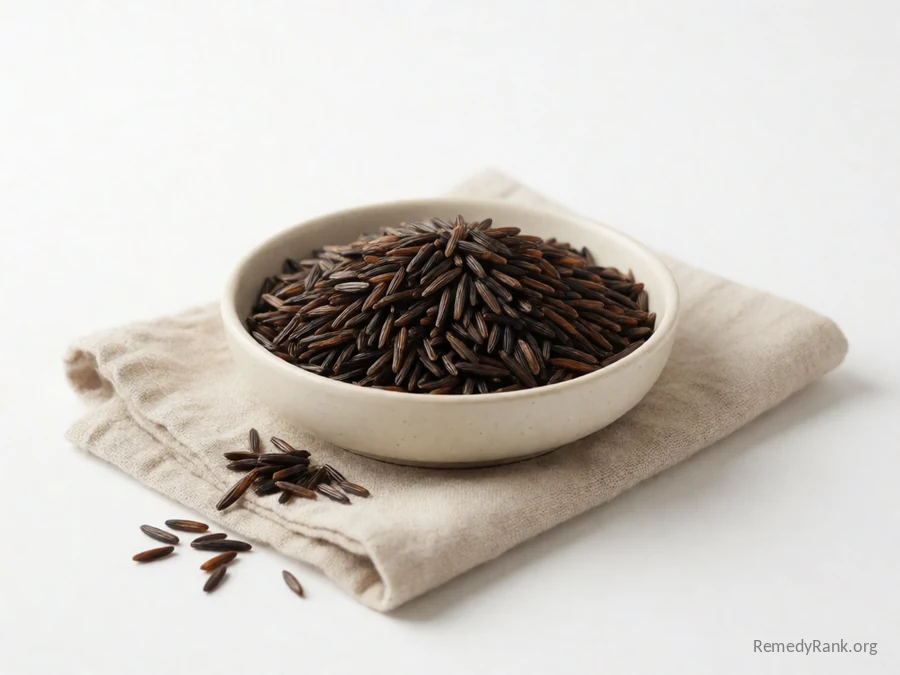
Wild rice is not true rice but the seed of an aquatic grass, native to North America, with a nutty flavor and satisfying chew once cooked tender.
📜 Where it comes from
Wild rice has been harvested for thousands of years by Native American nations of the Great Lakes region, particularly the Ojibwe, who gathered it by hand from canoes in shallow lakes and rivers as a sacred and sustaining staple food. It held deep cultural and spiritual significance and remains an important traditional food today. Wild rice entered broader American markets in the twentieth century as its nutty flavor gained wider appreciation.
✨ Why it's good for you
- May help support healthy cholesterol levels
- May help support steady blood sugar
- May help support heart health with antioxidants
- May help supply plant protein and fiber
🥗 Nutrition
Per 1 cup cooked (164g) · about 166 calories
- Protein 6.5g
- Fiber 3g
- Magnesium 52mg
- Zinc 2.2mg
Source: USDA FoodData Central
🥄 How to use it
Simmer until the grains split open and serve as a side, in salads, or stirred into soups.
How much: A practical food amount is about half a cup to a cup cooked, a few times a week.
Why it works: Nutrition science points to wild rice's fiber, protein, and antioxidantA helpful substance in colorful fruits and vegetables that protects your cells from everyday wear and tear. More → content as support for healthy cholesterol and steady blood sugar, distinguishing it nutritionally from true rice.
Show full details & how to prepare it
Wild rice is not truly rice at all but the long, dark seed of a tall grass that grows in shallow lakes and rivers, gathered as a treasured food for generations. Its nutty flavor and pleasant chew make it one of the most satisfying of whole grains.
It carries notably more protein than ordinary rice, along with a generous helping of fiber that helps gather up excess cholesterol and keeps blood sugar from rising too quickly after a meal. Its dark color signals a rich store of protective antioxidants that quietly support the heart and the whole body.
As a whole, unrefined grain it is a wholesome and safe food. It simply asks for patience in the pot — long simmering until the grains split open — and, like all high-fiber foods, a gradual welcome with plenty of water.
Ways to prepare it
⚠️ Cautions
- It needs long cooking until tender; underdone grains are tough and hard to digest.
- Like other whole grains it is filling and high in fiber, so increase your portion gradually with plenty of water.
📚 Learn more
🌿 Deeper natural detail
🩺 The conventional view
💬 Ask Remy about Wild Rice
📚 Resource confidence
Based on mentions in health references
Your vote is saved. Source endorsement totals come from books and studies (+7 per book, +5 per article). You can change your vote anytime from this device.
💬 Comments & experiences
Share what worked for you — and reply or 👍 like the experiences that resonate. Comments get a quick review before they appear publicly, to keep things safe and honest. Please don't make medical claims.
💚 Have an experience to share? Create a free account to join the conversation — your words might be exactly what someone else needs. Reading is always open to everyone.
Know a remedy like this?
Share a structured suggestion and our team will review it for the site.
Suggest a similar remedy