Vegetable
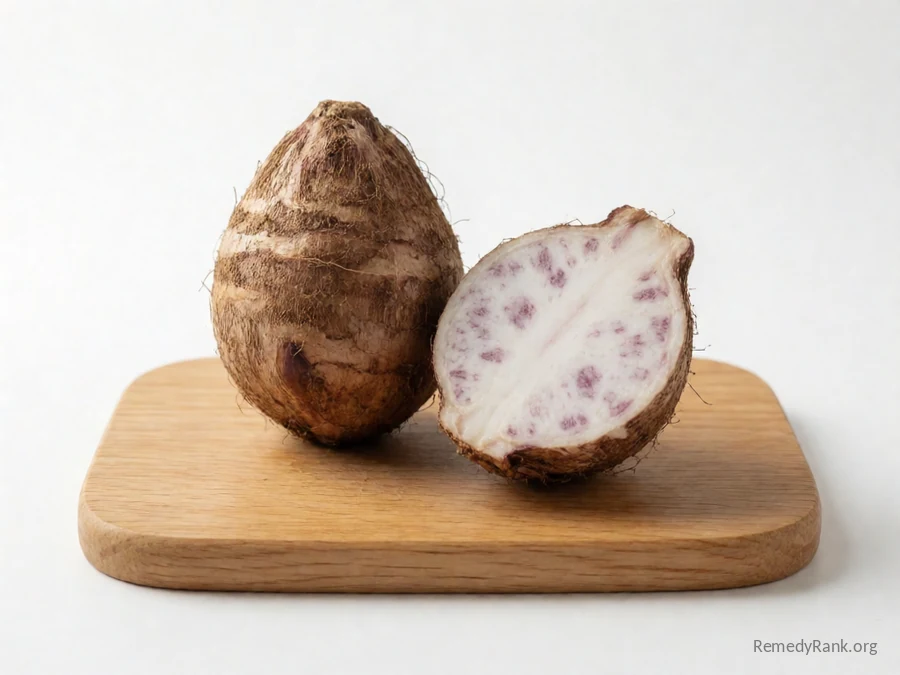
Taro Root
A nourishing starchy root, rich in fiber and resistant starch, that steadies digestion and blood sugar.
 ⤢
⤢📊 How it ranks (our editor score) — 85/100Tap to see the breakdown
🌱 What it is
Taro is a starchy root vegetable widely grown in Asia, Africa, and the Pacific Islands, with a mildly sweet, nutty flavor once cooked. Its fiber and resistant starch make it a gentle staple food.
📜 Where it comes from
Taro is one of the oldest cultivated root crops, grown across the Pacific Islands, Southeast Asia, and Africa for thousands of years, forming a staple food deeply woven into Polynesian and Hawaiian culture, where it is used to make poi. It also spread through trade to the Caribbean and parts of the Americas. Traditional Pacific Island diets relied heavily on taro as a dependable, filling staple.
✨ Why it's good for you
- may help support steady digestion thanks to its fiber and resistant starch
- may help support more even blood sugar as part of a balanced meal
- may help support lasting fullness and satisfaction after eating
- may help support gut health by feeding beneficial bacteria
🥗 Nutrition
Per 1 cup, cooked (132g) · about 187 calories
- Carbohydrates 46g
- Fiber 7g
- Potassium 639mg
- Vitamin E 3mg
- Vitamin B6 0.3mg
Source: USDA FoodData Central
🥄 How to use it
Peel and cook taro thoroughly, then steam, boil, or mash it as you would a potato.
How much: A cooked serving of about a cup, in place of potato or rice, a few times a week.
Why it works: Nutrition science points to taro's fiber and resistant starch content as support for steady blood sugar and digestive health, since resistant starch is digested more slowly than ordinary starch.
Show full details & how to prepare it
Taro is one of the oldest cultivated foods on earth, the comforting starch behind countless island and tropical kitchens. What sets it apart from an ordinary potato is its generous fiber and resistant starch, which the body digests slowly, helping to blunt blood-sugar spikes, feed the gut's friendly bacteria, and keep things moving gently. Its potassium adds quiet support for healthy blood pressure.
The one firm rule is to cook it well. Raw taro holds needle-like calcium-oxalate crystals that irritate the mouth and skin, all of which thorough cooking dissolves, leaving a mild, slightly sweet, floury root that mashes, steams, or simmers beautifully.
Ways to prepare it
⚠️ Cautions
- Always cook taro fully; raw taro contains irritating calcium-oxalate crystals that cooking destroys.
- Peel it under running water or wear gloves, as the raw skin can itch the hands.
📚 Learn more
🌿 Deeper natural detail
🩺 The conventional view
💬 Ask Remy about Taro Root
📚 Resource confidence
Based on mentions in health references
Your vote is saved. Source endorsement totals come from books and studies (+7 per book, +5 per article). You can change your vote anytime from this device.
💬 Comments & experiences
Share what worked for you — and reply or 👍 like the experiences that resonate. Comments get a quick review before they appear publicly, to keep things safe and honest. Please don't make medical claims.
💚 Have an experience to share? Create a free account to join the conversation — your words might be exactly what someone else needs. Reading is always open to everyone.
Know a remedy like this?
Share a structured suggestion and our team will review it for the site.
Suggest a similar remedy