Vegetable
Swiss Chard
A colorful leafy green full of magnesium and potassium that gently supports healthy blood pressure.
 ⤢
⤢📊 How it ranks (our editor score) — 89/100Tap to see the breakdown
🌱 What it is
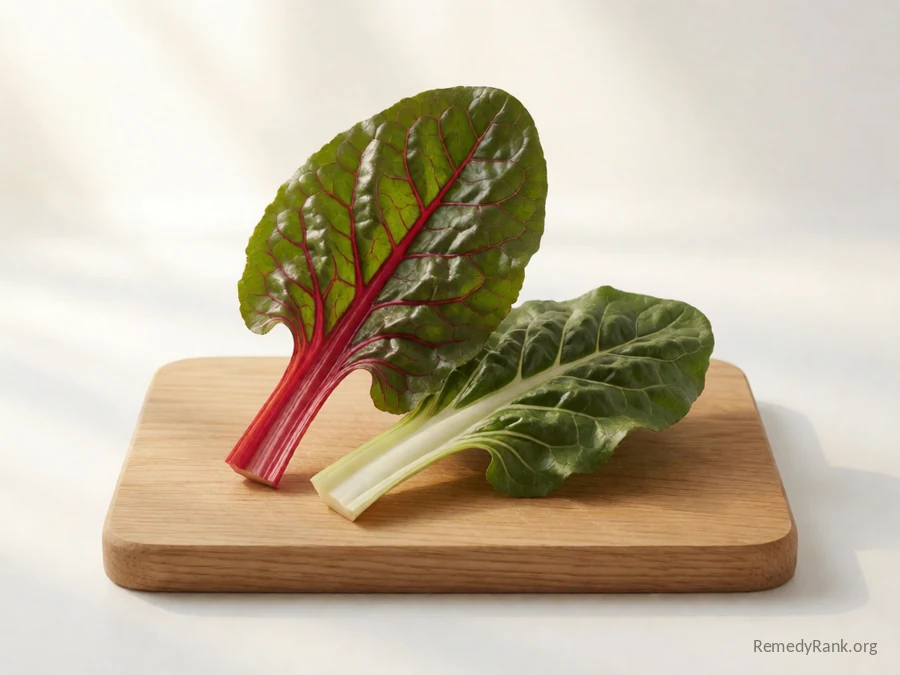
Swiss chard is a leafy green in the beet family, known for its glossy dark leaves and bright red, yellow, or white stalks, with an earthy flavor similar to spinach.
📜 Where it comes from
Swiss chard descends from wild beet plants native to the Mediterranean region, where Greco-Roman writers including Aristotle described it as a cultivated leafy green. It became a staple leafy vegetable throughout Mediterranean and Middle Eastern cooking for centuries. Despite its name, it has no particular connection to Switzerland, having gained that label through a nineteenth-century seed catalogue naming convention.
✨ Why it's good for you
- May help support healthy blood pressure with magnesium and potassium
- May help support strong bones with vitamin K
- May help supply iron and antioxidants
- May help support healthy eyes with vitamin A
🥗 Nutrition
Per 1 cup cooked (175g) · about 35 calories
- Vitamin K 573mcg
- Magnesium 150mg
- Potassium 961mg
- Vitamin A 214mcg RAE
Source: USDA FoodData Central
🥄 How to use it
Sauté the leaves and tender stems with a little olive oil and garlic until wilted, just a few minutes.
How much: A practical serving is about 1 cup cooked a few times a week as part of a varied, plant-rich plate.
Why it works: Nutrition science points to Swiss chard's magnesium and potassium content as support for healthy blood pressure, since both minerals are studied for their role in relaxing blood vessels and balancing fluid levels.
Show full details & how to prepare it
Swiss chard is a leafy green with glossy leaves and bright, ribbon-like stems of red, gold, or white. Beneath the color it is quietly mineralA natural building block your body needs in small amounts, like calcium or magnesium. More →-rich, carrying generous magnesium and potassium — two minerals the body leans on to keep blood vessels relaxed and blood pressure in a healthy range.
The leaves also bring plant iron and folate for healthy blood, plus fiber and steady, slow-releasing carbohydrate that fit well into a blood-sugar-friendly plate. A quick sauté wilts both leaves and tender stems while keeping their nutrients largely intact.
Chard is a very safe everyday vegetable. Like other dark greens it is high in oxalates and vitamin K, so those who form kidney stones should keep portions modest, and anyone on a blood thinner should keep their leafy-green intake steady and informed by their doctor.
Ways to prepare it
⚠️ Cautions
- Chard is high in oxalates, so those prone to kidney stones should enjoy it in moderation.
- It is rich in vitamin K, which can interact with blood thinners, so it helps to keep intake steady rather than swinging high and low.
- Wash well and cook lightly; very large raw amounts may be hard on sensitive stomachs.
📚 Learn more
🌿 Deeper natural detail
🩺 The conventional view
💬 Ask Remy about Swiss Chard
📚 Resource confidence
Based on mentions in health references
Your vote is saved. Source endorsement totals come from books and studies (+7 per book, +5 per article). You can change your vote anytime from this device.
💬 Comments & experiences
Share what worked for you — and reply or 👍 like the experiences that resonate. Comments get a quick review before they appear publicly, to keep things safe and honest. Please don't make medical claims.
💚 Have an experience to share? Create a free account to join the conversation — your words might be exactly what someone else needs. Reading is always open to everyone.
Know a remedy like this?
Share a structured suggestion and our team will review it for the site.
Suggest a similar remedy