Vegetable
Pumpkin
A bright orange squash loaded with beta-carotene that nourishes the eyes, skin, and immune system.
 ⤢
⤢📊 How it ranks (our editor score) — 81/100Tap to see the breakdown
🌱 What it is
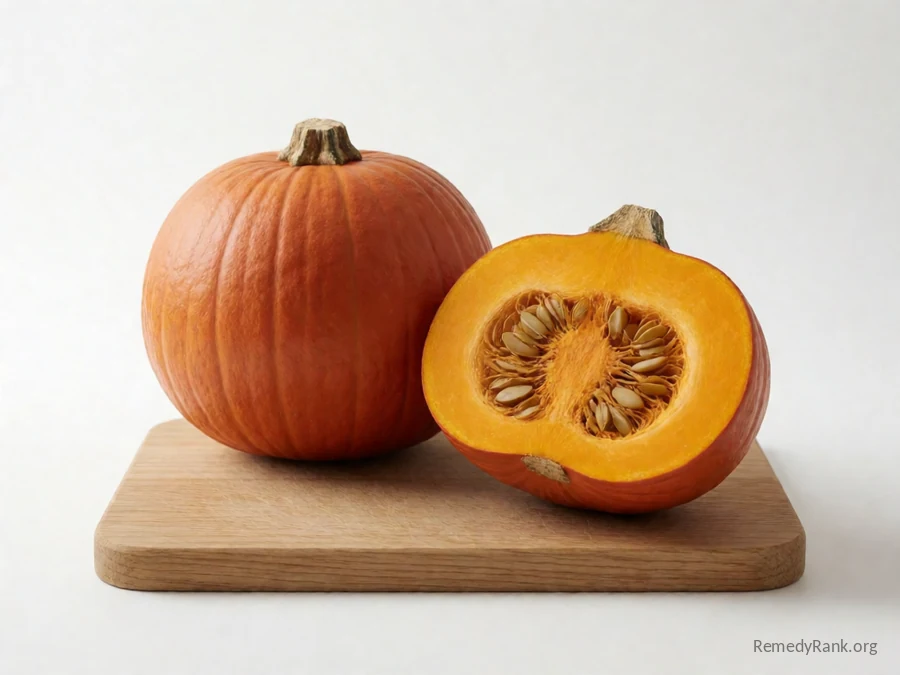
Pumpkin is a large orange squash, soft and sweet when cooked, and loaded with beta-carotene and fiber.
📜 Where it comes from
Pumpkins are native to the Americas, cultivated by indigenous peoples for thousands of years before European contact, valued as a hardy, storable food through the winter months. Early American settlers adopted pumpkin from Native agricultural practice, eventually incorporating it into harvest traditions such as Thanksgiving. Its rich orange flesh has long made it a valued source of nourishment in the cooler months.
✨ Why it's good for you
- Beta-carotene supports healthy skin and eyes
- Fiber keeps digestion smooth and regular
- Naturally sweet and very filling for few calories
🥗 Nutrition
Per 1 cup cooked, mashed (245g) · about 49 calories
- Vitamin A 245% DV
- Fiber 3g
- Potassium 16% DV
- Vitamin C 19% DV
Source: USDA FoodData Central
🥄 How to use it
Roast or steam the flesh for soups, purées, and bakes; its deep color signals rich vitamin A value.
How much: A practical serving is about ½ to 1 cup cooked pumpkin, enjoyed regularly during its season and beyond as purée.
Why it works: Nutrition science points to pumpkin's beta-carotene content as support for eye and immune health, with some research also examining its seeds and flesh for supporting prostate comfort.
Show full details & how to prepare it
Pumpkin is a deep-orange squash whose color comes from beta-carotene, which the body turns into vitamin A. That makes pumpkin a beautiful, natural ally for the eyes — vitamin A is essential for seeing in dim light and for protecting the retina, the very tissues involved in night vision and age-related sight changes.
The same carotenoids and antioxidants support healthy skin and a resilient immune systemYour body's built-in defense team that fights off germs and helps you heal. More →, while pumpkin's fiber keeps digestionHow your body breaks food down into pieces small enough to use for energy. More → gentle and regular. Its seeds, eaten separately, are also traditionally valued for prostate health, complementing the flesh's all-round nourishment.
Pumpkin is a wonderfully safe, wholesome food. The wisest approach is to get its vitamin A from the whole vegetable rather than from high-dose supplements, since concentrated vitamin A can build up to harmful levels — something the food form simply does not do.
Ways to prepare it
⚠️ Cautions
- Enjoy pumpkin as a whole food rather than relying on high-dose vitamin A supplements, which can be toxic in excess.
- Sweetened canned pumpkin pie filling is high in added sugar — choose plain pumpkin purée.
- Very large amounts of carotene-rich foods can temporarily tint the skin orange; harmless and reversible.
📚 Learn more
💬 Ask Remy about Pumpkin
📚 Resource confidence
Based on mentions in health references
Your vote is saved. Source endorsement totals come from books and studies (+7 per book, +5 per article). You can change your vote anytime from this device.
💬 Comments & experiences
Share what worked for you — and reply or 👍 like the experiences that resonate. Comments get a quick review before they appear publicly, to keep things safe and honest. Please don't make medical claims.
💚 Have an experience to share? Create a free account to join the conversation — your words might be exactly what someone else needs. Reading is always open to everyone.
Know a remedy like this?
Share a structured suggestion and our team will review it for the site.
Suggest a similar remedy