Herb
Psyllium Husk
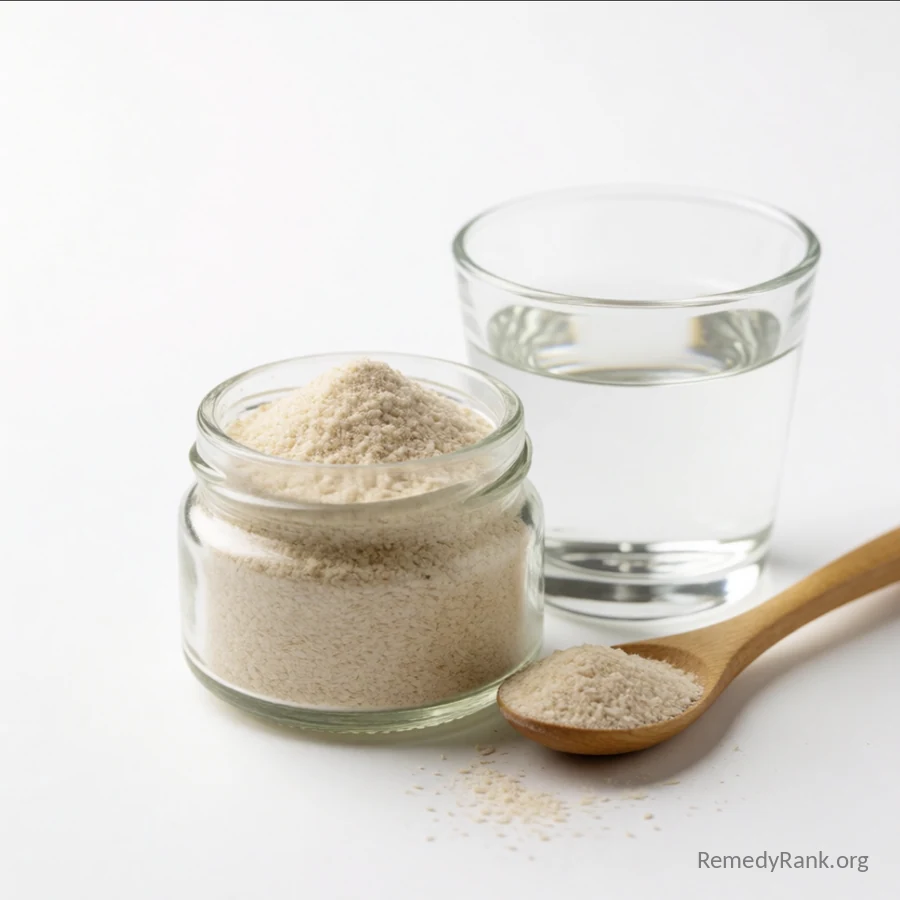
A gentle soluble fiber from a tiny seed, stirred into water to ease both constipation and loose stools and to support healthy cholesterol.
 ⤢
⤢📊 How it ranks (our editor score) — 74/100Tap to see the breakdown
🌱 What it is
Psyllium husk is the soluble fiber coating of the psyllium plant's seeds, stirred into water to form a soft gel. It's one of the most well-studied fibers for gut and heart health.
📜 Where it comes from
Psyllium comes from a plant native to India and the Mediterranean and has been used in Ayurvedic medicine for centuries as a remedy for both constipation and loose stools. Its seed husks were traded along old spice and medicine routes into the Middle East and eventually Europe. It became a well-established fiber supplement in Western use during the twentieth century as its gentle, gel-forming action was studied more closely.
✨ Why it's good for you
- May help support regular, comfortable digestion
- May help support healthy cholesterol levels
- May help support steady blood sugar after meals
- May help support a comfortable, full feeling between meals
🥗 Nutrition
Per 1 tablespoon (about 7g) · about 20 calories
- Fiber: 5g
- Soluble fiber: 4g
- Protein: 0g
- Total carbohydrate: 6g
- Sodium: 5mg
Source: USDA FoodData Central
🥄 How to use it
Stir 1 teaspoon of psyllium husk into a full glass of water, drink right away before it thickens, and follow with another glass of water. Start with a small amount once a day and build up slowly.
How much: Start with 1 teaspoon in a full glass of water once daily, building to 1-2 teaspoons one to three times a day as tolerated, each with plenty of water.
Why it works: Fiber that promotes softer stool and regularity.
Show full details & how to prepare it
Psyllium husk is the fine outer coat of a tiny seed, and it's one of the most useful gentle fibers there is. Because it's a soluble fiber that forms a soft gelA cool, jelly-like preparation that soothes and moisturizes skin. How to make a gel →, it works both ways... softening hard stools to ease constipation, and firming up loose ones... while also helping to lower cholesterol over time.
The golden rule is water: psyllium must always be taken with a full glass, and followed by more, so it can do its work safely. Build the amount up slowly to let your gut adjust, and keep it apart from medicines, which it can otherwise carry through too quickly.
Ways to prepare it
🔬 Let's get technical
The scientific view, plainly reported. Hover a dotted word for its meaning.
What's in it
Psyllium husk is composed largely of , a soluble, highly branched that swells into on contact with water, alongside a smaller fraction.
Mechanism of action
The hydrated gel increases stool bulk and water content, mechanically distending the bowel wall and stimulating . In the small intestine, the viscous gel slows and delays glucose and lipid absorption, which blunts post-meal . The same gel binds in the intestinal lumen, reducing their reabsorption and increasing fecal bile acid loss, which prompts the liver to divert more circulating cholesterol into new bile acid synthesis. Because the fiber is only partially fermented, it retains much of its water-holding capacity through the colon, distinguishing its bulking effect from more fully fermentable fibers.
Current pharmacological applications
Psyllium is widely used and well studied as a for both constipation and, at appropriate hydration, loose stool, with consistent evidence for improved stool regularity. Its -lowering effect is also well supported across multiple randomized trials and meta-analyses, modest in magnitude but reproducible. Evidence for symptom relief in irritable bowel syndrome is more mixed, varying by predominant symptom pattern.
Every underlined word is collected on the technical glossary.
⚠️ Cautions
- Always take with plenty of water... too little fluid can cause it to swell and block the throat or gut.
- Build up slowly to avoid gas and bloating; separate it from medications by a couple of hours, as it can slow their absorption.
- Avoid if you have a known bowel narrowing or swallowing difficulty; ongoing bowel changes are generally worth medical attention.
📚 Learn more
🌿 Deeper natural detail
💬 Ask Remy about Psyllium Husk
📚 Resource confidence
Based on mentions in health references
Your vote is saved. Source endorsement totals come from books and studies (+7 per book, +5 per article). You can change your vote anytime from this device.
💬 Comments & experiences
Share what worked for you — and reply or 👍 like the experiences that resonate. Comments get a quick review before they appear publicly, to keep things safe and honest. Please don't make medical claims.
💚 Have an experience to share? Create a free account to join the conversation — your words might be exactly what someone else needs. Reading is always open to everyone.
Know a remedy like this?
Share a structured suggestion and our team will review it for the site.
Suggest a similar remedy