Fruit
Persimmon
A glowing autumn fruit, sweet as honey, rich in fiber and antioxidants that gently support the heart and digestion.
 ⤢
⤢📊 How it ranks (our editor score) — 92/100Tap to see the breakdown
🌱 What it is
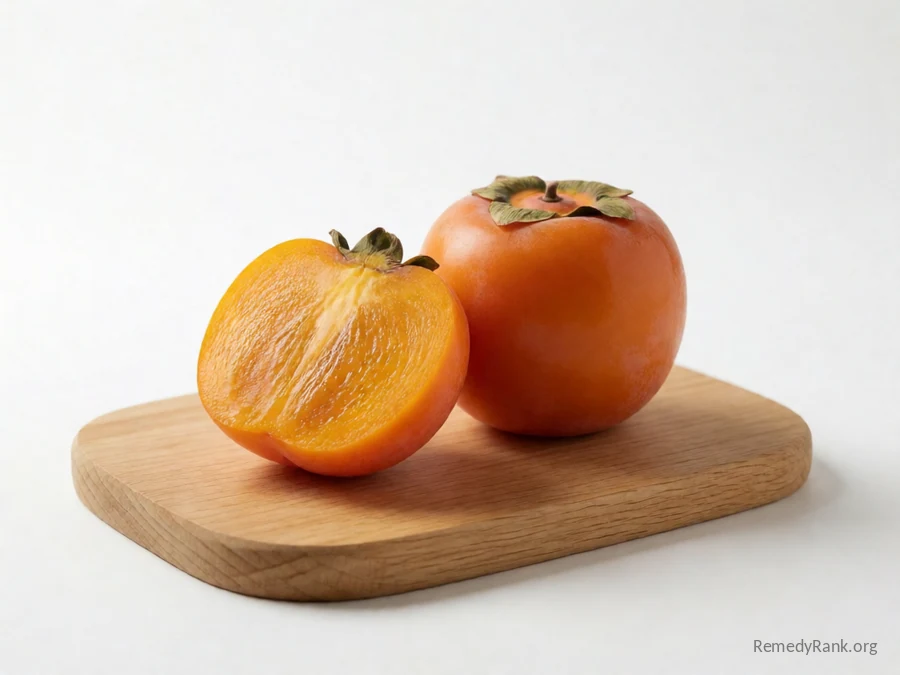
Persimmons are orange, glossy fruits that ripen in the cooler months, turning soft and honey-sweet when fully ready to eat. Some varieties are eaten firm like an apple, while others must soften completely before enjoying.
📜 Where it comes from
Persimmons have been cultivated in China for thousands of years, where they hold cultural significance in traditional medicine and cuisine, and cultivation later spread to Japan and Korea, where the fruit became deeply woven into autumn tradition. Japanese persimmons, known as kaki, were introduced to the West in the nineteenth century. American persimmons were also traditionally gathered and eaten by Native American peoples in the eastern United States.
✨ Why it's good for you
- May help support healthy digestion with its generous fiber content
- Traditionally used to support the heart with its antioxidant and potassium content
- May help support healthy vision with its beta-carotene content
- May help support immune health with its vitamin C content
🥗 Nutrition
Per 1 medium persimmon (168 g) · about 118 calories
- Fiber 6 g
- Vitamin C 12.6 mg
- Vitamin A (beta-carotene) 55 mcg RAE
- Potassium 270 mg
- Manganese 0.6 mg
Source: USDA FoodData Central
🥄 How to use it
Eat a ripe persimmon fresh and soft, slice it over oatmeal, or fold the pulp into a warm porridge.
How much: One ripe persimmon a day in season is a wholesome serving. Dried persimmon is sweeter and more concentrated, so a piece or two is plenty.
Why it works: Nutrition science points to persimmon's fiber and antioxidantA helpful substance in colorful fruits and vegetables that protects your cells from everyday wear and tear. More → compounds as support for digestive comfort and heart health, consistent with research on other fiber-rich fruits.
Show full details & how to prepare it
The persimmon ripens late, hanging like a small lantern after the leaves have fallen, and rewards patience with a flesh so soft and sweet it almost spoons like jam. Inside that sweetness is a generous helping of soluble fiber, which gently keeps things moving and feeds the body's friendly gut bacteria, along with antioxidants and potassium that quietly support healthy blood pressure and the heart.
The one rule worth remembering is ripeness. Astringent varieties are mouth-puckering and tannic when firm, and need to soften completely before eating; the sweeter 'fuyu' kinds can be enjoyed while still crisp. Eaten ripe and in sensible amounts, persimmons are a gentle, nourishing pleasure.
Ways to prepare it
⚠️ Cautions
- Eat persimmons fully ripe; very unripe astringent ones can, in rare cases, form a hard mass in the stomach, especially if many are eaten at once.
- Their natural sugars are concentrated, so those watching blood sugar should enjoy them in modest portions.
📚 Learn more
🌿 Deeper natural detail
🩺 The conventional view
💬 Ask Remy about Persimmon
📚 Resource confidence
Based on mentions in health references
Your vote is saved. Source endorsement totals come from books and studies (+7 per book, +5 per article). You can change your vote anytime from this device.
💬 Comments & experiences
Share what worked for you — and reply or 👍 like the experiences that resonate. Comments get a quick review before they appear publicly, to keep things safe and honest. Please don't make medical claims.
💚 Have an experience to share? Create a free account to join the conversation — your words might be exactly what someone else needs. Reading is always open to everyone.
Know a remedy like this?
Share a structured suggestion and our team will review it for the site.
Suggest a similar remedy