Vegetable
Okra
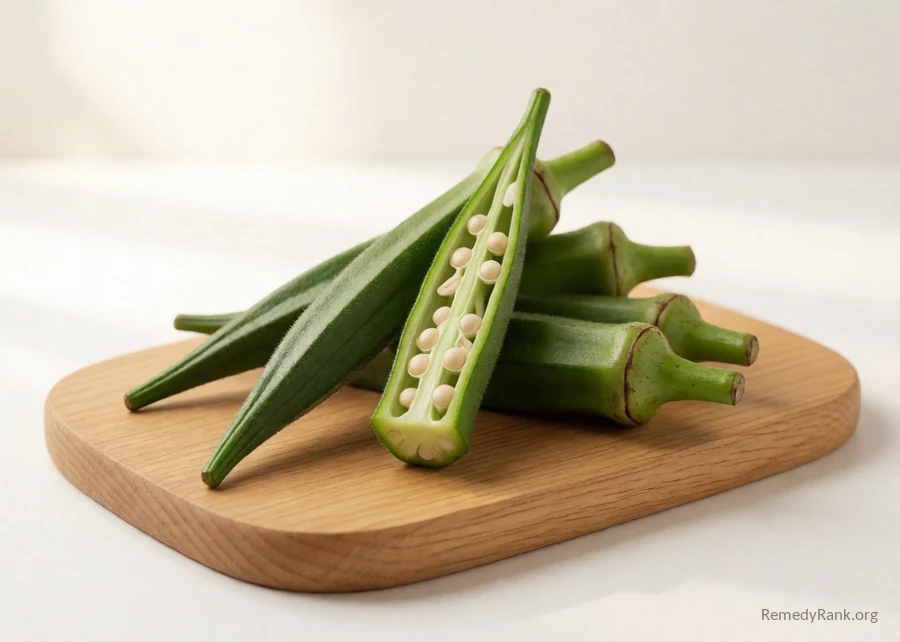
A green pod whose silky, soothing fiber gently calms the digestive tract and helps steady blood sugar.
 ⤢
⤢📊 How it ranks (our editor score) — 89/100Tap to see the breakdown
🌱 What it is
Okra is the edible green seed pod of a warm-climate plant in the mallow family, prized for its mucilage... a natural silky texture that thickens soups and stews.
📜 Where it comes from
Okra is believed to have originated in Africa, where it was cultivated for centuries before spreading to the Middle East, India, and eventually the Americas through the transatlantic slave trade, becoming a foundational ingredient in Southern American and Caribbean cooking. Traditional African and Middle Eastern kitchens valued its thickening mucilage in soups and stews. It remains a beloved vegetable across many warm-climate cuisines today.
✨ Why it's good for you
- May help support soothing, gentle digestion
- May help support healthy blood sugar levels
- May help supply fiber and vitamin C
- May help support healthy cholesterol levels
🥗 Nutrition
Per 1 cup sliced, cooked (160g) · about 35 calories
- Fiber 4g
- Vitamin C 22mg
- Vitamin K 64mcg
- Magnesium 57mg
Source: USDA FoodData Central
🥄 How to use it
Add young pods to soups and stews, or stir-fry quickly with a little olive oil so they stay tender. A short cook keeps them most soothing.
How much: A practical serving is about ½ to 1 cup of cooked okra (roughly 8-10 pods) a few times a week, as part of a varied plant-basedEating mostly or only foods that come from plants — fruits, vegetables, beans, grains, nuts, and seeds. More → plate.
Why it works: Nutrition science points to okra's soluble fiber and mucilage as support for steady blood sugar and digestive comfort, since the gelA cool, jelly-like preparation that soothes and moisturizes skin. How to make a gel →-like fiber slows sugar absorption and soothes the digestive lining.
Show full details & how to prepare it
Okra is the slender green pod of a mallow-family plant, and its quiet secret is the soft, gelA cool, jelly-like preparation that soothes and moisturizes skin. How to make a gel →-like fiber inside. That soluble fiber is what makes okra so soothing for the digestive tract: it adds gentle bulk and moisture that ease things along, while the same gel helps slow how quickly sugars are absorbed after a meal.
Because that fiber can also bind a little cholesterol and carry it out of the body, okra has long been valued as part of a heart-friendly, plant-rich plate. A light, short cook keeps the pods tender and preserves their soothing quality... long boiling makes them stringy.
Okra is a wonderfully safe everyday food. The main cautions are small: it is naturally high in oxalates, so people prone to kidney stones should keep portions modest, and a sudden large jump in fiber can bring gas until the body adjusts.
Ways to prepare it
⚠️ Cautions
- Okra is high in oxalates, so anyone prone to kidney stones should enjoy it in moderation.
- Its natural fiber can cause gas if you suddenly eat a lot... increase the amount slowly and drink water.
- If you take blood-sugar medicine, watch for added blood-sugar-lowering effects when eating okra regularly.
📚 Learn more
🌿 Deeper natural detail
🩺 The conventional view
💬 Ask Remy about Okra
📚 Resource confidence
Based on mentions in health references
Your vote is saved. Source endorsement totals come from books and studies (+7 per book, +5 per article). You can change your vote anytime from this device.
💬 Comments & experiences
Share what worked for you — and reply or 👍 like the experiences that resonate. Comments get a quick review before they appear publicly, to keep things safe and honest. Please don't make medical claims.
💚 Have an experience to share? Create a free account to join the conversation — your words might be exactly what someone else needs. Reading is always open to everyone.
Know a remedy like this?
Share a structured suggestion and our team will review it for the site.
Suggest a similar remedy