Fermented Food
Miso
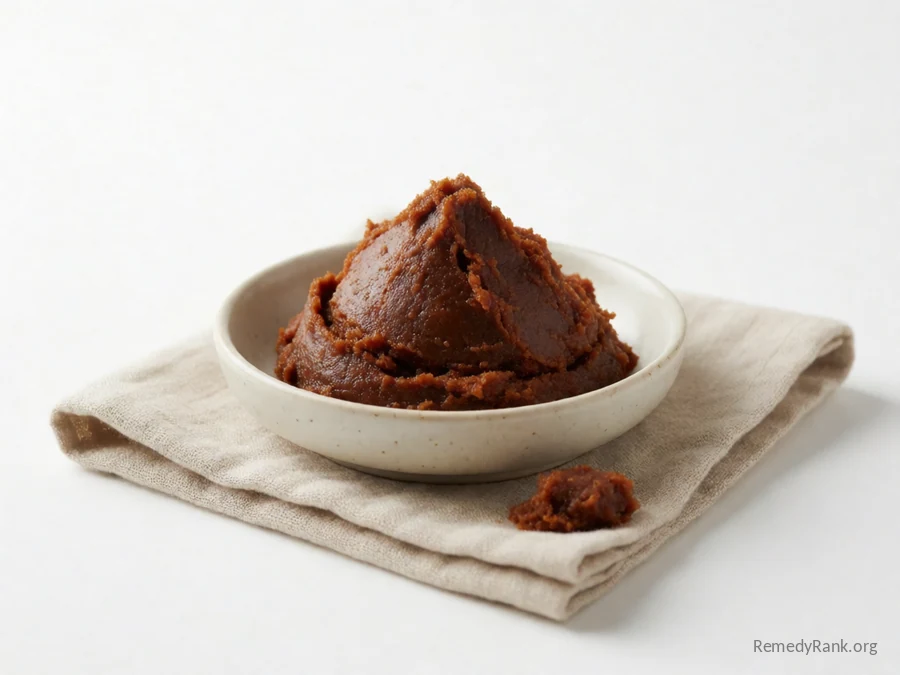
A savory, salty Japanese paste of fermented soybeans (and often grain), used to season broths and sauces.
 ⤢
⤢📊 How it ranks (our editor score) — 77/100Tap to see the breakdown
🌱 What it is
Miso is made by fermenting soybeans, often together with rice or barley, using a mold culture (koji) over weeks to months, producing a deeply savory, salty paste.
📜 Where it comes from
Miso developed in Japan over more than a thousand years, likely adapted from earlier fermented soybean pastes brought from China, and it became a foundational seasoning in Japanese cooking, used daily in soups, marinades, and sauces. Traditional miso-making relied on a mold culture called koji to slowly ferment soybeans, often together with rice or barley, over weeks or months in wooden vats. Regional variation across Japan produced many different styles, from light and sweet to dark and intensely savory.
✨ Why it's good for you
- Provides live beneficial cultures when unpasteurized and not boiled
- A source of plant protein and B vitamins
- Adds deep savory flavor without needing much added fat
- Traditional fermentation may make some soy nutrients easier to absorb
🥗 Nutrition
Per 1 tablespoon (17g) · about 34 calories
- Protein 2g
- Sodium 634mg
- Manganese 0.3mg
- Vitamin K 12mcg
Source: USDA FoodData Central
🥄 How to use it
Stir a spoonful into warm (not boiling) water or broth for a simple soup, or whisk into dressings and marinades; add miso at the end of cooking, off high heat, to protect its live cultures and flavor.
Why it works: Food scientists explain miso's deep savory flavor as the product of koji fermentation breaking down soy proteins into amino acids, while nutritionists note its notable sodium content as the main dietary consideration.
⚠️ Cautions
- Very high in sodium, so keep portions modest, especially with high blood pressure. A soy allergy is a reason to avoid it, and those with a gluten sensitivity should check whether barley or wheat koji was used. Not meaningfully alcoholic.
📚 Learn more
🌿 Deeper natural detail
Curated links coming for this one.
🩺 The conventional view
💬 Ask Remy about Miso
📚 Resource confidence
Based on mentions in health references
Your vote is saved. Source endorsement totals come from books and studies (+7 per book, +5 per article). You can change your vote anytime from this device.
💬 Comments & experiences
Share what worked for you — and reply or 👍 like the experiences that resonate. Comments get a quick review before they appear publicly, to keep things safe and honest. Please don't make medical claims.
💚 Have an experience to share? Create a free account to join the conversation — your words might be exactly what someone else needs. Reading is always open to everyone.
Know a remedy like this?
Share a structured suggestion and our team will review it for the site.
Suggest a similar remedy