Whole Grain
Millet
A soft, gluten-free ancient grain that gives gentle, steady energy and is easy on digestion.
 ⤢
⤢📊 How it ranks (our editor score) — 89/100Tap to see the breakdown
🌱 What it is
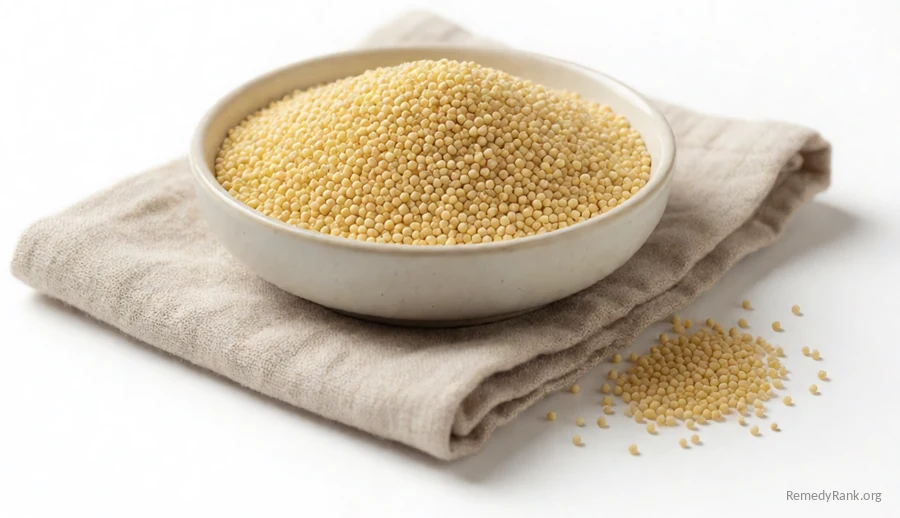
Millet is a small, round, gluten-free grain that has fed people across Africa and Asia for thousands of years, with a mild, slightly nutty flavor.
📜 Where it comes from
Millet is one of the oldest cultivated grains, grown across Africa and Asia for many thousands of years, predating rice cultivation in some regions. Traditional diets in India, China, and across the African continent relied on millet as a drought-resistant staple that could thrive where other grains struggled. It remains a dietary mainstay in many parts of the world today.
✨ Why it's good for you
- May help support steady, gentle energy
- May help support easy digestion
- May help supply magnesium and B vitamins
- May help support healthy blood sugar levels
🥗 Nutrition
Per 1 cup cooked (174g) · about 207 calories
- Magnesium 77mg
- Fiber 2.3g
- Protein 6g
- Phosphorus 174mg
Source: USDA FoodData Central
🥄 How to use it
Simmer like rice for a fluffy side, or cook with extra water for a creamy breakfast porridge.
How much: A practical serving is about ½ to 1 cup cooked millet a few times a week in place of refined grains.
Why it works: Nutrition science points to millet's fiber content and gentle digestibility as support for steady blood sugar and easy digestionHow your body breaks food down into pieces small enough to use for energy. More → compared to more refined grains.
Show full details & how to prepare it
Millet is a tiny, round, gluten-free grain that has fed families across Africa and Asia for thousands of years. Cooked soft, it is one of the gentlest grains on the stomach, which makes it a comforting choice for those who find heavier grains hard to digest.
Like other whole grains, millet releases its energy slowly and comes packaged with fiber and minerals, so it helps keep blood sugar on an even keel rather than spiking and crashing. That same fiber gently encourages regular digestionHow your body breaks food down into pieces small enough to use for energy. More → and helps the body carry away a little cholesterol over time.
Millet is a very safe, wholesome staple. The only note worth knowing is that very large amounts contain natural compounds that can affect the thyroid in people who are short on iodine — a non-issue at normal serving sizes in a varied diet.
Ways to prepare it
⚠️ Cautions
- Very large daily amounts of millet may affect thyroid function in people who are iodine-deficient; ordinary servings are fine.
- Increase its fiber gradually with water to avoid bloating.
- Rinse before cooking and choose plain millet rather than sweetened mixes.
📚 Learn more
🌿 Deeper natural detail
🩺 The conventional view
💬 Ask Remy about Millet
📚 Resource confidence
Based on mentions in health references
Your vote is saved. Source endorsement totals come from books and studies (+7 per book, +5 per article). You can change your vote anytime from this device.
💬 Comments & experiences
Share what worked for you — and reply or 👍 like the experiences that resonate. Comments get a quick review before they appear publicly, to keep things safe and honest. Please don't make medical claims.
💚 Have an experience to share? Create a free account to join the conversation — your words might be exactly what someone else needs. Reading is always open to everyone.
Know a remedy like this?
Share a structured suggestion and our team will review it for the site.
Suggest a similar remedy