Vegetable
Kohlrabi
A crisp, mild cabbage-cousin loaded with vitamin C and fiber for immunity and digestion.
 ⤢
⤢📊 How it ranks (our editor score) — 89/100Tap to see the breakdown
🌱 What it is
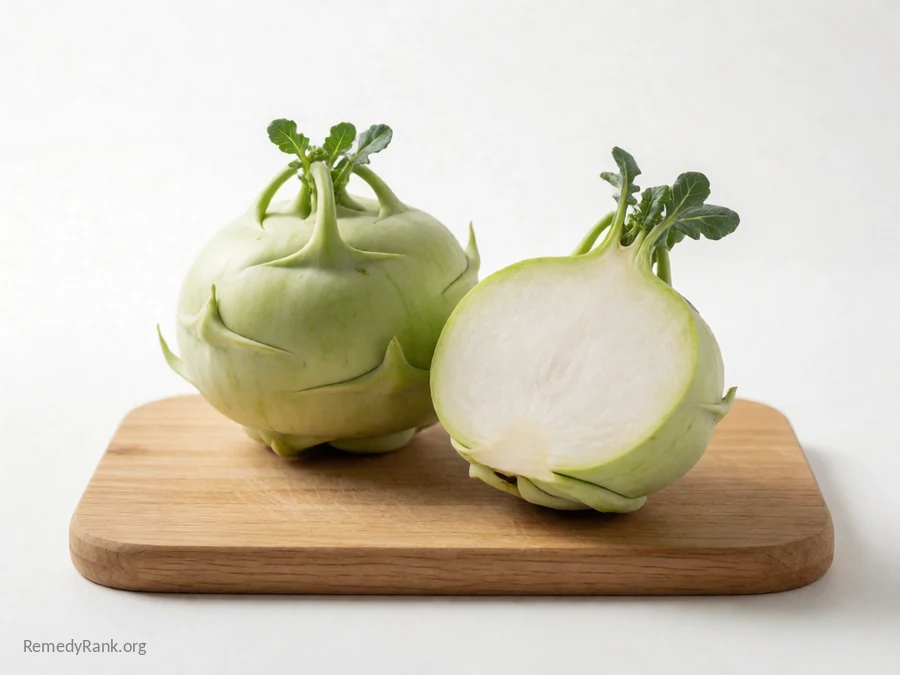
Kohlrabi is a crunchy, pale-green or purple bulb from the cabbage family, with a mild, slightly sweet flavor similar to a broccoli stem or mild turnip.
📜 Where it comes from
Kohlrabi developed from wild cabbage varieties in Europe, first clearly documented in the sixteenth century, and it became a popular vegetable in German, Austrian, and Eastern European kitchens, with its name deriving from German words for cabbage and turnip. Traditional European gardens valued it for its mild flavor and ability to store well through cooler months. It remains a common vegetable across Central Europe today.
✨ Why it's good for you
- may help support immune health with its generous vitamin C content
- may help support digestion and regularity through its fiber
- may help support healthy hydration since it is largely water
- may help support balanced blood sugar as a low-calorie, high-fiber vegetable
🥗 Nutrition
Per 1 cup, raw (135g) · about 36 calories
- Vitamin C 84mg
- Fiber 5g
- Potassium 472mg
- Vitamin B6 0.2mg
- Protein 2g
Source: USDA FoodData Central
🥄 How to use it
Peel and eat kohlrabi raw in sticks or slaw, or roast and steam the bulb until tender.
How much: A cup of raw or cooked kohlrabi as a side or snack, several times a week.
Why it works: Nutrition science points to kohlrabi's vitamin C and fiber content as support for immune function and healthy digestionHow your body breaks food down into pieces small enough to use for energy. More →, consistent with other members of the cabbage family.
Show full details & how to prepare it
Kohlrabi looks like a small green or purple spaceship but is simply a swollen cabbage stem, and it carries the cabbage family's gifts in a crisp, mild, slightly sweet package. A single bulb delivers most of a day's vitamin C to support the immune systemYour body's built-in defense team that fights off germs and helps you heal. More →, along with soluble fiber for steady digestionHow your body breaks food down into pieces small enough to use for energy. More → and healthier cholesterol, and a good dose of potassium.
Raw, peeled and cut into sticks, it is juicy and refreshing like a cross between an apple and a radish; roasted or steamed, it turns tender and sweet. Cooking also gentles the gas-forming fibers and softens the natural goitrogens, a small kindness for sensitive stomachs and thyroids.
Ways to prepare it
⚠️ Cautions
- Like other cabbage-family vegetables, large raw amounts may cause gas in sensitive stomachs.
- Those managing thyroid conditions may prefer it cooked, as cooking softens its goitrogen content.
📚 Learn more
🌿 Deeper natural detail
🩺 The conventional view
💬 Ask Remy about Kohlrabi
📚 Resource confidence
Based on mentions in health references
Your vote is saved. Source endorsement totals come from books and studies (+7 per book, +5 per article). You can change your vote anytime from this device.
💬 Comments & experiences
Share what worked for you — and reply or 👍 like the experiences that resonate. Comments get a quick review before they appear publicly, to keep things safe and honest. Please don't make medical claims.
💚 Have an experience to share? Create a free account to join the conversation — your words might be exactly what someone else needs. Reading is always open to everyone.
Know a remedy like this?
Share a structured suggestion and our team will review it for the site.
Suggest a similar remedy