Fruit
Kiwi
A tangy green fruit exceptionally rich in vitamin C and fiber, supporting digestion, immunity, and even sleep.
 ⤢
⤢📊 How it ranks (our editor score) — 88/100Tap to see the breakdown
🌱 What it is
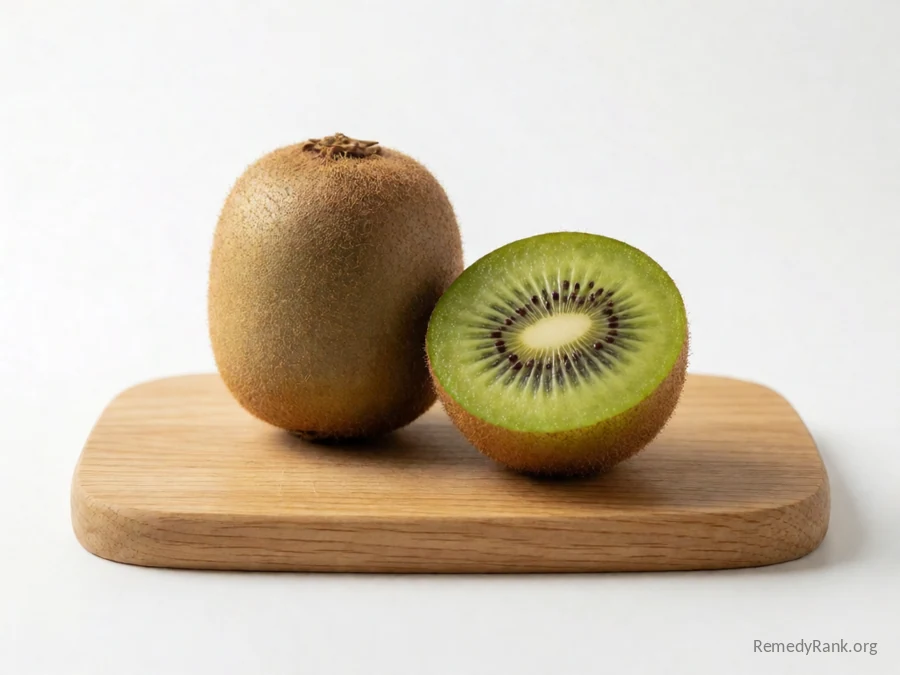
Kiwi is a little brown fruit with bright green (or golden) flesh and tiny black seeds. It is sweet, tangy, and full of good things.
📜 Where it comes from
Kiwi originated as a wild fruit in China, where it was known for centuries in traditional use, before New Zealand growers cultivated and renamed it in the early 20th century, helping it become a popular global fruit. Its exceptional vitamin C content has made it a focus of more recent nutrition research.
✨ Why it's good for you
- Loaded with vitamin C for everyday immune support
- Soft fiber that helps things move along gently
- A naturally sweet way to add color to your plate
🥗 Nutrition
Per 1 medium kiwi (69g) · about 42 calories
- Vitamin C 71% DV
- Vitamin K 31% DV
- Fiber 2g
- Potassium 4% DV
Source: USDA FoodData Central
🥄 How to use it
Eat one or two ripe kiwis a day (the skin is edible and fibrous if you like); two kiwis in the evening are a studied, gentle aid for sleep.
How much: One to two ripe kiwis a day.
Why it works: Kiwi is unusually rich in vitamin C and fiber for its size, and nutritionists note its natural enzyme actinidin may help the body break down protein, which is one reason it has been studied for easing digestionHow your body breaks food down into pieces small enough to use for energy. More → and supporting sleep.
Show full details & how to prepare it
The kiwi is a small fruit with an outsized nutritional punch — more vitamin C than an orange, plenty of fiber, and an enzyme that aids digestionHow your body breaks food down into pieces small enough to use for energy. More →. Intriguingly, eating a couple of kiwis in the evening has been studied as a gentle, natural aid for falling and staying asleep.
Ways to prepare it
⚠️ Cautions
- A whole food, very safe.
- A rare allergy is possible, sometimes alongside latex sensitivity.
- Its acidity can tingle a sensitive mouth in large amounts.
📚 Learn more
🌿 Deeper natural detail
Curated links coming for this one.
🩺 The conventional view
💬 Ask Remy about Kiwi
📚 Resource confidence
Based on mentions in health references
Your vote is saved. Source endorsement totals come from books and studies (+7 per book, +5 per article). You can change your vote anytime from this device.
💬 Comments & experiences
Share what worked for you — and reply or 👍 like the experiences that resonate. Comments get a quick review before they appear publicly, to keep things safe and honest. Please don't make medical claims.
💚 Have an experience to share? Create a free account to join the conversation — your words might be exactly what someone else needs. Reading is always open to everyone.
Know a remedy like this?
Share a structured suggestion and our team will review it for the site.
Suggest a similar remedy