Fermented Food
Kimchi
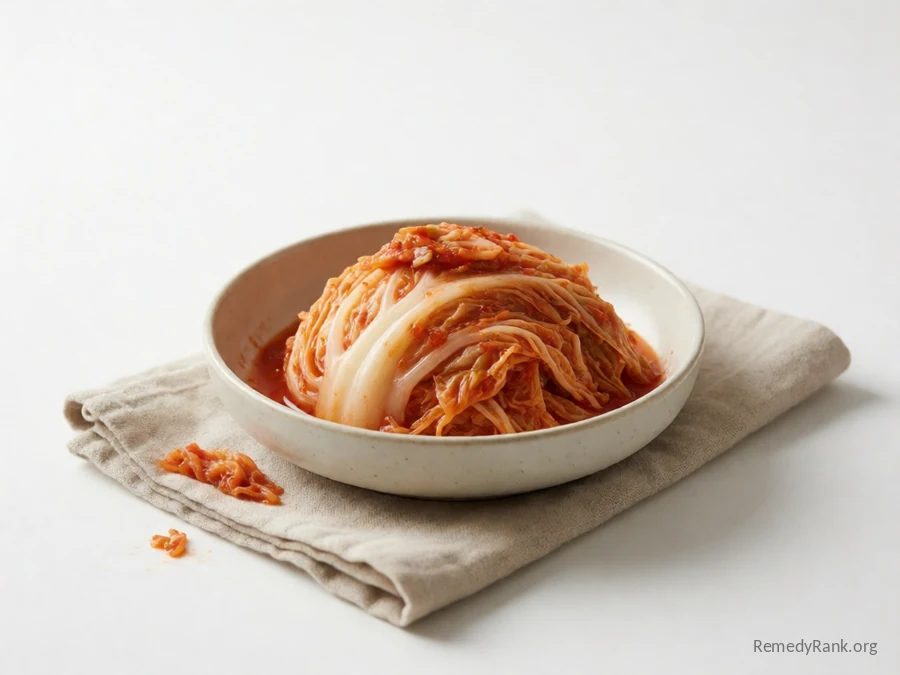
A spicy, tangy Korean fermented cabbage side dish, rich in live cultures -- research shows its lactic-acid fermentation keeps alcohol very low, though not literally zero.
 ⤢
⤢📊 How it ranks (our editor score) — 83/100Tap to see the breakdown
🌱 What it is
Kimchi is napa cabbage (or other vegetables) salted and fermented with garlic, ginger, and chili, developing a tangy, spicy flavor and live beneficial bacteria along the way. Its fermentation is driven mainly by lactic-acid bacteria rather than yeast, and research on vegetable ferments generally finds the resulting alcohol content very low -- though, as with any home or small-batch ferment, not something to assume is zero.
📜 Where it comes from
Kimchi has been made in Korea for well over a thousand years, beginning as a simple method of salting and fermenting vegetables to preserve them through the winter, long before chili peppers, introduced later from the Americas, gave the dish its now-familiar red color and heat. It became central to nearly every traditional Korean meal, made in large seasonal batches within families and communities. It has remained a defining staple of Korean cuisine into the present day.
✨ Why it's good for you
- Provides live beneficial bacteria (probiotics) that may support gut health
- Rich in vitamin C and fiber from the vegetables it’s made from
- A flavorful, low-calorie way to add vegetables to a meal
- Traditional fermentation may make some nutrients easier to absorb
🥗 Nutrition
Per 1/2 cup (75g) · about 15 calories
- Vitamin C 9mg
- Vitamin K 15mcg
- Sodium 300mg
- Fiber 1.5g
Source: USDA FoodData Central
🥄 How to use it
Enjoy a small serving as a side dish alongside rice, soups, or bowls; keep refrigerated, where it will keep fermenting slowly and grow more tangy over time.
Why it works: Nutrition science attributes kimchi's benefits to the live lactic-acid bacteria produced during its fermentation, which researchers associate with supporting gut bacteria balance and digestionHow your body breaks food down into pieces small enough to use for energy. More →.
⚠️ Cautions
- Kimchi is high in sodium, so those watching salt intake should keep portions modest. Its spice level can irritate a sensitive stomach or reflux. On alcohol: kimchi's fermentation is dominated by lactic-acid bacteria rather than yeast, and published research on vegetable ferments generally finds ethanol staying under about 1% by volume -- much lower than yeast-driven ferments like kombucha. We share this as what the research shows rather than a guarantee for any specific jar, especially one that's fermented longer than usual or in a home kitchen; anyone abstaining from alcohol on health, recovery, or faith grounds may still want to check labels on store-bought versions and avoid very old or heavily home-fermented batches.
📚 Learn more
💬 Ask Remy about Kimchi
📚 Resource confidence
Based on mentions in health references
Your vote is saved. Source endorsement totals come from books and studies (+7 per book, +5 per article). You can change your vote anytime from this device.
💬 Comments & experiences
Share what worked for you — and reply or 👍 like the experiences that resonate. Comments get a quick review before they appear publicly, to keep things safe and honest. Please don't make medical claims.
💚 Have an experience to share? Create a free account to join the conversation — your words might be exactly what someone else needs. Reading is always open to everyone.
Know a remedy like this?
Share a structured suggestion and our team will review it for the site.
Suggest a similar remedy