Fermented Food
Kefir
A tangy, drinkable fermented milk (or water-based alternative), rich in a wide variety of live cultures.
 ⤢
⤢📊 How it ranks (our editor score) — 80/100Tap to see the breakdown
🌱 What it is
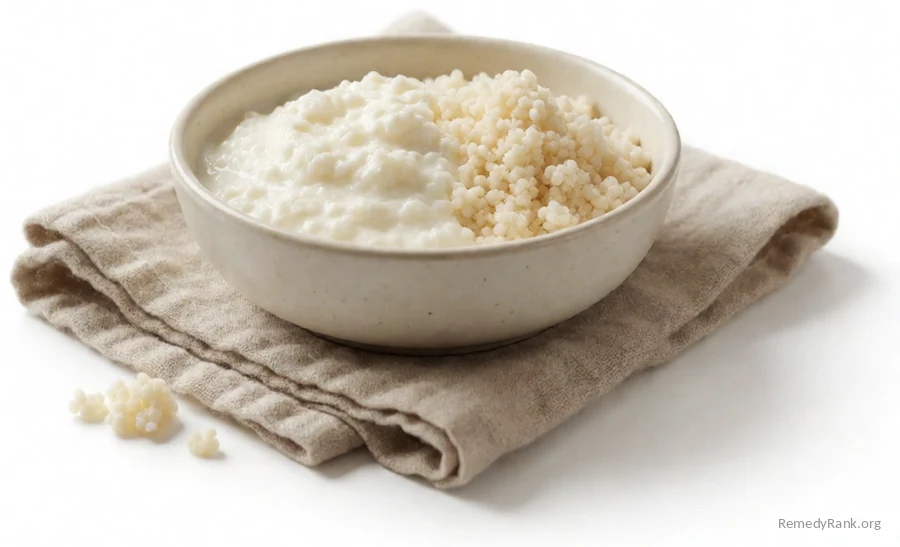
Kefir is milk fermented with "kefir grains" -- a cluster of bacteria and yeast -- producing a tart, drinkable, yogurt-like ferment with a broader range of live cultures than most yogurt. A dairy-free version, water kefir, ferments sugar water instead of milk.
📜 Where it comes from
Kefir traditionally comes from the Caucasus Mountains region, where shepherding communities are said to have discovered that milk carried in skin bags fermented into a tangy, effervescent drink using a distinctive culture of bacteria and yeast known as kefir grains. The practice was closely guarded within families and communities for generations before it spread into Russia and Eastern Europe in the 19th and 20th centuries. It later reached Western markets as interest in fermented and probiotic foods grew.
✨ Why it's good for you
- Provides a wide variety of live beneficial bacteria and yeast (probiotics)
- Dairy kefir supplies protein and calcium
- May be easier to digest than plain milk for some people with mild lactose sensitivity, since fermentation breaks some of it down
- A versatile base for smoothies or a simple drink on its own
🥗 Nutrition
Per 1 cup, plain dairy kefir (243g) · about 104 calories
- Protein 8.9g
- Calcium 296mg
- Vitamin D (if fortified)
- Probiotic cultures
Source: USDA FoodData Central
🥄 How to use it
Drink dairy kefir plain, blended into smoothies, or poured over granola; water kefir can be flavored with fruit and enjoyed chilled.
Why it works: Researchers point to kefir's unusually broad diversity of live bacterial and yeast strains, more varied than most yogurts, as the basis for its studied benefits to gut bacteria balance.
⚠️ Cautions
- Like other yeast ferments, dairy and water kefir normally contain only trace alcohol, but this can rise somewhat with longer home fermentation -- worth checking if you strictly abstain from alcohol. Dairy kefir is not suitable for a milk allergy and may still bother significant lactose intolerance; choose water kefir instead in those cases. Those with a compromised immune system should be cautious with any live-culture ferment.
📚 Learn more
🌿 Deeper natural detail
🩺 The conventional view
Curated links coming for this one.
💬 Ask Remy about Kefir
📚 Resource confidence
Based on mentions in health references
Your vote is saved. Source endorsement totals come from books and studies (+7 per book, +5 per article). You can change your vote anytime from this device.
💬 Comments & experiences
Share what worked for you — and reply or 👍 like the experiences that resonate. Comments get a quick review before they appear publicly, to keep things safe and honest. Please don't make medical claims.
💚 Have an experience to share? Create a free account to join the conversation — your words might be exactly what someone else needs. Reading is always open to everyone.
Know a remedy like this?
Share a structured suggestion and our team will review it for the site.
Suggest a similar remedy