Herb
Green Tea (Concentrated Extract)
Concentrated green-tea extract is a caffeinated stimulant supplement studied for supporting metabolism... it is NOT a NEWSTART-aligned everyday habit, and should only be considered occasionally, in limited circumstances, if the evidence for it actually holds up for your situation.
 ⤢
⤢📊 How it ranks (our editor score) — 63/100Tap to see the breakdown
👶 Safe for children?
This remedy carries age-related cautions. Please read them before giving it to a child, and check with your pediatrician or pharmacist first.
- Concentrated extracts (especially taken on an empty stomach) have been linked to rare but serious liver injury; avoid in pregnancy, breastfeeding, in children, and with any liver condition, and always take with food.
🌱 What it is
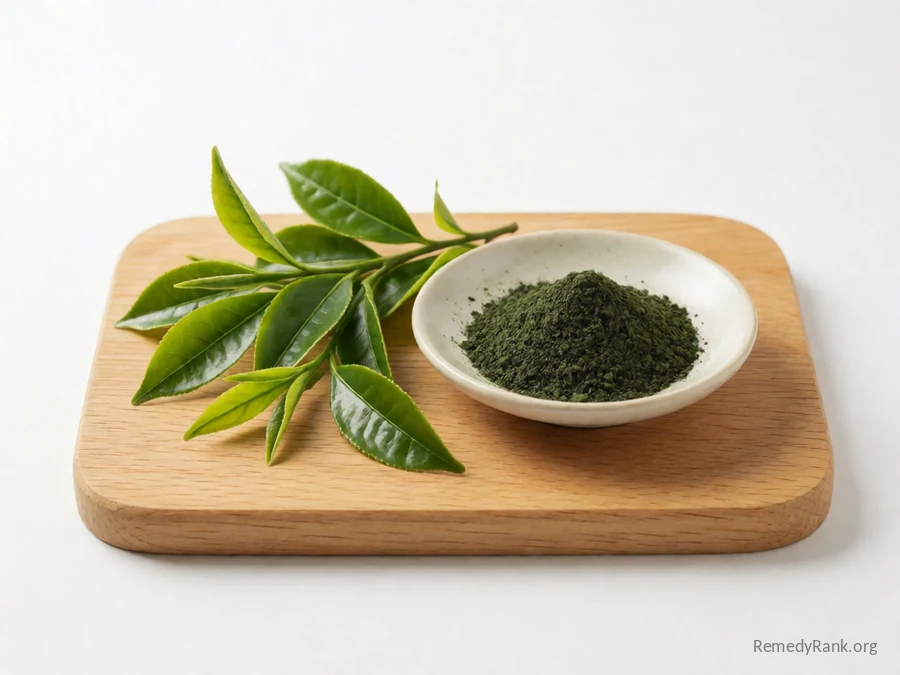
Green tea comes from the same plant as black tea but is steamed rather than fermented, keeping more of its green color and antioxidant compounds. It can be brewed as an everyday tea, or concentrated into extract capsules that pack many cups’ worth of those compounds -- and of caffeine -- into a single dose.
📜 Where it comes from
Green tea has been consumed in China for thousands of years, first as a medicinal drink noted in ancient Chinese texts and later spread through Buddhist monastic tradition to Japan, where it became central to daily life and ceremony. Traditional use valued it for alertness and digestion. The concentrated extract form used in modern supplements is a 20th and 21st-century development, created once researchers identified and isolated green tea's polyphenol compounds for study in metabolism and weight research.
✨ Why it's good for you
- Rich in antioxidants that support the body’s cells
- Traditionally used to support healthy metabolism as part of a balanced lifestyle
- Gives a gentle, steady lift without the sharper crash of coffee, in brewed form
- A warm, calming drink to enjoy earlier in the day
🥗 Nutrition
Per 1 capsule (standardized) · about 3 calories
- EGCG catechins (antioxidant)
- Polyphenols
- May contain caffeine
Source: Nutrition estimate (per typical serving)
🥄 How to use it
⚠️ CAFFEINE WARNING: This is a concentrated caffeine source, not a cup of teaA warm drink made by steeping herbs in hot water. How to make a tea →. It should not be used as a daily habit. If used at all, treat it as an occasional, short-term measure... take with food, following the product label exactly, and do not stack it with coffee or other caffeinated products. Ordinary brewed green tea still contains caffeine (in a smaller, self-limiting dose) and is likewise not caffeine-free.
How much: ⚠️ Caffeinated stimulant... not a daily supplement. Only if used occasionally: follow the product label exactly, take with food, and avoid stacking with coffee or other caffeinated products the same day.
Why it works: Researchers point to green teaA warm drink made by steeping herbs in hot water. How to make a tea → extract's caffeine and catechin compounds as working together to modestly raise metabolic rate and fat use, an effect studied in supplement research though generally modest in practice.
Show full details & how to prepare it
Green teaA warm drink made by steeping herbs in hot water. How to make a tea → itself, brewed and sipped, is a widely enjoyed everyday habit... but it still contains real caffeine, just in a smaller, self-limiting dose than the concentrated extract. This entry is specifically about the concentrated extract capsules sold for weight support, which deliver far more of green tea's active compounds (catechins and caffeine) than a cup ever would... and it is that concentration, not the tea itself, that carries the rare liver-injury reports. Because it is a caffeine source, RemedyRank does not recommend concentrated green-tea extract as a routine, everyday supplement. If it is used at all, it should be an occasional, limited-use choice made only where there's solid evidence it will actually help... not a default daily habit. Anyone avoiding caffeine, including for sleep, anxiety, heart, or lifestyle reasons, should look to a caffeine-free alternative instead.
Ways to prepare it
⚠️ Cautions
- ⚠️ CAFFEINE: This is a stimulant, at concentrations well beyond a single cup of tea. It can disturb sleep, raise heart rate and blood pressure, and cause jitteriness or anxiety. It is not a caffeine-free remedy, and should not be treated as a routine daily supplement.
- Only consider using this in limited, occasional situations... and only if there is genuine, solid evidence it will actually help your specific case. For everyday, caffeine-free support, prefer a decaffeinated or herbal alternative instead.
- Not recommended for anyone avoiding caffeine for health, sleep, or lifestyle reasons... this includes people following a NEWSTART or caffeine-free lifestyle.
📚 Learn more
🌿 Deeper natural detail
🩺 The conventional view
💬 Ask Remy about Green Tea (Concentrated Extract)
📚 Resource confidence
Based on mentions in health references
Your vote is saved. Source endorsement totals come from books and studies (+7 per book, +5 per article). You can change your vote anytime from this device.
💬 Comments & experiences
Share what worked for you — and reply or 👍 like the experiences that resonate. Comments get a quick review before they appear publicly, to keep things safe and honest. Please don't make medical claims.
💚 Have an experience to share? Create a free account to join the conversation — your words might be exactly what someone else needs. Reading is always open to everyone.
Know a remedy like this?
Share a structured suggestion and our team will review it for the site.
Suggest a similar remedy