Herb
Dill
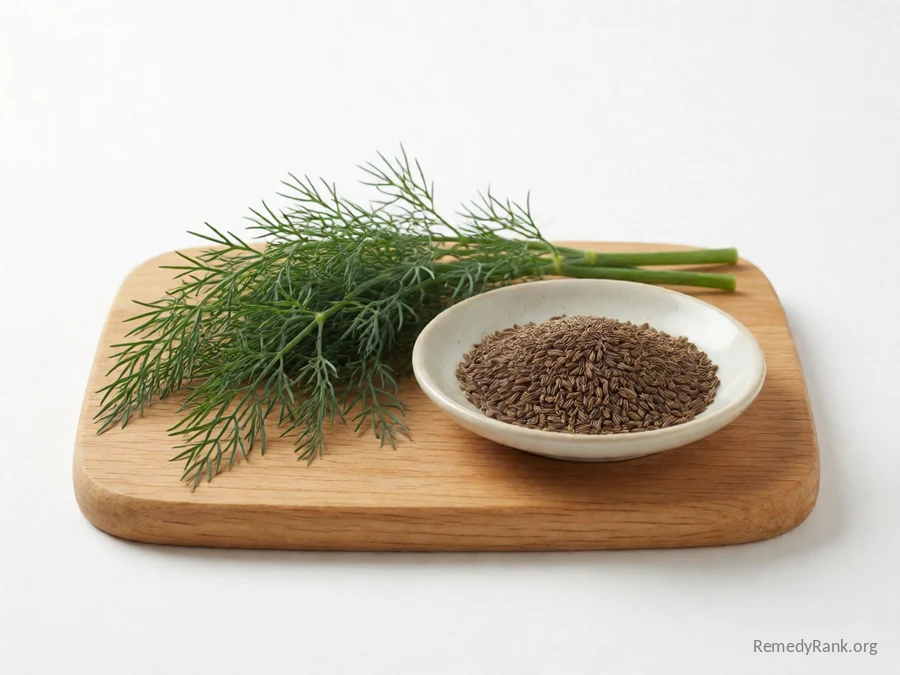
A feathery herb and its seeds, used in food or a weak tea, traditionally soothing for gas, colic, and an unsettled stomach.
 ⤢
⤢📊 How it ranks (our editor score) — 88/100Tap to see the breakdown
👶 Safe for children?
This remedy carries age-related cautions. Please read them before giving it to a child, and check with your pediatrician or pharmacist first.
- For infants, use only a weak, cooled tea.
🌱 What it is
Dill is a feathery-leafed herb whose fresh fronds and dried seeds are both used in cooking, especially with pickles, fish, and soups.
📜 Where it comes from
Dill has been used since ancient Egyptian and Greco-Roman times, when it was valued as both food and a gentle remedy for digestive trouble. Its very name is thought to come from an old word meaning to lull or soothe, reflecting its long use for calming colicky infants across European folk tradition. It remains a staple in northern and eastern European kitchens.
✨ Why it's good for you
- May help soothe gas and colic
- May help support a comfortable, unsettled stomach
- May help support digestion after a meal
- May help supply antioxidants from a fresh kitchen herb
🥗 Nutrition
Per 1/4 cup fresh dill weed (2.2 g) · about 1 calories
- Vitamin C 1.9mg
- Vitamin A 4mcg RAE
- Manganese 0.03mg
- Folate 3mcg
Source: USDA FoodData Central
🥄 How to use it
Steep 1 teaspoon of lightly crushed dill seeds in hot water for 10 minutes for a teaA warm drink made by steeping herbs in hot water. How to make a tea →, or use the fresh fronds generously in food; a very weak, cooled tea is a traditional soother for a colicky baby.
How much: 1 teaspoon crushed seeds as teaA warm drink made by steeping herbs in hot water. How to make a tea →, or generous culinary use; very weak and cooled for infants, with medical guidance.
Why it works: Herbalists attribute dill's soothing effect on gas and colic to its aromatic oils, believed to relax the digestive tract's smooth muscle.
Show full details & how to prepare it
Dill is the feathery, fresh-tasting herbA plant, or part of one, used for flavor, food, or gentle health support. More → of pickles and potato dishes, and both its leaves and seeds have a long, gentle history of soothing a gassy, crampy stomach. Its name even hints at it... 'dill' comes from an old word meaning 'to soothe'... and dill seed was the original ingredient in traditional baby 'gripe water.'
The fresh fronds brighten food, and a teaA warm drink made by steeping herbs in hot water. How to make a tea → of the crushed seeds settles digestionHow your body breaks food down into pieces small enough to use for energy. More →. It's about as gentle as herbs come; for little ones, a weak, cooled tea is the traditional approach.
Ways to prepare it
⚠️ Cautions
- Food and tea amounts are very gentle.
- Rare allergy is possible; avoid large medicinal seed doses in pregnancy.
📚 Learn more
🌿 Deeper natural detail
🩺 The conventional view
💬 Ask Remy about Dill
📚 Resource confidence
Based on mentions in health references
Your vote is saved. Source endorsement totals come from books and studies (+7 per book, +5 per article). You can change your vote anytime from this device.
💬 Comments & experiences
Share what worked for you — and reply or 👍 like the experiences that resonate. Comments get a quick review before they appear publicly, to keep things safe and honest. Please don't make medical claims.
💚 Have an experience to share? Create a free account to join the conversation — your words might be exactly what someone else needs. Reading is always open to everyone.
Know a remedy like this?
Share a structured suggestion and our team will review it for the site.
Suggest a similar remedy