Herb
Chicory Root
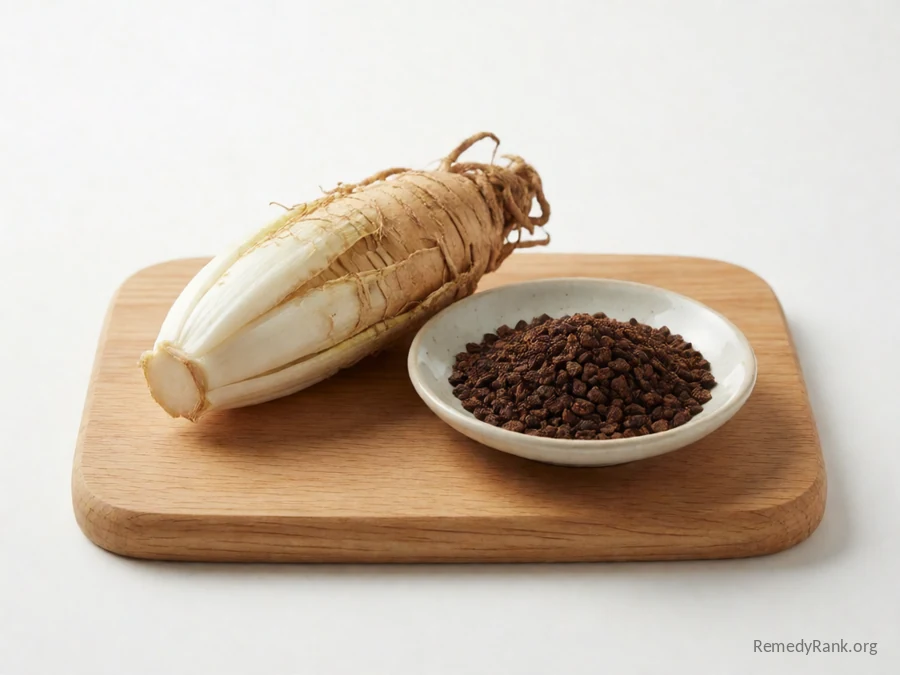
A roasted root used as a caffeine-free coffee substitute, rich in inulin fiber that feeds the gut and aids digestion.
 ⤢
⤢📊 How it ranks (our editor score) — 82/100Tap to see the breakdown
🌱 What it is
Chicory is a blue-flowered roadside plant whose taproot has been roasted and brewed as a coffee substitute for generations. The root is especially rich in inulin, a prebiotic fiber.
📜 Where it comes from
Chicory has been used since ancient Egyptian and Roman times, when Dioscorides and other early physicians praised its bitter root and leaves as a liver and digestive aid. Roasted chicory root became a popular coffee substitute and stretcher in Europe, especially in France and later in the American South, particularly during coffee shortages such as the Civil War and the Great Depression. It remains a familiar addition to New Orleans-style coffee today.
✨ Why it's good for you
- Traditionally used as a caffeine-free coffee substitute
- Its inulin fiber may help feed friendly gut bacteria
- May gently support regular digestion
- Acts as a mild bitter that can stimulate bile flow
🥗 Nutrition
Per 1 cup (145g) raw chicory root · about 68 calories
- Fiber (inulin) 15g
- Potassium 420mg
- Vitamin C 8mg
- Manganese 0.3mg
Source: USDA FoodData Central
🥄 How to use it
Brew roasted chicory root like coffee for a caffeine-free hot drink, or add a little chicory inulin to foods; start small, as the inulin fiber can cause gas.
How much: Brewed like coffee, a cup or two daily; start with small amounts.
Why it works: Herbalists attribute chicory's digestive benefits to its bitter compounds, which are thought to stimulate bile flow, while nutrition science points to its inulin fiber as a prebiotic that feeds beneficial gut bacteria.
Show full details & how to prepare it
Chicory is a blue-flowered roadside plant whose roasted root brews into a dark, coffee-like drink with no caffeine — long used to stretch or replace coffee. Its real prize is inulin, a prebiotic fiber that feeds beneficial gut bacteria and supports digestionHow your body breaks food down into pieces small enough to use for energy. More → and regularity, while its bitterness gently stimulates the bile.
Ways to prepare it
⚠️ Cautions
- The inulin fiber can cause gas and bloating — build up gradually.
- Those allergic to ragweed/daisies may react; avoid large amounts with gallstones or in pregnancy.
- Acts as a mild bitter that stimulates bile — gentle for most.
📚 Learn more
🌿 Deeper natural detail
🩺 The conventional view
💬 Ask Remy about Chicory Root
📚 Resource confidence
Based on mentions in health references
Your vote is saved. Source endorsement totals come from books and studies (+7 per book, +5 per article). You can change your vote anytime from this device.
💬 Comments & experiences
Share what worked for you — and reply or 👍 like the experiences that resonate. Comments get a quick review before they appear publicly, to keep things safe and honest. Please don't make medical claims.
💚 Have an experience to share? Create a free account to join the conversation — your words might be exactly what someone else needs. Reading is always open to everyone.
Know a remedy like this?
Share a structured suggestion and our team will review it for the site.
Suggest a similar remedy