Nut
Chestnut
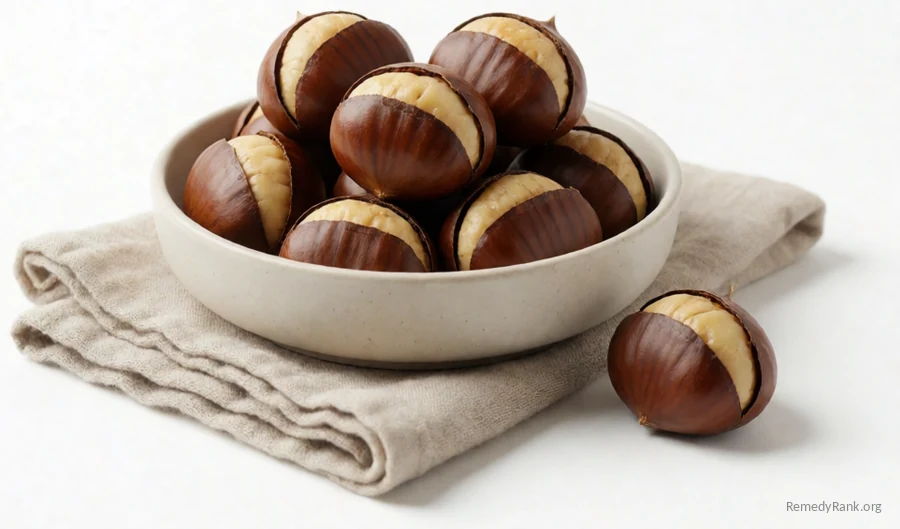
A warm, starchy nut, low in fat and gentle on the stomach, that has fed people through many winters.
 ⤢
⤢📊 How it ranks (our editor score) — 87/100Tap to see the breakdown
🌱 What it is
Chestnuts are the sweet, starchy nuts of the chestnut tree. Unlike most nuts, they are low in fat and high in carbohydrates, so they eat more like a small potato than a walnut or almond.
📜 Where it comes from
Chestnuts have been a staple food across Europe and Asia for thousands of years, particularly valued in mountainous regions of Italy, France, and the Mediterranean, where chestnut flour served as bread for poorer communities through the winter months. American chestnut trees also once dominated eastern forests before a blight devastated them in the early twentieth century. Traditional roasting of chestnuts over an open fire remains an enduring winter custom.
✨ Why it's good for you
- may help support steady, gentle energy thanks to its starchy, low-fat makeup
- may help support digestive comfort compared to richer, oilier nuts
- may help support a heart-healthy diet as a lower-fat nut choice
- may help support winter meals with warmth and simple, whole-food nourishment
🥗 Nutrition
Per 1 cup, roasted (143g) · about 350 calories
- Carbohydrates 76g
- Fiber 7g
- Vitamin C 39mg
- Potassium 847mg
- Fat 3g
Source: USDA FoodData Central
🥄 How to use it
Roast or boil chestnuts and eat them warm, or simmer them into soups and stuffings.
How much: A handful of cooked chestnuts, about 3 ounces, makes a warming snack or side.
Why it works: Nutrition science points to chestnut's complex carbohydrate content, unusual among nuts, as support for sustained energy, while its low fat content makes it gentler on the stomach than other nuts.
Show full details & how to prepare it
Unlike its oily cousins, the chestnut is mostly gentle complex starch, low in fat and naturally rich in vitamin C and potassium, which is part of why whole regions once leaned on 'the bread tree' to carry them through lean winters. That slow-burning starch gives steady energy without heaviness, the fiber eases digestionHow your body breaks food down into pieces small enough to use for energy. More →, and the potassium quietly supports healthy blood pressure.
Chestnuts must be cooked, never eaten raw, both for digestibility and to soften their tannins. Roasted until the shells split, or boiled and peeled, they turn sweet and floury, lovely on their own or folded into soups and savory bakes.
Ways to prepare it
⚠️ Cautions
- Always cook chestnuts before eating; raw ones are hard to digest and high in tannins.
- They are a tree nut, so avoid if you have a nut allergy.
📚 Learn more
🌿 Deeper natural detail
🩺 The conventional view
💬 Ask Remy about Chestnut
📚 Resource confidence
Based on mentions in health references
Your vote is saved. Source endorsement totals come from books and studies (+7 per book, +5 per article). You can change your vote anytime from this device.
💬 Comments & experiences
Share what worked for you — and reply or 👍 like the experiences that resonate. Comments get a quick review before they appear publicly, to keep things safe and honest. Please don't make medical claims.
💚 Have an experience to share? Create a free account to join the conversation — your words might be exactly what someone else needs. Reading is always open to everyone.
Know a remedy like this?
Share a structured suggestion and our team will review it for the site.
Suggest a similar remedy