Food
Bee Pollen
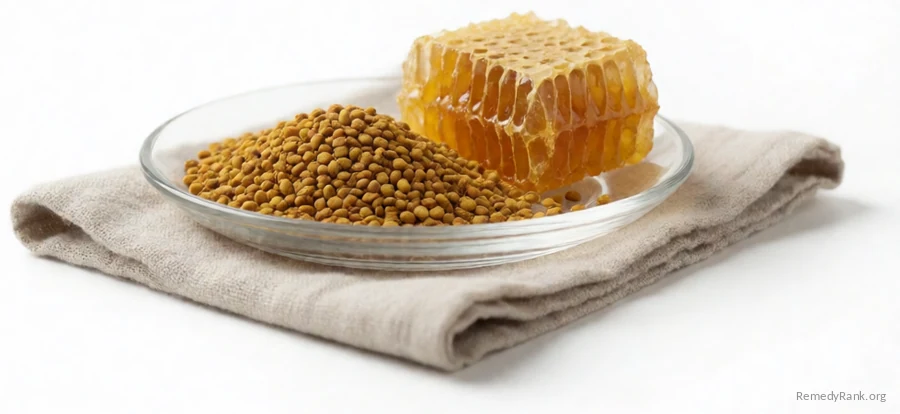
Tiny granules of flower pollen gathered by bees, taken as a nutrient-rich food and traditional support for energy and seasonal allergies.
 ⤢
⤢📊 How it ranks (our editor score) — 65/100Tap to see the breakdown
🌱 What it is
Bee pollen is made of flower pollen grains that worker bees pack into small pellets on their legs and bring back to the hive. It's collected at the hive entrance and dried for use as a food.
📜 Where it comes from
Bee pollen has been used since ancient Egyptian and Greco-Roman times as a valued natural food, and traditional folk medicine across Europe and Asia regarded it as a tonic for vigor and stamina. It gained a following in the 20th-century natural health movement, sometimes taken in small amounts to help the body build tolerance to seasonal pollen.
✨ Why it's good for you
- May help support steady, natural energy
- May help support the body's response to seasonal plant pollens
- May help provide a boost of plant nutrients and protein
- May help support overall wellness as part of a varied diet
🥗 Nutrition
Per 1 tablespoon (about 10 g) · about 30 calories
- Protein 1.5 g
- Carbohydrate 3.5 g
- B vitamins
- Trace minerals (iron, zinc)
Source: USDA FoodData Central
🥄 How to use it
Start with just a few granules to check for any reaction, then build to about 1 teaspoon sprinkled on oatmeal, yogurt, or a smoothie.
How much: Start with a few granules; build to about 1 teaspoon daily if well tolerated.
Why it works: Advocates point to bee pollen's mix of proteins, vitamins, and plant compounds as supporting energy, while its traditional use for allergies rests on the idea of gradual pollen exposure.
Show full details & how to prepare it
Bee pollen is the flower pollen bees pack into tiny golden granules, rich in protein, vitamins, and antioxidants. It's taken as a nourishing food for energy, and locally-sourced pollen is traditionally used to gently build tolerance to local allergens — but because it's pollen, allergic reactions are a real risk, so always start with just a few granules.
Ways to prepare it
⚠️ Cautions
- Always start with a few granules — bee pollen can cause allergic reactions, occasionally severe, especially in those allergic to pollen or bee stings.
- Stop immediately and seek care for any swelling, itching, or trouble breathing.
- Avoid in pregnancy and for those with known pollen or bee allergies.
📚 Learn more
🌿 Deeper natural detail
Curated links coming for this one.
🩺 The conventional view
💬 Ask Remy about Bee Pollen
📚 Resource confidence
Based on mentions in health references
Your vote is saved. Source endorsement totals come from books and studies (+7 per book, +5 per article). You can change your vote anytime from this device.
💬 Comments & experiences
Share what worked for you — and reply or 👍 like the experiences that resonate. Comments get a quick review before they appear publicly, to keep things safe and honest. Please don't make medical claims.
💚 Have an experience to share? Create a free account to join the conversation — your words might be exactly what someone else needs. Reading is always open to everyone.
Know a remedy like this?
Share a structured suggestion and our team will review it for the site.
Suggest a similar remedy