Herb
Amla (Indian Gooseberry)
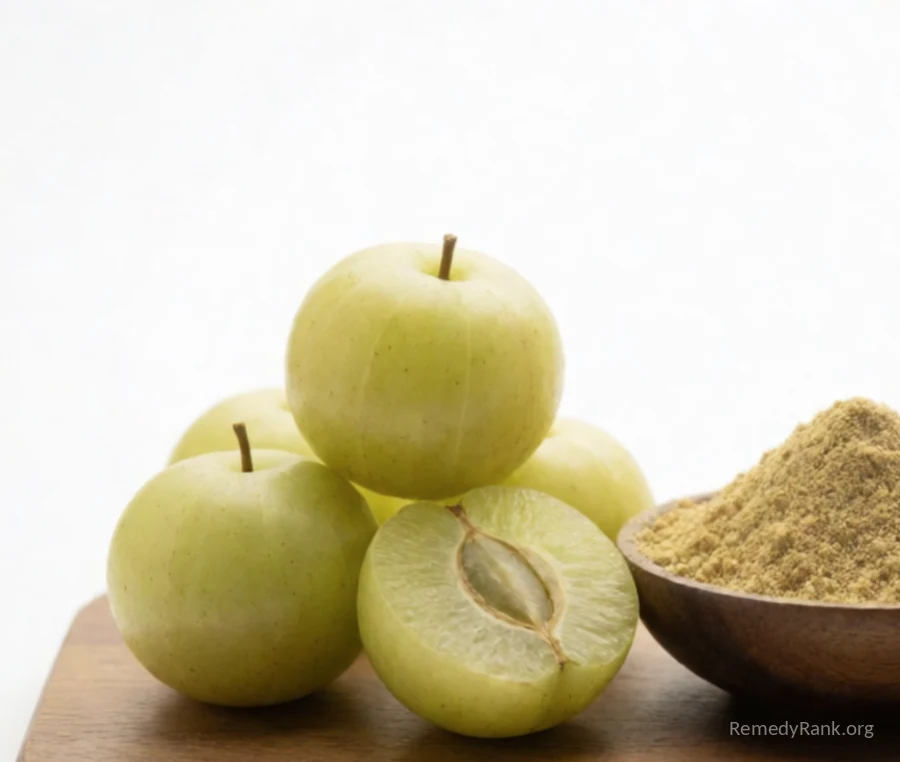
A sour green fruit exceptionally rich in vitamin C, taken as powder or juice to support immunity, digestion, and hair.
 ⤢
⤢📊 How it ranks (our editor score) — 80/100Tap to see the breakdown
🌱 What it is
Amla, also called Indian gooseberry, is a tart green fruit from a tree native to India, long valued in traditional wellness practices for its unusually high and stable vitamin C content.
📜 Where it comes from
Amla, or Indian gooseberry, holds an important place in traditional Ayurvedic medicine, where it has been used for thousands of years as a rejuvenating tonic and is considered one of the most valued fruits for balancing the body. It forms a key ingredient in classic Ayurvedic formulas such as triphala and chyawanprash, traditionally taken to support digestion, vitality, and hair health. Amla entered Western wellness markets more recently as interest in Ayurvedic herbs grew.
✨ Why it's good for you
- Very rich in vitamin C to help support immunity
- Traditionally used to support healthy digestion
- May help support healthy hair and skin
- Provides antioxidant plant compounds
🥗 Nutrition
Per 1 tablespoon (7g) amla powder · about 20 calories
- Vitamin C 60mg
- Fiber 2g
- Iron 0.3mg
- Calcium 3mg
Source: USDA FoodData Central
🥄 How to use it
Stir ½–1 teaspoon of amla powder into water or a smoothie, or take it as a juice; its vitamin C is unusually stable, surviving drying well.
How much: ½–1 teaspoon of powder daily, in water or food.
Why it works: Amla is exceptionally rich in a stable form of vitamin C that holds up well to drying and processing, which nutritionists say supports immune function, digestionHow your body breaks food down into pieces small enough to use for energy. More →, and, in traditional hair care, scalp health.
Show full details & how to prepare it
Amla, the Indian gooseberry, is one of the richest natural sources of vitamin C — and unusually, its vitamin C is so stable that it survives drying into a powder. Revered in traditional medicine, it's used to support the immune systemYour body's built-in defense team that fights off germs and helps you heal. More →, aid digestionHow your body breaks food down into pieces small enough to use for energy. More →, and nourish the hair and scalp.
Ways to prepare it
⚠️ Cautions
- Generally very safe and food-like; very large amounts may loosen the stool or mildly thin the blood.
- Its acidity can affect sensitive teeth — rinse after.
- Those on blood thinners or with very low blood pressure should be moderate.
📚 Learn more
🌿 Deeper natural detail
🩺 The conventional view
💬 Ask Remy about Amla (Indian Gooseberry)
📚 Resource confidence
Based on mentions in health references
Your vote is saved. Source endorsement totals come from books and studies (+7 per book, +5 per article). You can change your vote anytime from this device.
💬 Comments & experiences
Share what worked for you — and reply or 👍 like the experiences that resonate. Comments get a quick review before they appear publicly, to keep things safe and honest. Please don't make medical claims.
💚 Have an experience to share? Create a free account to join the conversation — your words might be exactly what someone else needs. Reading is always open to everyone.
Know a remedy like this?
Share a structured suggestion and our team will review it for the site.
Suggest a similar remedy