Vegetable
Zucchini
A tender, water-rich summer squash that is light, hydrating, and easy to fit into almost any meal.
 ⤢
⤢📊 How it ranks (our editor score) — 92/100Tap to see the breakdown
🌱 What it is
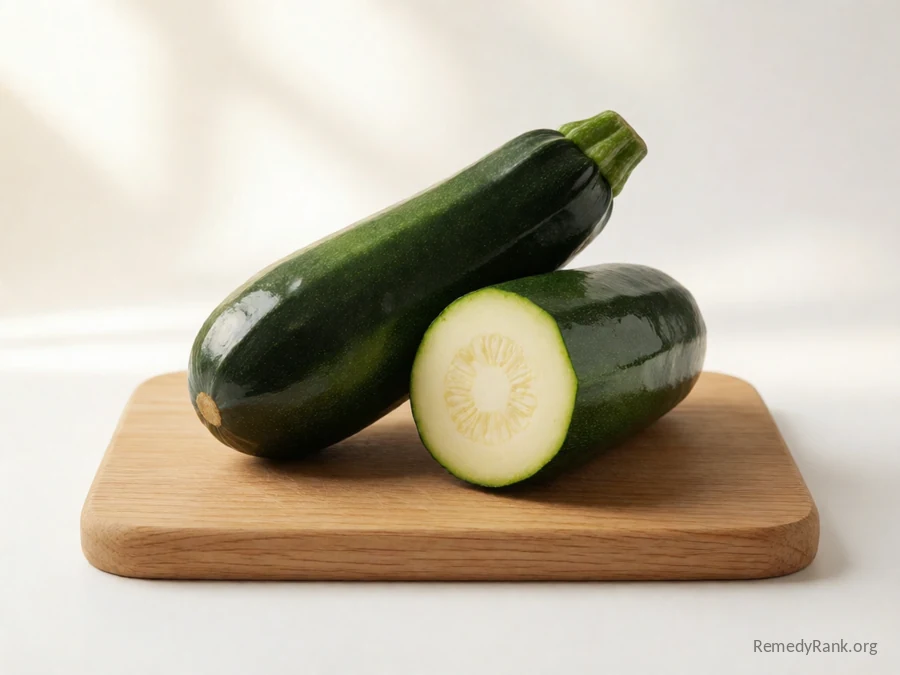
Zucchini is a tender summer squash with soft edible skin and mild-tasting flesh, harvested young before its seeds harden.
📜 Where it comes from
Zucchini is a type of summer squash developed from squash varieties native to the Americas, though the specific slender green zucchini familiar today was cultivated in Italy in the nineteenth century. It spread quickly through European and then American gardens for its fast growth and mild versatility. Traditional Italian cooking made zucchini a summer kitchen staple.
✨ Why it's good for you
- may help support hydration with its high water content
- may help support digestion with gentle fiber
- may help support healthy skin with vitamin C and antioxidants
- may help support steady blood sugar as a low-calorie food
🥗 Nutrition
Per 1 cup sliced, cooked (180g) · about 27 calories
- Vitamin C 9.2mg
- Potassium 456mg
- Fiber 1.3g
- Vitamin A 245 IU
- Manganese 0.2mg
Source: USDA FoodData Central
🥄 How to use it
Sauté, roast, or spiralize into noodles; it cooks quickly and takes on the flavors around it.
How much: A practical serving is about 1 cup cooked or raw zucchini, used freely as a light, filling addition to meals.
Why it works: Nutrition science points to zucchini's high water content and potassium as support for hydrationGiving your body enough water to work well. More → and fluid balance, while its fiber content is studied for aiding digestionHow your body breaks food down into pieces small enough to use for energy. More →.
Show full details & how to prepare it
Zucchini is a slender summer squash made up mostly of water, which is exactly what makes it so useful for light, satisfying eating. It fills a plate with volume and gentle fiber for very few calories, helping with comfortable fullness while keeping meals easy on the waistline.
Alongside that water and fiber it brings potassium, a mineralA natural building block your body needs in small amounts, like calcium or magnesium. More → that helps balance sodium and supports healthy blood pressure, plus a little vitamin C. Mild and quick-cooking, zucchini happily absorbs the flavors of whatever it is cooked with, from herbs and garlic to tomato sauces, and can even stand in for noodles when spiralized.
Zucchini is among the safest, friendliest vegetables. The one genuine caution is rare: if a piece tastes strikingly bitter, discard it, as that bitterness signals natural cucurbitacin compounds that can upset the stomach.
Ways to prepare it
⚠️ Cautions
- Occasionally a zucchini tastes very bitter, which signals natural compounds called cucurbitacins — discard any that is markedly bitter.
- Its high water content means it can turn watery if overcooked; cook briefly over higher heat.
- Enjoy the skin for extra fiber after washing well.
📚 Learn more
🌿 Deeper natural detail
💬 Ask Remy about Zucchini
📚 Resource confidence
Based on mentions in health references
Your vote is saved. Source endorsement totals come from books and studies (+7 per book, +5 per article). You can change your vote anytime from this device.
💬 Comments & experiences
Share what worked for you — and reply or 👍 like the experiences that resonate. Comments get a quick review before they appear publicly, to keep things safe and honest. Please don't make medical claims.
💚 Have an experience to share? Create a free account to join the conversation — your words might be exactly what someone else needs. Reading is always open to everyone.
Know a remedy like this?
Share a structured suggestion and our team will review it for the site.
Suggest a similar remedy